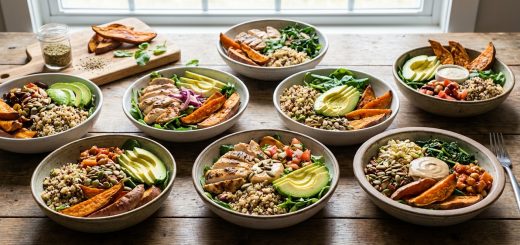
The Ultimate Guide to Post-Workout Nutrition: What to Eat and When
You just crushed a killer leg day. Your muscles are screaming, your shirt is soaked, and you’re ready to head home. But what you eat in the next few hours could make or break all that hard work you just put in.
Post workout nutrition fuels muscle repair and glycogen replenishment. Aim for 20-40g protein and 30-60g carbs within two hours of training. Whole foods work just as well as supplements. Your meal timing matters, but consistency with total daily intake matters more. Real recovery happens when you match your nutrition strategy to your training intensity and goals.
Why what you eat after training actually matters
Your body doesn’t build muscle during your workout. It breaks muscle down.
The real magic happens after you leave the gym. That’s when your body shifts into repair mode, rebuilding damaged muscle fibers stronger than before. But it needs raw materials to do the job.
When you train hard, you deplete glycogen stores in your muscles. You create micro-tears in muscle tissue. You trigger inflammation. Your body is primed to absorb nutrients and start the recovery process.
Feed it the right fuel at the right time, and you’ll recover faster, build more muscle, and show up stronger for your next session. Skip it or mess it up, and you’re leaving gains on the table.
The three macronutrients that drive recovery
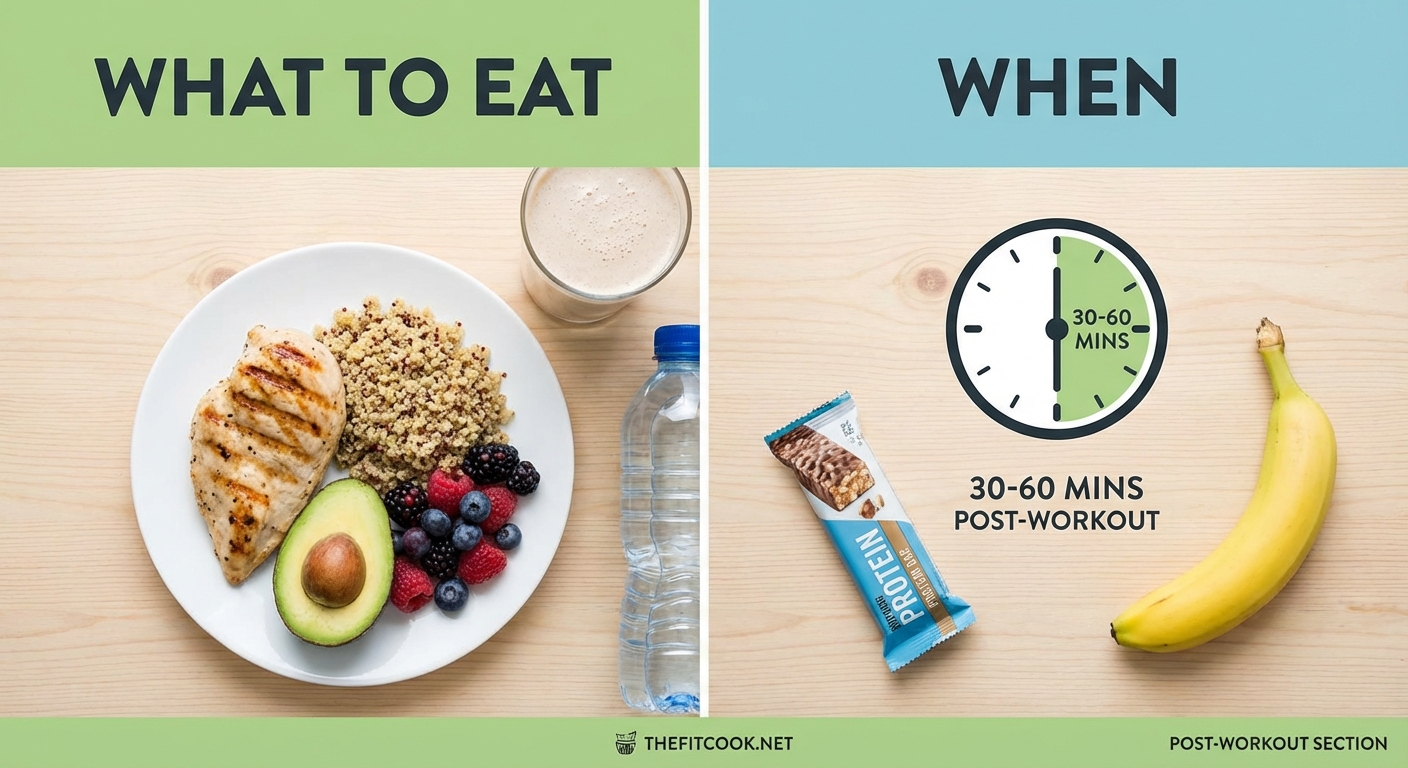
Protein repairs and rebuilds muscle tissue
Protein provides the amino acids your muscles need to repair damage from training. Without enough protein after your workout, your body can’t effectively rebuild what you just broke down.
Research shows that 20-40g of high-quality protein after training maximizes muscle protein synthesis. That’s the scientific term for muscle building.
More isn’t always better. Your body can only process so much protein at once. Going beyond 40g doesn’t give you extra benefits for most people.
Best post-workout protein sources:
- Chicken breast (3-4 oz)
- Greek yogurt (1-2 cups)
- Eggs (3-4 whole eggs)
- Whey protein shake (1 scoop)
- Salmon (4 oz)
- Lean ground turkey (4 oz)
Carbohydrates restore energy and support growth
Carbs get a bad rap, but they’re essential after training. They refill the glycogen your muscles just burned through. They also trigger an insulin response that helps shuttle nutrients into your cells.
The amount you need depends on your workout intensity. A light yoga session doesn’t require the same carb reload as a two-hour CrossFit beatdown.
General guidelines:
- Light workout (30 minutes, low intensity): 15-25g carbs
- Moderate workout (45-60 minutes, moderate intensity): 30-45g carbs
- Intense workout (60+ minutes, high intensity): 50-70g carbs
If you’re training for muscle building meal prep on a budget, you’ll want to hit the higher end of these ranges consistently.
Fat plays a supporting role
Fat won’t hurt your recovery, but it doesn’t need to be a priority immediately after training. It slows digestion, which can delay nutrient absorption.
That said, if your post-workout meal naturally contains some fat, don’t stress about it. A few grams won’t derail your recovery.
Save the higher-fat meals for later in the day when rapid nutrient delivery isn’t as critical.
The truth about the anabolic window
You’ve probably heard you need to slam a protein shake within 30 minutes of finishing your last set or you’ll lose all your gains.
That’s mostly myth.
The so-called “anabolic window” is real, but it’s wider than you think. Your muscles remain primed to absorb nutrients for several hours after training, not just 30 minutes.
Here’s what actually matters:
-
If you ate a solid meal 2-3 hours before training: You have more flexibility. Nutrients from that pre-workout meal are still circulating in your system. You can wait 60-90 minutes after training without any issues.
-
If you trained fasted or ate 4+ hours before your workout: Get food in sooner. Aim for within 60 minutes of finishing your session.
-
If you’re training twice per day: Timing becomes more important. You need to recover fast for your second session. Eat within 30-60 minutes.
The real priority is hitting your total daily protein and calorie targets. Meal timing is the cherry on top, not the whole sundae.
Building the perfect post-workout meal
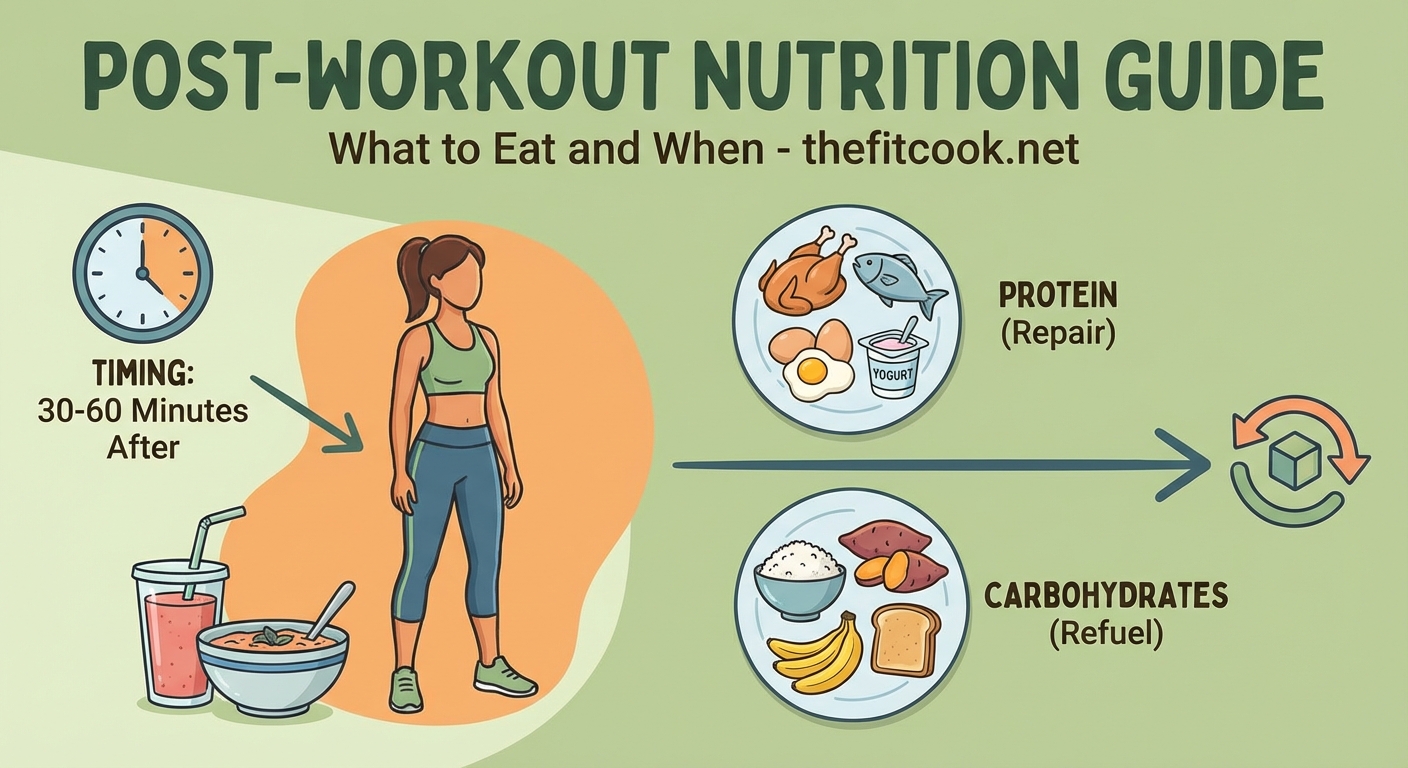
A solid recovery meal hits three targets: adequate protein, strategic carbs, and easy digestion.
Here’s a simple framework:
| Component | Amount | Purpose |
|---|---|---|
| Protein source | 20-40g | Muscle repair and growth |
| Carb source | 30-60g | Glycogen replenishment |
| Vegetables | 1-2 cups | Micronutrients and fiber |
| Hydration | 16-24 oz water | Rehydration |
Mix and match based on what you have available and what fits your macros. The guide to calculating your macros can help you dial in your specific needs.
Real post-workout meals that work
Option 1: The classic bodybuilder plate
- 6 oz grilled chicken breast
- 1 cup white rice
- 1 cup steamed broccoli
- 1 tbsp olive oil
Macros: 45g protein, 52g carbs, 8g fat
Option 2: The breakfast recovery bowl
- 3 whole eggs scrambled
- 2 slices whole grain toast
- 1 medium banana
- 1 cup berries
Macros: 28g protein, 58g carbs, 16g fat
Option 3: The shake and real food combo
- 1 scoop whey protein
- 1 cup almond milk
- 1 medium apple
- 2 tbsp almond butter
Macros: 32g protein, 42g carbs, 18g fat
Option 4: The meal prep warrior
- 5 oz lean ground turkey
- 1 medium sweet potato
- 1 cup roasted vegetables
- Side salad with balsamic vinegar
Macros: 38g protein, 45g carbs, 12g fat
If you’re someone who meal preps lunches for the entire week, you can batch cook these components on Sunday and mix them throughout the week.
Option 5: The plant-based recovery
- 1 cup cooked quinoa
- 1 cup chickpeas
- 2 cups mixed greens
- ¼ avocado
- Tahini dressing (2 tbsp)
Macros: 24g protein, 62g carbs, 16g fat
For more ideas, check out the plant-based protein meals guide.
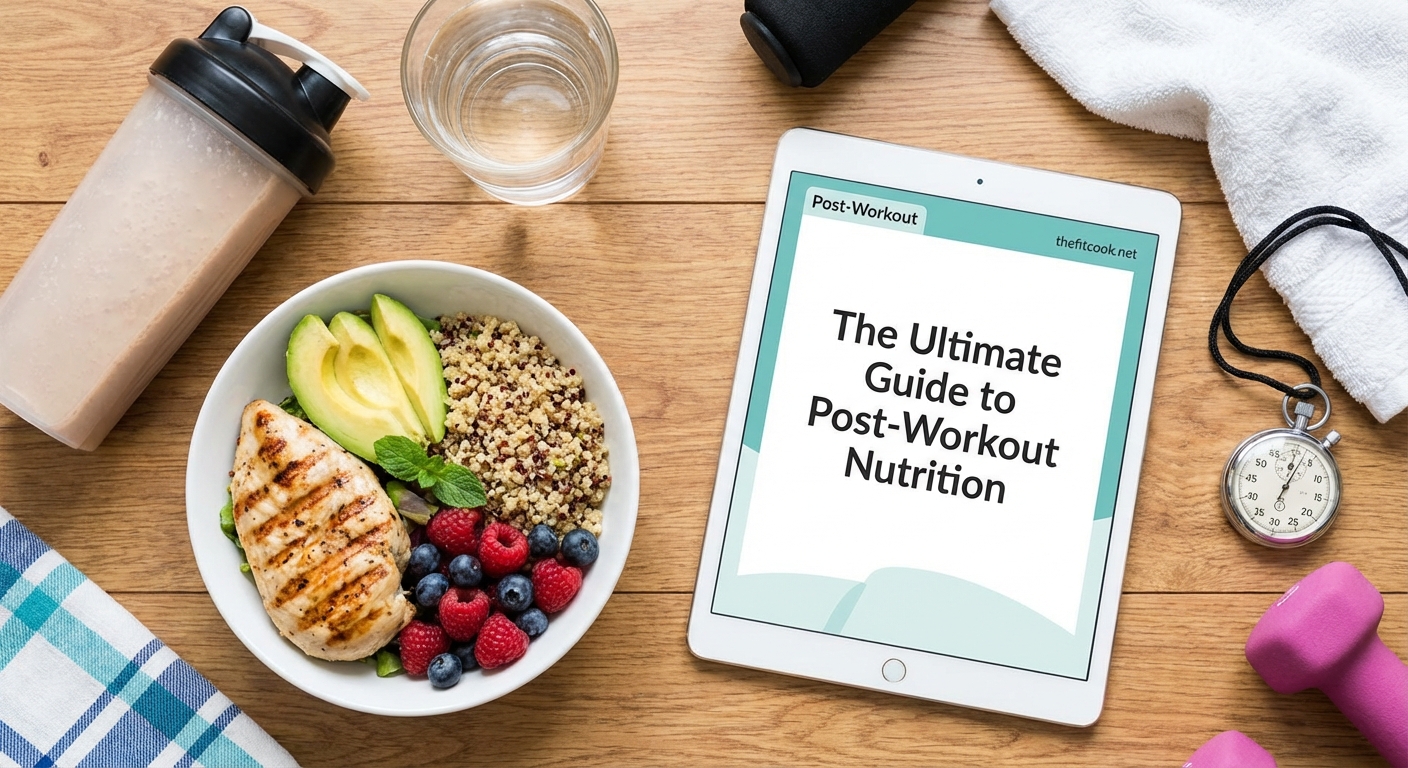
Common post-workout nutrition mistakes
| Mistake | Why it hurts | The fix |
|---|---|---|
| Waiting too long to eat | Delays recovery, especially if training fasted | Set a timer for 60-90 minutes post-workout |
| Not enough protein | Limits muscle protein synthesis | Track your intake, aim for 20-40g minimum |
| Only drinking a shake | Leaves you hungry, misses micronutrients | Add whole food or make it a meal replacement |
| Overdoing the carbs | Can lead to fat gain if not matched to activity | Scale carbs to workout intensity |
| Skipping post-workout food entirely | Wastes the workout, slows progress | Prep grab-and-go options ahead of time |
Supplements versus real food
Protein powders and recovery drinks are convenient. They’re portable, they digest fast, and they’re easy to measure.
But they’re not required.
Whole foods provide protein, carbs, vitamins, minerals, and fiber. They’re often more satisfying and keep you full longer.
“I’ve coached hundreds of athletes. The ones who build the most muscle and perform the best are the ones who prioritize real food first and use supplements to fill gaps, not replace meals.” – Registered Sports Dietitian
That said, supplements have their place:
- When you’re training early and don’t have time for a full meal
- When you’re on the road and don’t have access to a kitchen
- When you struggle to eat enough protein from whole foods alone
- When you need something light that won’t upset your stomach
If you’re curious about how much protein you really need after a workout, the research might surprise you.
Hydration is part of recovery too

You lose water and electrolytes through sweat during training. Replacing them is just as important as replacing nutrients.
Dehydration slows recovery, impairs performance, and makes you feel sluggish.
Simple hydration strategy:
- Weigh yourself before and after your workout (if possible)
- For every pound lost, drink 16-24 oz of water
- Add a pinch of salt or electrolyte powder if you sweat heavily
- Sip water consistently throughout the day, not just after training
If your urine is dark yellow, you’re behind on hydration. Aim for pale yellow throughout the day.
Adjusting your post-workout nutrition for different goals
For muscle gain
- Prioritize higher carbs (50-70g) to support growth and training volume
- Don’t fear a calorie surplus
- Consistency matters more than perfection
For fat loss
- Keep protein high (30-40g) to preserve muscle
- Moderate carbs based on workout intensity (20-40g)
- Watch total daily calories, not just post-workout
- Consider building the perfect low carb plate if you’re following a lower-carb approach
For endurance training
- Carbs become the priority (60-80g or more)
- Protein still matters but can be slightly lower (15-25g)
- Electrolyte replacement is critical
For general fitness
- Balanced approach: 20-30g protein, 30-40g carbs
- Focus on nutrient-dense whole foods
- Don’t overthink it
How to prep your post-workout meals ahead of time

If you’re someone who struggles to eat after the gym because you’re exhausted, meal prep is your best friend.
Batch cooking strategy:
- Pick 2-3 protein sources: Grill chicken breasts, bake salmon, cook ground turkey
- Prep 2-3 carb sources: Cook rice, roast sweet potatoes, prepare quinoa
- Chop vegetables: Broccoli, bell peppers, spinach, whatever you like
- Portion into containers: Mix and match throughout the week
Store in the fridge for 3-4 days or freeze for longer. If you’re worried about meal prep going bad after 3 days, proper storage makes all the difference.
For those short on time, one-pan meal prep recipes can save you hours in the kitchen while still delivering solid nutrition.
What to eat when you train at different times of day
Morning training (5-7 AM)
If you train fasted:
– Prioritize post-workout meal within 60 minutes
– Include both protein and carbs
– This becomes your breakfast
If you eat before:
– Light pre-workout snack (banana, toast)
– Post-workout meal can wait 90 minutes
– Check out high protein breakfast recipes for ideas
Midday training (11 AM-1 PM)
- Eat a solid breakfast 2-3 hours before
- Post-workout meal becomes lunch
- More flexibility with timing
Evening training (5-7 PM)
- Eat lunch 3-4 hours before
- Post-workout meal becomes dinner
- Don’t skip it just because it’s late
- If you’re exhausted, try what to cook when you have zero energy after the gym
Late night training (8-10 PM)
- Eat a solid dinner before training
- Keep post-workout meal lighter but still protein-focused
- Greek yogurt, cottage cheese, or a shake works well
The role of micronutrients in recovery
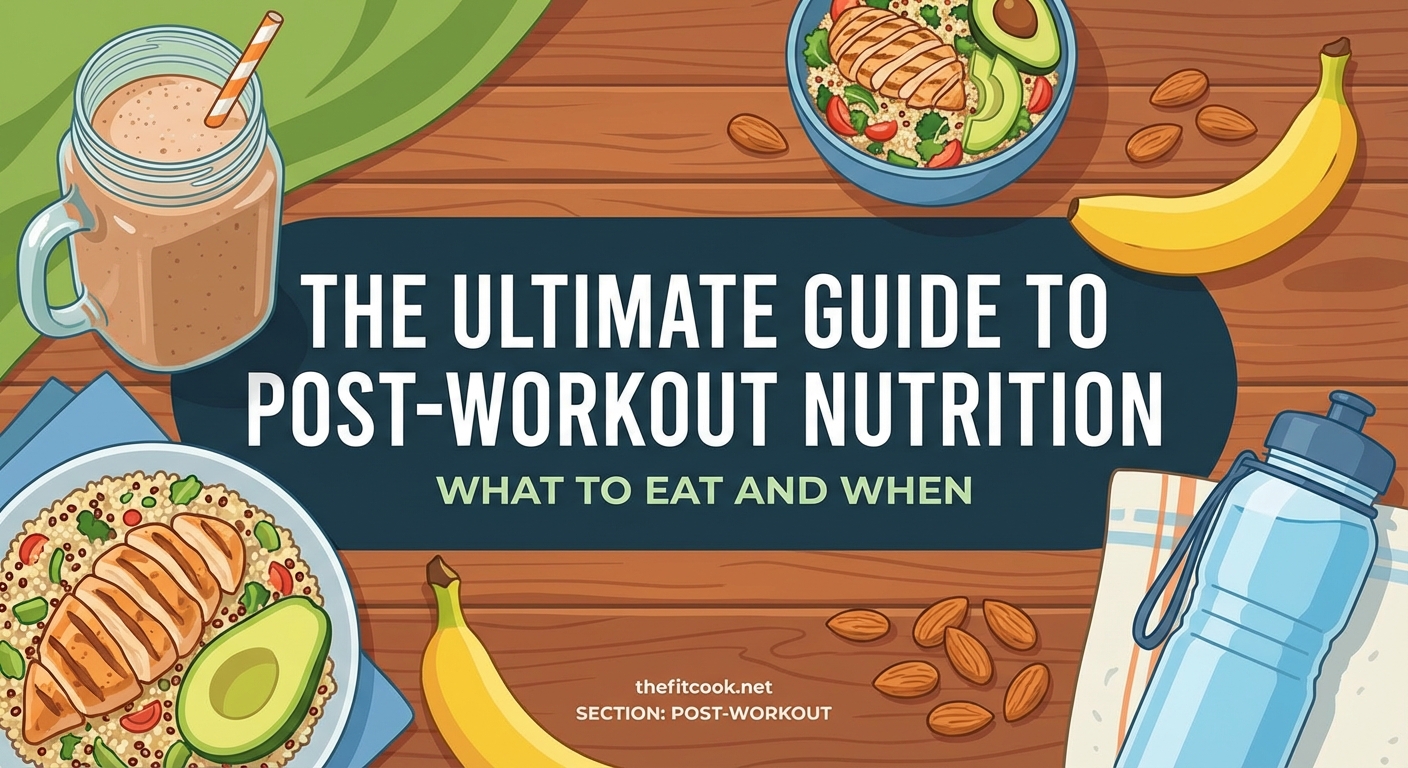
Protein and carbs get all the attention, but vitamins and minerals matter too.
Key micronutrients for recovery:
- Vitamin C: Supports immune function and collagen synthesis (berries, citrus, bell peppers)
- Vitamin D: Supports muscle function and testosterone (fatty fish, fortified foods, sunlight)
- Magnesium: Supports muscle relaxation and sleep (spinach, nuts, whole grains)
- Zinc: Supports immune function and protein synthesis (meat, shellfish, legumes)
- Potassium: Supports muscle function and hydration (bananas, potatoes, spinach)
Eating a variety of colorful vegetables and fruits ensures you’re covering your bases.
Signs your post-workout nutrition is working
You should notice:
- Faster recovery between sessions
- Less muscle soreness lasting into day three
- Consistent energy levels throughout the day
- Strength and performance improving over time
- Better sleep quality
- Hunger that’s manageable, not ravenous
If you’re not seeing these signs, reassess your total daily intake. You might be undereating overall, not just post-workout.
Putting it all together for long-term success

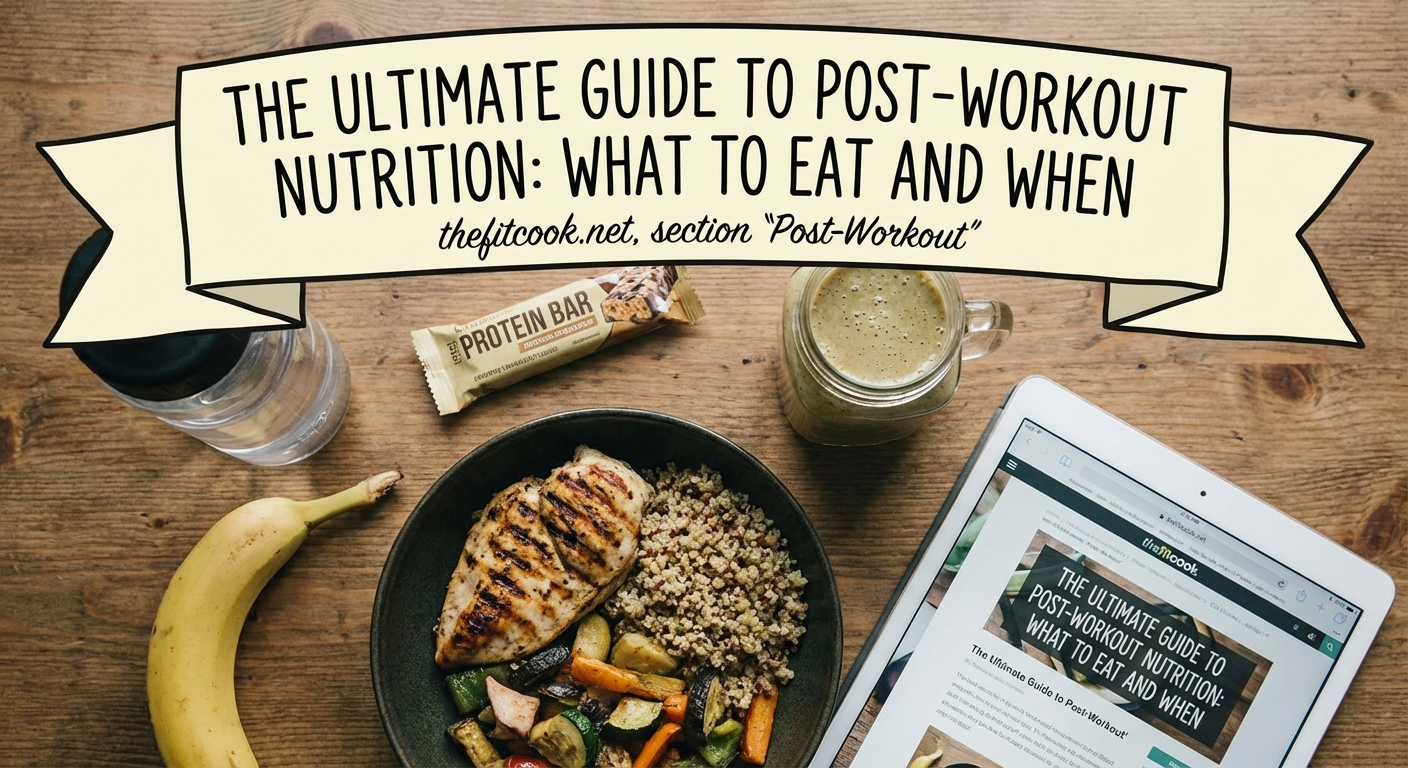
Post workout nutrition isn’t about perfection. It’s about consistency.
You don’t need the fanciest supplements or the most complicated meal plans. You need a simple system you can stick with week after week.
Start here:
- Eat within 60-90 minutes of finishing your workout
- Hit 20-40g protein
- Add 30-60g carbs based on workout intensity
- Drink water
- Track your progress and adjust as needed
If you can do that most days, you’re already ahead of 90% of people in the gym. The rest is just fine-tuning based on your specific goals and preferences.
Your muscles are waiting for the fuel they need to grow stronger. Give them what they’re asking for, and they’ll reward you with the results you’re working so hard to achieve.