How to Calculate Your Macros for Fat Loss and Muscle Gain
You’ve been told to track your macros a hundred times. But no one ever shows you how to actually calculate them yourself. Most people just plug numbers into a calculator and hope for the best. That approach works until your body changes, your goals shift, or you need to adjust mid-plan. Understanding the math behind your macros gives you control over your nutrition instead of blindly following generic recommendations.
Calculating macros involves finding your total daily energy expenditure, setting a calorie target based on your goal, then splitting those calories into protein, fats, and carbohydrates using proven ratios. Protein gets priority for muscle retention, fats support hormones, and carbs fill the remaining calories. This method works for fat loss, muscle gain, or maintenance without relying on automated tools.
What Macros Actually Mean for Your Body
Macros are the three nutrients that provide calories: protein, carbohydrates, and fats.
Protein builds and repairs muscle tissue. Each gram contains 4 calories.
Carbohydrates fuel your workouts and daily activity. Also 4 calories per gram.
Fats regulate hormones and support cell function. These pack 9 calories per gram.
Your body needs all three to function properly. The ratio changes based on whether you want to lose fat, build muscle, or maintain your current weight.
Calories still matter. But hitting specific macro targets ensures those calories support your body composition goals instead of just filling your stomach.
Step One: Calculate Your Basal Metabolic Rate
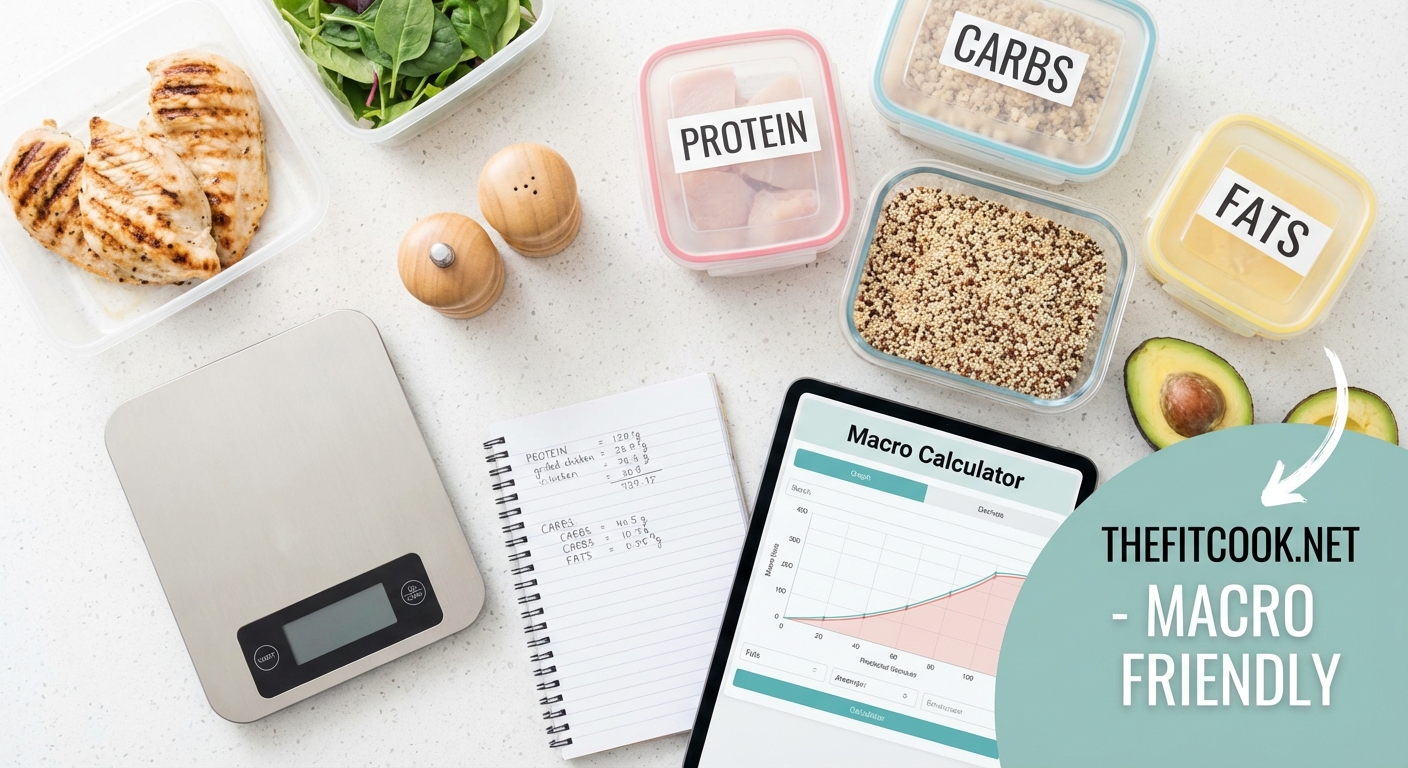
Your BMR is the number of calories your body burns at complete rest. It covers breathing, circulation, and cell production.
The Mifflin-St Jeor equation gives you the most accurate estimate:
For men: (10 × weight in kg) + (6.25 × height in cm) – (5 × age) + 5
For women: (10 × weight in kg) + (6.25 × height in cm) – (5 × age) – 161
Let me show you a real example. A 30-year-old woman weighing 150 pounds (68 kg) and standing 5’6″ (168 cm) tall would calculate:
(10 × 68) + (6.25 × 168) – (5 × 30) – 161 = 680 + 1,050 – 150 – 161 = 1,419 calories
That’s her BMR. The baseline before adding any activity.
Step Two: Factor in Your Activity Level
Your BMR only covers rest. Now multiply it by an activity factor to get your Total Daily Energy Expenditure (TDEE).
Use these multipliers:
- Sedentary (desk job, little exercise): BMR × 1.2
- Lightly active (light exercise 1-3 days/week): BMR × 1.375
- Moderately active (moderate exercise 3-5 days/week): BMR × 1.55
- Very active (hard exercise 6-7 days/week): BMR × 1.725
- Extremely active (physical job + hard training): BMR × 1.9
Most people overestimate their activity level. Be honest here.
Our example woman trains 4 days per week with moderate intensity. That’s moderately active: 1,419 × 1.55 = 2,199 calories.
This is her maintenance number. The calories needed to stay at her current weight.
Step Three: Adjust Calories for Your Goal
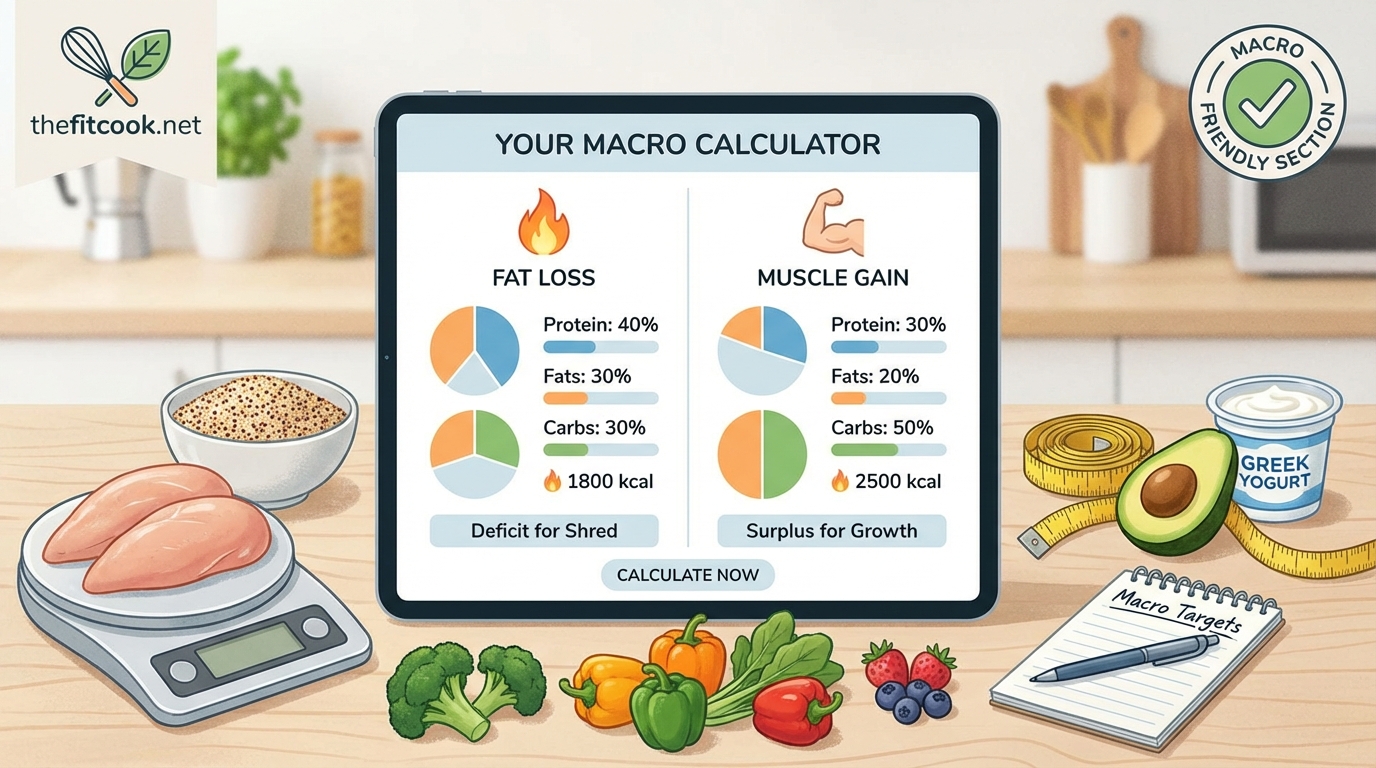
Now you set your target based on what you want to achieve.
For fat loss: Subtract 300-500 calories from your TDEE. Start with 300 if you’re new to dieting or have less than 20 pounds to lose. Go with 500 if you have more weight to lose and want faster results.
For muscle gain: Add 200-300 calories to your TDEE. Smaller surpluses minimize fat gain while supporting muscle growth.
For maintenance: Use your TDEE as calculated.
Our example woman wants fat loss. She subtracts 400 calories: 2,199 – 400 = 1,799 calories per day.
Round to 1,800 for simplicity.
Step Four: Set Your Protein Target First
Protein gets priority because it preserves muscle during fat loss and builds it during a surplus.
Set protein at 0.8 to 1 gram per pound of body weight. Use your goal weight if you have significant fat to lose.
Our 150-pound woman sets protein at 130 grams (splitting the difference for moderate goals).
130 grams × 4 calories per gram = 520 calories from protein.
She has 1,800 total calories, so 1,800 – 520 = 1,280 calories left for fats and carbs.
Protein is the only macro that directly supports muscle tissue. Set it first, make it non-negotiable, then work with what remains for fats and carbs.
Step Five: Calculate Your Fat Minimum
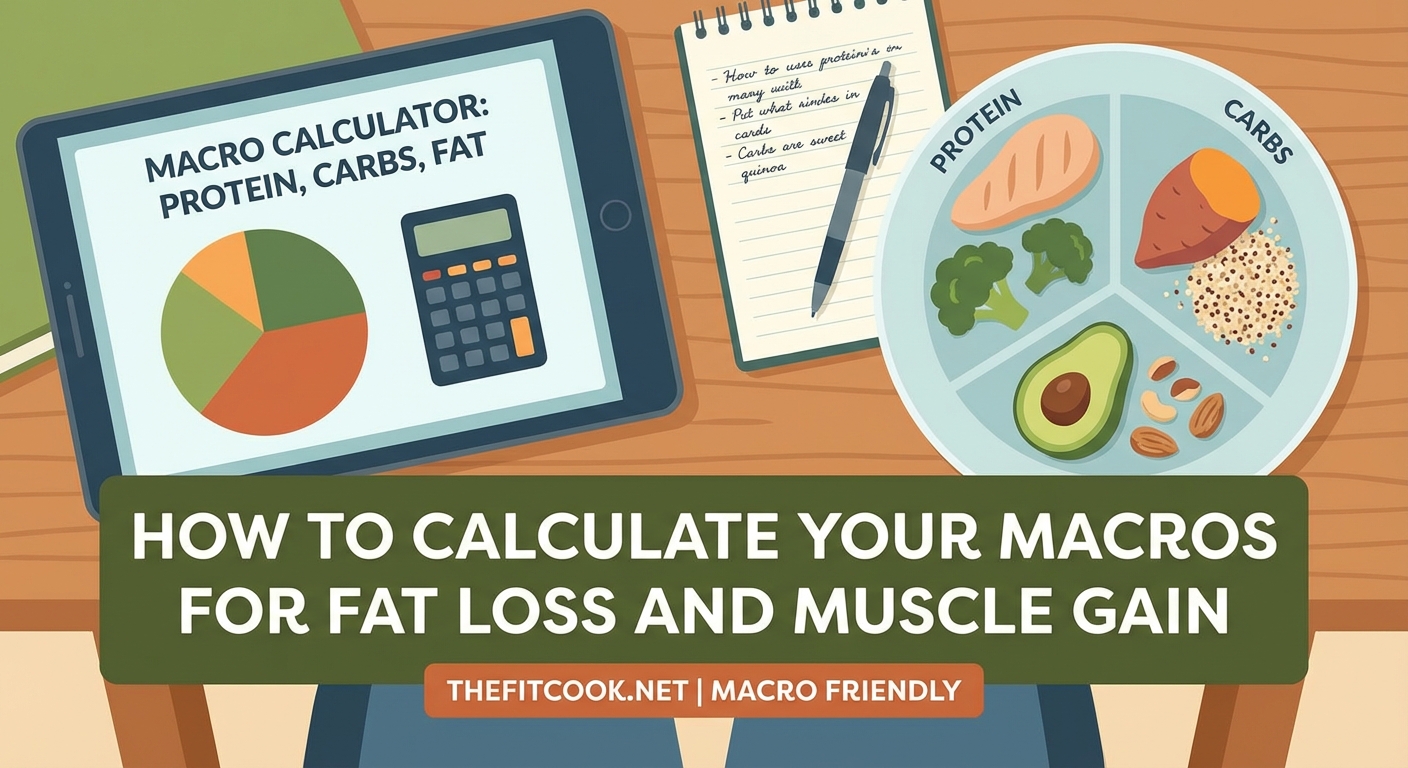
Fats support hormone production, especially testosterone and estrogen. Too little fat tanks your energy and mood.
Set fats at 0.3 to 0.5 grams per pound of body weight. Women should lean toward the higher end.
Our example woman weighs 150 pounds. She sets fats at 0.4 grams per pound: 150 × 0.4 = 60 grams.
60 grams × 9 calories per gram = 540 calories from fat.
Remaining calories: 1,280 – 540 = 740 calories left for carbs.
Step Six: Fill Remaining Calories with Carbs
Carbs are flexible. They fuel performance but aren’t essential like protein and fats.
Take your remaining calories and divide by 4 (since carbs contain 4 calories per gram).
Our example: 740 calories ÷ 4 = 185 grams of carbs.
Her final macros for fat loss:
– Protein: 130g
– Fat: 60g
– Carbs: 185g
– Total calories: 1,800
If she wanted to build muscle instead, she’d add 250 calories to her TDEE (2,199 + 250 = 2,449, round to 2,450). Keep protein and fats the same, add the extra calories as carbs: 250 ÷ 4 = 62 more grams, bringing carbs to 247g total.
Common Macro Splits by Goal
Different goals need different approaches. Here’s how the ratios typically shake out:
| Goal | Protein | Fats | Carbs | Best For |
|---|---|---|---|---|
| Fat Loss | 35-40% | 25-30% | 30-40% | Preserving muscle while dropping weight |
| Muscle Gain | 25-30% | 20-25% | 45-55% | Supporting training volume and recovery |
| Maintenance | 25-30% | 25-30% | 40-50% | Sustaining current physique |
| Low Carb | 30-35% | 50-60% | 10-20% | Fat adaptation or specific preferences |
These percentages are guidelines. Absolute gram targets matter more than ratios.
A 200-pound man needs more protein than a 120-pound woman, even if their percentages match.
Adjusting Macros as You Progress
Your body adapts. What works today might not work in 8 weeks.
Signs you need to adjust:
- Weight hasn’t changed in 2-3 weeks
- Energy crashes during workouts
- Constant hunger that disrupts sleep
- Strength dropping significantly
- Mood swings or irritability
For fat loss plateaus, drop carbs by 25-50 grams or add 2-3 cardio sessions before cutting calories further.
For muscle gain stalls, add 25-50 grams of carbs around training. If weight still doesn’t budge after two weeks, add another 100-150 calories.
Adjust one variable at a time. Wait two weeks. Assess. Repeat.
Tracking Your Macros Without Losing Your Mind
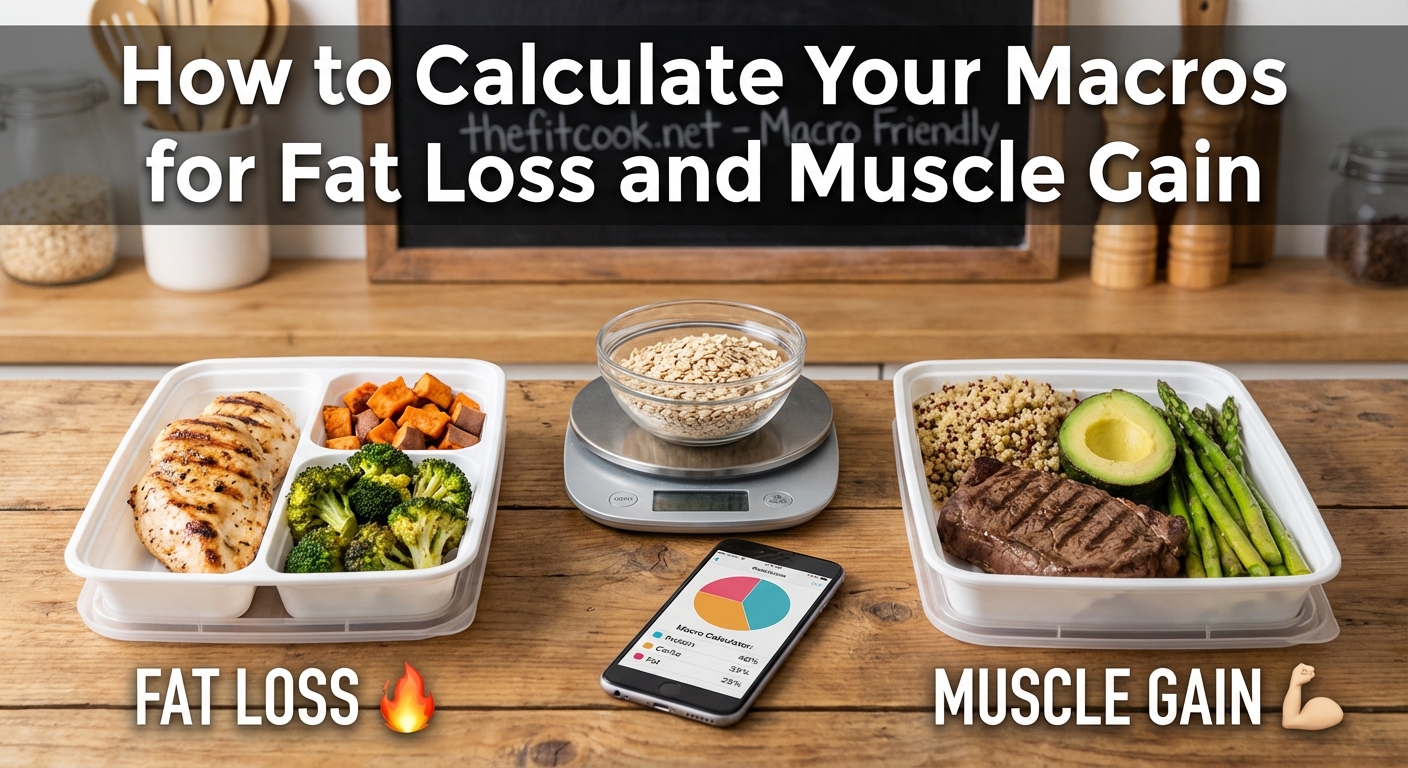
You don’t need to weigh lettuce.
Focus on protein sources first. How to meal prep 150g protein daily without getting bored shows you how to hit targets consistently.
Track these foods precisely:
– Meat, fish, poultry
– Oils, butter, nuts, nut butters
– Rice, pasta, bread, oats
– High-calorie sauces and dressings
Estimate these loosely:
– Non-starchy vegetables
– Herbs and spices
– Black coffee and tea
– Zero-calorie seasonings
A food scale costs $15 and removes all guesswork. Weigh raw whenever possible since cooking changes water content.
Meal prep makes tracking easier. The ultimate macro-friendly freezer meal prep guide for beginners walks through batch cooking meals with known macro counts.
Macro Mistakes That Sabotage Results
Mistake 1: Forgetting cooking oils
That tablespoon of olive oil adds 120 calories. Two tablespoons per day that you don’t track equals 240 calories, or 1,680 per week. That’s half a pound of fat loss you’re missing.
Mistake 2: Using the wrong activity multiplier
Going to the gym doesn’t make you “very active” if you sit at a desk the other 23 hours. Most people fit the lightly active or moderately active categories.
Mistake 3: Eating back exercise calories
Your TDEE already includes exercise. Don’t add more calories because you trained that day unless you’re doing serious endurance work (think 90+ minute sessions).
Mistake 4: Changing macros too often
Give each macro setup at least two weeks. Your body needs time to adapt. Daily weight fluctuations don’t mean your macros are wrong.
Mistake 5: Ignoring protein timing
Total daily protein matters most, but spreading it across 3-4 meals optimizes muscle protein synthesis better than two massive servings. How much protein do you really need after a workout covers the science.
Building Meals Around Your Macro Targets
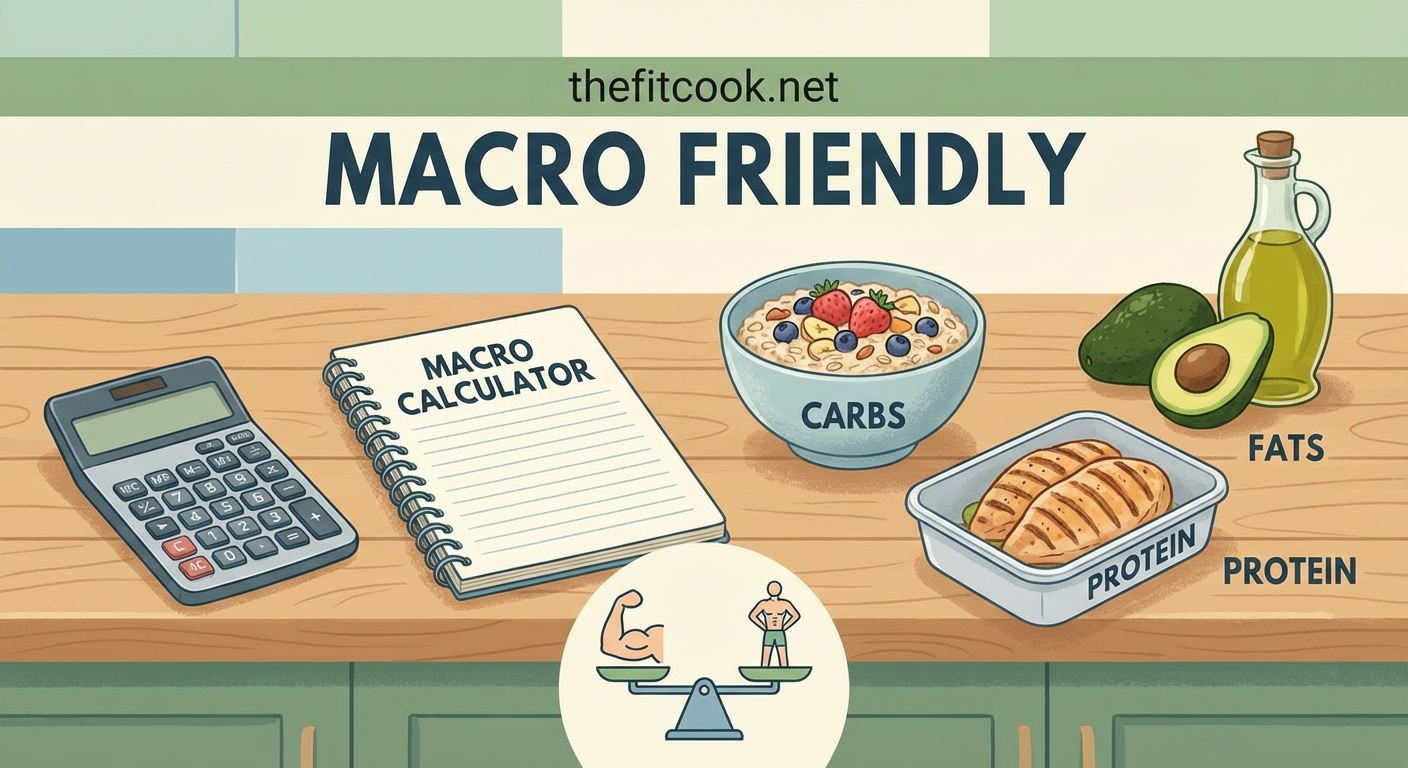
Once you know your numbers, you need to actually eat them.
A balanced plate for fat loss looks like this:
– 1 palm-sized portion of protein (4-6 oz)
– 1 thumb of fat (1 tablespoon oil or small handful nuts)
– 1-2 cupped handfuls of carbs (1/2 to 1 cup cooked)
– Unlimited non-starchy vegetables
For muscle gain, double the carb portion and add a second fat source.
Macro-friendly meal prep: 5 days of perfectly balanced lunches gives you exact recipes with macro breakdowns.
Sample Day of Eating with Calculated Macros
Let me show you what 1,800 calories with 130g protein, 60g fat, and 185g carbs actually looks like:
Breakfast (480 calories):
– 3 whole eggs scrambled (18g protein, 15g fat)
– 1 cup cooked oatmeal (6g protein, 3g fat, 54g carbs)
– 1/2 banana sliced on top (14g carbs)
Lunch (520 calories):
– 5 oz grilled chicken breast (40g protein, 3g fat)
– 1 cup cooked brown rice (5g protein, 2g fat, 45g carbs)
– Steamed broccoli with 1 tsp olive oil (5g fat, 10g carbs)
Snack (280 calories):
– Greek yogurt, non-fat, 1 cup (20g protein, 12g carbs)
– 1 oz almonds (6g protein, 14g fat, 6g carbs)
Dinner (520 calories):
– 6 oz salmon (36g protein, 18g fat)
– 6 oz sweet potato (2g protein, 30g carbs)
– Mixed greens salad with 1 tbsp balsamic vinegar (8g carbs)
Total: 127g protein, 60g fat, 179g carbs, 1,800 calories
Close enough. Perfect precision isn’t required.
When to Recalculate Your Macros
Recalculate every 10-15 pounds of weight change. Your BMR drops as you lose weight and increases as you gain.
Also recalculate if:
– Your activity level changes significantly (new job, training program, injury)
– You’ve been at the same macros for 12+ weeks
– Your goal switches from fat loss to muscle gain or vice versa
The formulas stay the same. Just plug in your new numbers.
Macros for Special Situations
Vegetarian or vegan: Protein becomes harder but not impossible. Prioritize tempeh, seitan, tofu, legumes, and protein powder. You might need 10-20% more total protein since plant sources have lower bioavailability.
Over 50: Keep protein at the higher end (1g per pound) to combat age-related muscle loss. Consider slightly higher fats for hormone support.
Endurance athletes: Carbs should be 50-60% of calories to fuel long training sessions. Protein can drop slightly to 0.6-0.7g per pound.
Very overweight: Use your goal weight or lean body mass estimate for protein calculations, not current body weight. Otherwise protein gets unnecessarily high.
The Math Behind Flexible Dieting
Understanding these calculations lets you practice flexible dieting. You can fit any food into your macros as long as the daily totals align.
Want pizza? Fine. One slice has roughly 12g protein, 12g fat, and 35g carbs. Build the rest of your day around it.
The ultimate guide to flexible dieting with macro-counted recipes shows you how to enjoy your favorite foods without derailing progress.
The 80/20 approach works well here. Get 80% of your calories from whole, nutrient-dense foods. Use the remaining 20% for treats that keep you sane.
Putting Your Numbers to Work
You now have the formulas, the examples, and the adjustments needed to calculate macros for any goal.
Start with your BMR calculation. Be honest about your activity level. Set your calorie target. Lock in protein first, establish your fat minimum, then fill the rest with carbs.
Track for two weeks without changing anything. Assess your progress. Adjust one variable if needed.
The beauty of understanding the math is that you’re never stuck wondering what to do next. Your body gives you feedback. You respond with calculated adjustments. No guessing, no generic meal plans that don’t fit your life.
Grab a calculator and run your numbers right now. Then build a clean eating meal plan that actually fits your macros so you know exactly what to eat tomorrow.