5 Smart Meal Prep Strategies to Cut Your Cooking Time in Half
You already know the feeling. You get home from work, the kids need help with homework, and you stare into the fridge hoping something edible appears. Ordering takeout feels like the only option. But you want to eat clean, hit your protein goals, and stay on track with your fitness. The problem isn’t your motivation. It’s your system.
Most people think meal prep means spending an entire Sunday chopping vegetables and cooking five identical chicken breasts. That is one version, but it is not the only version. And for many busy professionals and parents, that rigid approach leads to burnout and wasted food. The real goal is finding meal prep strategies to save time without sacrificing flavor or variety.
Let’s fix that today.
Meal prep does not have to eat your entire Sunday. By using smart batch cooking, versatile base ingredients, and strategic freezer storage, you can cut your weekly cooking time by more than half. These five strategies help you eat healthy, hit your macros, and reclaim hours of your week without living off bland repetition.
Start with a strategy, not a recipe
The biggest mistake new meal preppers make is choosing recipes first. They find a beautiful picture of lemon herb salmon with roasted asparagus and decide that is their week. But that single recipe requires specific ingredients, precise timing, and often leaves you with leftover half-used items that spoil.
Instead, start by asking three questions.
How many meals do you actually need to prep? Some people need five lunches. Others need three dinners and two breakfasts. Be honest about your schedule. If you know Thursday is always pizza night with coworkers, do not pack a lunch for that day.
What proteins and vegetables are on sale this week? Building your plan around what is affordable saves money and reduces decision fatigue.
Which cooking methods can you combine? Roasting vegetables at 400 degrees while chicken bakes on the same sheet pan is efficient. Using the stovetop for one thing and the oven for another at the same time doubles your output.
One of the most effective meal prep strategies to save time is choosing a single cooking method for the whole session. Sheet pan meals, slow cooker batches, and Instant Pot recipes all let you set and forget while you do other things. If you love one-pan cooking, check out these one-pan meal prep recipes that actually taste good reheated.
Cook once, eat three ways
Here is where the time savings really add up. Instead of cooking three separate meals, cook one large batch of a versatile base ingredient and turn it into different dishes throughout the week.
Let me show you how this works with a practical example.
-
Pick your base protein. Grill or bake 2 to 3 pounds of boneless skinless chicken thighs. Season them simply with salt, pepper, garlic powder, and smoked paprika. Do not go heavy on any one flavor profile yet. Keep it neutral.
-
Portion into three containers after cooling. Do not shred or chop everything yet. Leave some pieces whole, some sliced, and some shredded. Different textures work better for different meals.
-
Create three distinct meals from the same chicken.
- Meal one: Sliced chicken over a bed of mixed greens with cherry tomatoes, cucumber, and a light balsamic vinaigrette.
- Meal two: Shredded chicken tossed with barbecue sauce, served on a sweet potato with steamed broccoli.
- Meal three: Diced chicken stirred into a quick stir fry with frozen vegetables and soy sauce.
You just made three completely different tasting meals from one cooking session. No extra time spent at the stove. This approach works for ground turkey, lean beef, tofu, and even hard-boiled eggs. For more inspiration on using versatile proteins, take a look at these high-protein ground turkey recipes that work beautifully for batch cooking.
Use staggered cooking to avoid bottlenecks
Most people try to do everything at once. They chop all the vegetables, then cook all the grains, then cook all the proteins. But the oven only holds so many sheet pans, and the stovetop has only four burners. You end up waiting around, which defeats the purpose.
Staggered cooking solves this. Instead of doing everything simultaneously, you layer tasks so that nothing sits idle.
Here is a bulleted breakdown of how a staggered session looks for a Sunday afternoon:
- Start the slow cooker or Instant Pot first. These take the longest but require the least hands-on attention.
- While the slow cooker runs, prep your vegetables. Wash, chop, and portion them into containers.
- Preheat the oven when the slow cooker has about 20 minutes left. Roast sheet pan vegetables and any additional protein during that window.
- Use the stovetop burners last for things that cook quickly like scrambled eggs, quinoa, or sautéed greens.
- While everything finishes cooking, wash your dishes and wipe down the counters.
This system cuts your total active kitchen time nearly in half. You are never standing around watching a pot boil. You are always moving to the next logical step. If you want a full walkthrough of this method, read the sunday meal prep blueprint: 3 hours to a week of clean eating success.
Match your prep method to your schedule
Not every week looks the same. Some weeks you have two hours on Sunday. Other weeks you have 20 minutes on Wednesday night. The best meal prep strategies to save time adapt to your actual life instead of demanding that you adapt to them.
The table below breaks down three common schedule types and the prep method that fits best.
| Your Time Available | Best Prep Method | What That Looks Like |
|---|---|---|
| 90 to 120 minutes on Sunday | Full batch cooking | Cook all proteins, grains, and vegetables. Portion into containers for the whole week. |
| 30 minutes twice per week | Ingredient prep only | Wash and chop vegetables, marinate proteins, cook grains. Assemble meals the night before. |
| 15 minutes daily | Grab and go components | Keep pre-portioned cooked chicken, bagged salad, microwavable rice pouches, and pre-cut veggies ready to combine. |
Many people feel like they failed if they cannot do the full Sunday session. That is a trap. Ingredient prep alone still saves massive time during the week. Even just chopping onions and bell peppers on Sunday means Tuesday’s stir fry comes together in 10 minutes instead of 25.
If you struggle with food going bad before you eat it, you might be prepping too far ahead. The why your meal prep goes bad after 3 days (and how to fix it) guide explains exactly how to store each food type for maximum freshness.
Freeze strategically, not desperately
The freezer is the most underused tool in most kitchens. People toss leftover chili in a container and hope for the best. But strategic freezing means freezing in the format you will actually use.
Portion soups, stews, and chilis into single-serving containers. Label them with the name and date. Stack them flat so they freeze and thaw faster.
Freeze components, not just complete meals. Cooked rice freezes beautifully. So do roasted vegetables, shredded chicken, and meatballs. When you have a busy night, grab a bag of rice, a bag of vegetables, and a bag of meatballs. Reheat and eat in under 10 minutes. No chopping, no cooking.
Here are a few things that freeze exceptionally well for meal prep:
- Cooked quinoa and brown rice
- Portioned protein pancakes
- Homemade breakfast burritos wrapped in foil
- Marinara sauce and other tomato-based sauces
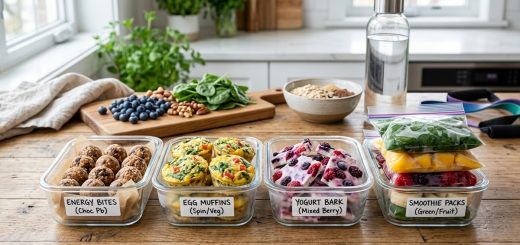
- Pre-portioned smoothie packs (frozen fruit plus spinach in a bag)
One caution: do not freeze meals that contain dairy or mayonnaise-based sauces. They separate and get grainy when thawed. If you want creamy elements, add them fresh after reheating.
For a deeper dive into this topic, the ultimate macro-friendly freezer meal prep guide for beginners shows you exactly how to stock your freezer so you never face a hungry emergency again.
“The difference between meal prep that works and meal prep that frustrates is not the recipes. It is the system. When you build a system around your actual schedule instead of an ideal version of yourself, you stop quitting after two weeks.”
This advice comes directly from working with hundreds of clients who transformed their kitchens by focusing on process over perfection.
Rethink your kitchen tools for speed
You do not need a professional kitchen. But the right tools cut your prep time significantly. A few smart investments pay for themselves in time saved within the first month.
A good chef’s knife changes everything. Dull knives make chopping slow and dangerous. A sharp 8-inch chef’s knife glides through onions, peppers, and sweet potatoes in seconds. Keep it honed and you will notice the difference immediately.
Sheet pans with raised edges let you roast large quantities at once. Line them with parchment paper for nearly zero cleanup. No scrubbing baked-on food.
Glass containers with snap-lock lids are worth the upgrade over plastic. They do not stain, they do not absorb odors, and they go from freezer to microwave without issues. Seeing your food clearly also reminds you to eat it instead of letting it disappear behind opaque lids.
A digital kitchen scale speeds up portioning dramatically. Instead of measuring cups and spoons, just place your container on the scale and add ingredients until you hit the right gram weight. Faster, more accurate, and fewer dishes to wash.
If you want a full list of gear that makes meal prep easier, read about the best containers for meal prep that keep food fresh for 7 days.
Make your meal prep work for you
Most people overcomplicate this process. They try to prep seven days of every single meal and burn out by Wednesday. Then they swear off meal prep entirely until the next burst of motivation hits.
The sustainable approach is smaller, more frequent, and less rigid. Prep three days of lunches and two days of dinners. Leave one or two nights for eating leftovers or having a simple meal out. That flexibility keeps you consistent without making you feel like a meal prep prisoner.
You do not need to be perfect. You just need a system that moves you forward more often than it lets you fall back. Use these meal prep strategies to save time this week. Pick one strategy and try it. Not all five at once. Just one.
When that one feels natural, add another. Before you know it, you will have reclaimed hours of your week, stopped worrying about what to eat, and started hitting your nutrition goals without the stress.
You have enough to manage already. Your meals should not be another source of pressure. Let the prep work for you.