7 High-Protein Bowl Recipes That Support Muscle Recovery and Taste Amazing
You just finished a brutal leg day. Your quads are shaking, your shirt is soaked, and your stomach is growling like a bear waking up from hibernation. The last thing you want is a bland chicken breast with steamed broccoli. You want something that tastes amazing, fills you up, and actually helps repair all that torn muscle tissue. That is where high protein bowl recipes become your secret weapon.
A well built bowl is a complete meal in one dish. It gives you the protein your muscles crave, the carbs to refill your energy stores, and the veggies that fight inflammation. Plus, it is infinitely customizable. Whether you meal prep on Sunday or throw something together in 15 minutes, a high protein bowl can be your go to recovery tool.
High protein bowl recipes are one of the most effective ways to support muscle recovery while keeping your taste buds happy. The secret lies in balancing lean protein, complex carbs, healthy fats, and colorful veggies. With the right prep techniques and a few smart ingredient swaps, you can build bowls that are macro friendly, meal prep ready, and genuinely delicious.
Why High Protein Bowls Are a Recovery Game Changer
Protein is the building block of muscle repair. After a workout, your body needs amino acids to rebuild the micro tears you created during training. Eating a protein rich meal within a couple of hours can significantly improve recovery and reduce soreness. Bowls make this easy because you can pack a large portion of protein into one dish without feeling like you are force feeding yourself.
“Your post workout meal should contain at least 25 to 40 grams of high quality protein, ideally paired with carbs to spike insulin and shuttle those amino acids into muscle cells.” — Brad Schoenfeld, PhD, muscle hypertrophy researcher
Beyond protein, bowls allow you to include anti inflammatory ingredients like leafy greens, turmeric, ginger, and healthy fats from avocado or olive oil. This combination reduces oxidative stress and speeds up healing. When you build a bowl correctly, you get the trifecta of recovery: protein for repair, carbs for glycogen, and micronutrients for immunity.
The Five Essential Components of a High Protein Bowl
Before we dive into specific recipes, you need to know the structure. Every great bowl follows a simple formula:
- Protein Base: Choose one or two sources (chicken, turkey, fish, eggs, tofu, tempeh, Greek yogurt, cottage cheese, or legume based protein).
- Complex Carbs: Sweet potatoes, brown rice, quinoa, farro, black beans, or lentils.
- Colorful Vegetables: Spinach, kale, bell peppers, broccoli, shredded carrots, roasted zucchini.
- Healthy Fat: Avocado slices, nuts, seeds, tahini dressing, or olive oil.
- Flavor Booster: A sauce, spice blend, or pickled element that makes you actually want to eat it.
If you are new to building macro balanced meals, check out our 5-Day Muscle Building Meal Prep on a Budget for a full shopping list and portion guide.
How to Build a High Protein Bowl in 4 Simple Steps
Follow this numbered process to create a bowl that hits your recovery goals and tastes like something you would order at a trendy cafe.
-
Cook your protein for the week. Grill, bake, or pressure cook 2 to 3 pounds of chicken breast, ground turkey, or firm tofu on Sunday. Store it in airtight containers. When you are ready to eat, you just reheat and assemble.
-
Prep your grains and starchy veggies. Make a big batch of quinoa, brown rice, or roasted sweet potatoes. These hold up well in the fridge for 4 to 5 days.
-
Wash and chop raw veggies. Keep a mix of sturdy greens like kale or romaine, plus crunchy options like bell peppers and shredded cabbage. They stay fresh longer if you store them dry with a paper towel.
-
Make a sauce that ties everything together. A simple tahini lemon dressing, a smoky chipotle yogurt sauce, or a peanut ginger sauce can transform a bowl from boring to crave worthy.
Common Mistakes That Sabotage Your High Protein Bowls
Even experienced meal preppers make errors that reduce protein content or kill flavor. Here is a table of frequent pitfalls and how to avoid them.
| Mistake | Why It Hurts | How to Fix It |
|---|---|---|
| Using only one protein source | Limits amino acid diversity and can get boring | Combine animal and plant proteins, like chicken + chickpeas or eggs + lentils |
| Skipping the sauce | Dry bowls feel like punishment | Whip up a simple yogurt herb sauce or vinaigrette; store it separately to prevent sogginess |
| Under seasoning the protein | Bland food leads to takeout cravings | Marinate your protein for at least 30 minutes with salt, acid, and spices |
| Adding too much fat from dressings | Calories skyrocket without adding much protein | Use dressings sparingly or base them on Greek yogurt / cottage cheese |
| Letting veggies get soggy | Cold, wet greens ruin texture | Store wet ingredients (tomatoes, cucumbers) separately and add just before eating |
Ingredient Swaps to Boost Protein Without Extra Cooking
Sometimes you want to add more protein to an existing bowl without firing up the stove. Consider these simple additions:
- Greek yogurt instead of sour cream or mayo based dressings.
- Nutritional yeast sprinkled on top for a cheesy flavor plus B vitamins.
- Hemp seeds or pumpkin seeds for a crunchy protein punch.
- Cottage cheese blended into a smooth sauce or dolloped on the bowl.
- Edamame or black beans for a plant based protein lift.
If you want more ideas for adding protein to meals, read our guide on 30 High Protein Snacks That Actually Taste Like Treats. Many of those concepts translate directly into bowl toppings.
Three High Protein Bowl Recipes to Try This Week
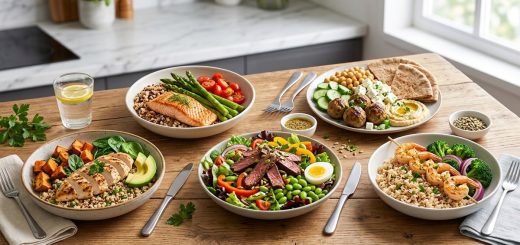
These combinations are designed to deliver 35 to 50 grams of protein per serving and support recovery with real flavor.
1. Southwest Chicken and Sweet Potato Bowl
- Protein: 6 oz grilled chicken breast (cooked with chili powder, cumin, garlic)
- Carbs: 1 cup roasted sweet potato cubes
- Veggies: Black beans, corn, diced bell pepper, romaine
- Fat: Half an avocado, cilantro lime dressing
- Sauce: Smoky yogurt sauce (Greek yogurt + lime + smoked paprika)
2. Mediterranean Salmon and Farro Bowl
- Protein: 4 oz baked salmon (seasoned with lemon and dill)
- Carbs: 1 cup cooked farro or quinoa
- Veggies: Chopped cucumber, cherry tomatoes, red onion, kalamata olives
- Fat: Feta cheese, drizzle of olive oil
- Sauce: Tzatziki (Greek yogurt, cucumber, garlic, dill)
3. Tofu and Peanut Tempeh Power Bowl
- Protein: 4 oz baked tofu + 4 oz tempeh (marinated in soy sauce and ginger)
- Carbs: 1 cup brown rice
- Veggies: Steamed broccoli, shredded carrot, edamame
- Fat: Crushed peanuts, sesame seeds
- Sauce: Peanut ginger dressing (peanut butter, rice vinegar, ginger, garlic, water)
For more prepped versions of these ideas, take a look at our Sweet Potato Power Bowls: 7 Post-Workout Bowl Recipes to Refuel Right for additional inspiration.
How to Keep Your Bowls from Going Bad After Three Days
One of the biggest frustrations with meal prep bowls is that they turn into a sad, soggy mess by Thursday. Use these bullet point strategies to extend freshness:
- Store wet and dry components separately. Salad greens stay crisp for up to 5 days if you keep them in a container with a paper towel.
- Keep sauces in a small jar and add only when you are about to eat.
- Reheat only the protein and grains; add cold veggies and sauce after reheating.
- Use sturdy greens like kale or shredded Brussels sprouts that do not wilt as fast as spinach.
- If you must pre assemble, layer ingredients with the protein on the bottom, grains in the middle, and greens on top, so moisture does not soak the greens.
If you are serious about weekly meal prep, the Sunday Meal Prep Blueprint will walk you through a complete 3 hour system to prep everything you need.
Why Your High Protein Bowl Needs Post Workout Carbs
Many gym goers focus only on protein and forget about carbohydrates. That is a mistake. After a tough session, your glycogen stores are depleted. Carbs help replenish them and also stimulate insulin, which drives amino acids into muscle tissue for repair. Without enough carbs, you may feel sluggish and recover slower.
Aim for a ratio of roughly 2:1 carbs to protein after a workout. That means if you eat 40 grams of protein, include about 80 grams of carbs from sources like sweet potatoes, brown rice, quinoa, or oats. This combination speeds up recovery and restores your energy for the next session.
For a deeper look at timing and portion sizes, read Should You Eat Carbs After a Workout? Here’s What Science Says.
Your Turn to Build a Better Bowl
High protein bowl recipes do not have to be complicated or boring. Once you understand the basic formula, you can swap ingredients based on what you have in your fridge, your macro goals, and your taste preferences. The key is to prep ahead, season generously, and keep your textures interesting by separating wet and dry components.
Start this week by picking one recipe from above. Cook a batch of protein, a batch of grains, and chop your veggies on Sunday. Assemble each day fresh, and notice how much better your recovery feels by the end of the week. Your muscles will thank you, and your taste buds will never complain about a dry chicken breast again.
If you want more guidance on designing your own macros for recovery, check out How to Calculate Your Macros for Fat Loss and Muscle Gain. It pairs perfectly with these bowl building strategies.