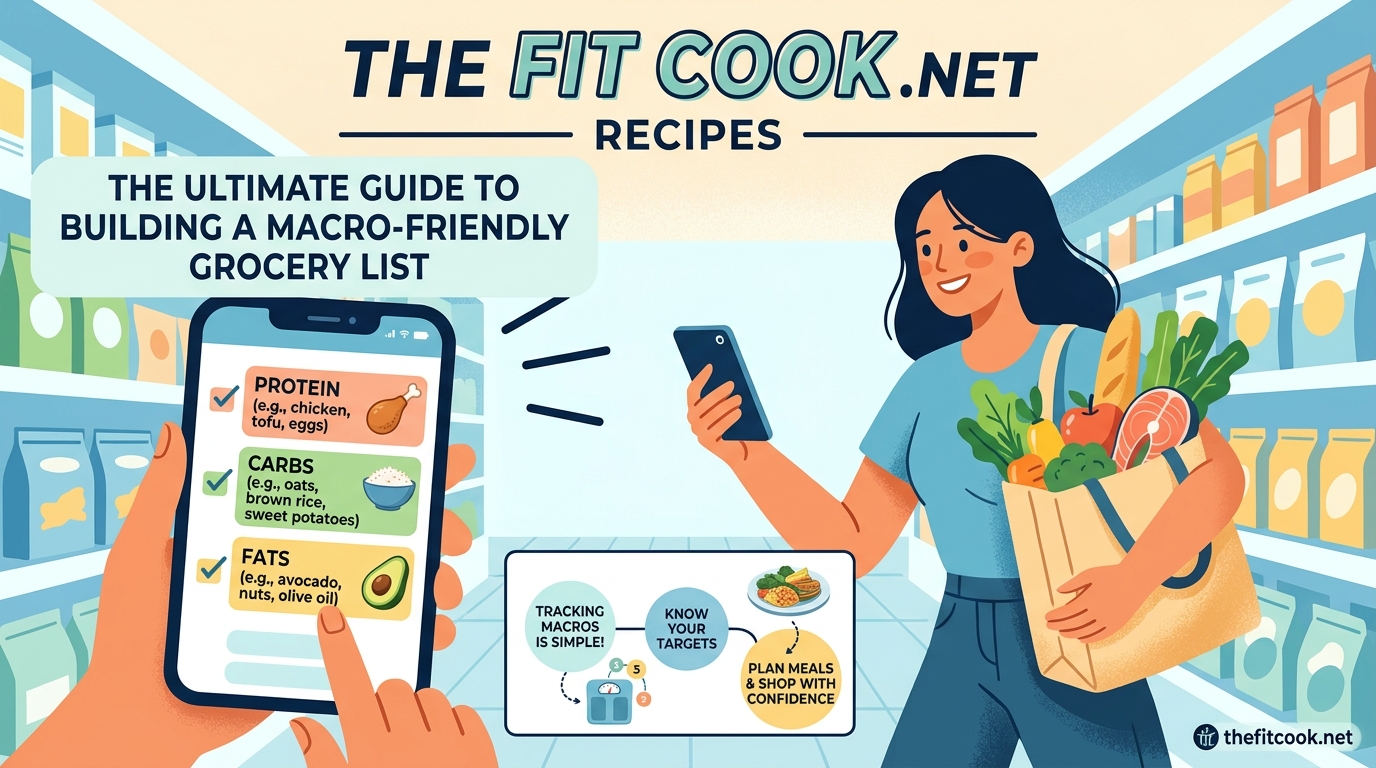
The Ultimate Guide to Building a Macro-Friendly Grocery List
Walking into the grocery store without a plan when you’re tracking macros is like going to the gym without knowing what muscle group you’re training. You end up wandering aimlessly, grabbing random items that look “healthy,” and somehow still coming home without the ingredients you actually need to hit your numbers. I’ve been there countless times, standing in the produce section with my phone calculator out, trying to figure out if the sweet potatoes I’m holding will fit into tomorrow’s carb budget.
The truth is, building a macro friendly grocery list isn’t about memorizing complicated nutrition facts or spending hours analyzing food labels. It’s about understanding which foods give you the most nutritional bang for your buck in each macronutrient category and having a system that makes shopping efficient and stress-free. Whether you’re meal prepping for muscle gain, cutting for a competition, or simply trying to eat healthier while staying within your macro targets, the foods you choose at the grocery store determine your success for the entire week.
This guide will walk you through exactly how to build a comprehensive macro friendly grocery list that takes the guesswork out of shopping. You’ll learn which protein sources give you the most grams per dollar, which carbs fuel your workouts best, and which healthy fats keep you satisfied without blowing your calorie budget. By the end, you’ll have a customizable shopping framework that makes hitting your macros as simple as checking items off a list.
Your Macro-Friendly Shopping Framework
Before we dive into specific foods, let’s establish how to use this guide effectively.
Prep Time: 15 minutes | Shopping Time: 45-60 minutes | Frequency: Weekly | Serves: Your individual macro needs
Planning Your List
What You’ll Need:
– Your daily macro targets (grams of protein, carbs, and fats)
– Number of days you’re shopping for (typically 5-7 days)
– Calculator or macro tracking app
– Reusable shopping bags
– Budget amount allocated for groceries
How to Build Your List
- Calculate your total weekly macro needs by multiplying your daily targets by the number of days you’re shopping for.
- Divide your protein needs across 2-3 main protein sources to prevent food boredom.
- Select 3-4 carbohydrate sources that match your energy needs and meal timing preferences.
- Choose 2-3 primary fat sources, keeping in mind many protein sources also contain fats.
- Add 5-7 different vegetables for micronutrients, fiber, and meal volume without excessive calories.
- Include condiments, seasonings, and zero-calorie flavor enhancers to make meals enjoyable.
- Review your list against your weekly meal plan if you have one, or ensure you have ingredients for at least 3-4 go-to macro-friendly meals.
The Complete Macro-Friendly Grocery List
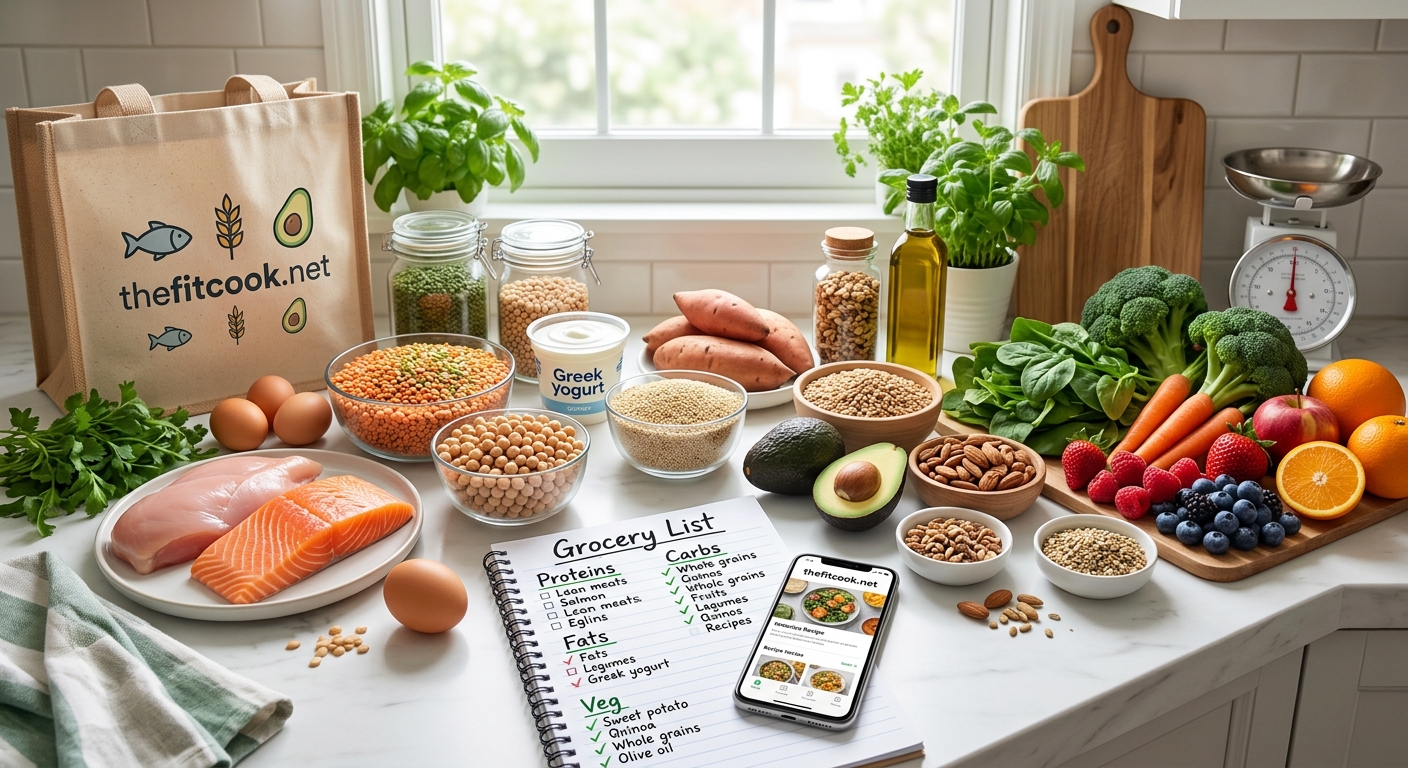
High-Protein Foods (Lean Options)
Poultry:
– Chicken breast, boneless skinless: 31g protein per 4 oz (113g), 1g fat, 0g carbs
– Turkey breast, ground 93/7: 20g protein per 4 oz (113g), 8g fat, 0g carbs
– Chicken thighs, boneless skinless: 26g protein per 4 oz (113g), 7g fat, 0g carbs
Fish & Seafood:
– Tilapia fillets: 23g protein per 4 oz (113g), 3g fat, 0g carbs
– Salmon, Atlantic: 25g protein per 4 oz (113g), 13g fat, 0g carbs
– Canned tuna in water: 20g protein per 3 oz (85g), 1g fat, 0g carbs
– Shrimp, raw: 24g protein per 4 oz (113g), 1g fat, 0g carbs
Beef & Pork:
– Ground beef, 93/7 lean: 23g protein per 4 oz (113g), 8g fat, 0g carbs
– Sirloin steak, trimmed: 26g protein per 4 oz (113g), 7g fat, 0g carbs
– Pork tenderloin: 26g protein per 4 oz (113g), 4g fat, 0g carbs
Dairy & Eggs:
– Greek yogurt, nonfat plain: 17g protein per 6 oz (170g), 0g fat, 6g carbs
– Cottage cheese, low-fat: 14g protein per 1/2 cup (113g), 2.5g fat, 5g carbs
– Egg whites, liquid: 25g protein per 1/2 cup (122g), 0g fat, 1g carbs
– Whole eggs, large: 6g protein per egg (50g), 5g fat, 0g carbs
Plant-Based Proteins:
– Tofu, extra firm: 10g protein per 3 oz (85g), 5g fat, 2g carbs
– Edamame, shelled: 9g protein per 1/2 cup (75g), 4g fat, 7g carbs
– Tempeh: 15g protein per 3 oz (85g), 9g fat, 9g carbs
Complex Carbohydrates
Grains & Starches:
– White rice, uncooked: 0g protein per 1/4 cup (50g), 0g fat, 41g carbs
– Brown rice, uncooked: 2g protein per 1/4 cup (48g), 1g fat, 35g carbs
– Quinoa, uncooked: 6g protein per 1/4 cup (43g), 2.5g fat, 30g carbs
– Oats, old-fashioned: 5g protein per 1/2 cup (40g), 3g fat, 27g carbs
– Sweet potatoes, medium: 2g protein per 5 oz (142g), 0g fat, 24g carbs
– White potatoes, medium: 3g protein per 5 oz (142g), 0g fat, 26g carbs
– Whole wheat pasta, uncooked: 7g protein per 2 oz (56g), 1.5g fat, 40g carbs
Breads & Wraps:
– Ezekiel bread: 5g protein per slice (34g), 0.5g fat, 15g carbs
– Whole wheat tortillas, 8-inch: 4g protein per tortilla (46g), 3g fat, 24g carbs
– Rice cakes, plain: 1g protein per cake (9g), 0g fat, 7g carbs
Legumes:
– Black beans, canned: 8g protein per 1/2 cup (130g), 0.5g fat, 20g carbs
– Chickpeas, canned: 7g protein per 1/2 cup (120g), 2g fat, 22g carbs
– Lentils, dry: 12g protein per 1/4 cup (48g), 0.5g fat, 30g carbs
Healthy Fats
Oils & Cooking Fats:
– Extra virgin olive oil: 0g protein per 1 tbsp (14g), 14g fat, 0g carbs
– Avocado oil: 0g protein per 1 tbsp (14g), 14g fat, 0g carbs
– Coconut oil: 0g protein per 1 tbsp (14g), 14g fat, 0g carbs
Nuts & Seeds:
– Almonds, raw: 6g protein per 1 oz (28g), 14g fat, 6g carbs
– Peanut butter, natural: 8g protein per 2 tbsp (32g), 16g fat, 7g carbs
– Almond butter: 7g protein per 2 tbsp (32g), 18g fat, 6g carbs
– Chia seeds: 5g protein per 2 tbsp (24g), 9g fat, 12g carbs
– Flaxseed, ground: 3g protein per 2 tbsp (14g), 6g fat, 4g carbs
Whole Food Fats:
– Avocado, medium: 3g protein per half (100g), 15g fat, 9g carbs
– Whole eggs: 6g protein per egg (50g), 5g fat, 0g carbs
Non-Starchy Vegetables
Leafy Greens:
– Spinach, fresh: 1g protein per 1 cup (30g), 0g fat, 1g carbs
– Kale, fresh: 1g protein per 1 cup (21g), 0g fat, 1g carbs
– Mixed salad greens: 0.5g protein per 2 cups (56g), 0g fat, 2g carbs
Cruciferous Vegetables:
– Broccoli, fresh: 2g protein per 1 cup (91g), 0g fat, 6g carbs
– Cauliflower, fresh: 2g protein per 1 cup (107g), 0g fat, 5g carbs
– Brussels sprouts: 3g protein per 1 cup (88g), 0g fat, 8g carbs
Other Vegetables:
– Bell peppers, any color: 1g protein per 1 cup (149g), 0g fat, 9g carbs
– Zucchini: 1g protein per 1 cup (124g), 0g fat, 4g carbs
– Asparagus: 3g protein per 1 cup (134g), 0g fat, 5g carbs
– Green beans: 2g protein per 1 cup (100g), 0g fat, 7g carbs
– Tomatoes, Roma: 1g protein per 1 cup (149g), 0g fat, 5g carbs
– Cucumbers: 1g protein per 1 cup (104g), 0g fat, 4g carbs
Fruits (Strategic Carb Sources)
Lower-Sugar Options:
– Berries, mixed: 1g protein per 1 cup (144g), 0.5g fat, 21g carbs
– Strawberries: 1g protein per 1 cup (152g), 0.5g fat, 12g carbs
– Blueberries: 1g protein per 1 cup (148g), 0.5g fat, 21g carbs
Higher-Carb Fruits:
– Bananas, medium: 1g protein per banana (118g), 0g fat, 27g carbs
– Apples, medium: 0g protein per apple (182g), 0g fat, 25g carbs
Condiments & Flavor Enhancers
Zero to Low-Calorie:
– Hot sauce (various brands): 0g protein per 1 tsp (5g), 0g fat, 0g carbs
– Mustard, yellow: 0g protein per 1 tsp (5g), 0g fat, 0g carbs
– Salsa, fresh: 0g protein per 2 tbsp (32g), 0g fat, 2g carbs
– Soy sauce, low sodium: 1g protein per 1 tbsp (16g), 0g fat, 1g carbs
– Apple cider vinegar: 0g protein per 1 tbsp (15g), 0g fat, 0g carbs
– Balsamic vinegar: 0g protein per 1 tbsp (16g), 0g fat, 3g carbs
Seasonings:
– Garlic powder: 0.5g protein per 1 tsp (3g), 0g fat, 2g carbs
– Onion powder: 0g protein per 1 tsp (2g), 0g fat, 2g carbs
– Everything bagel seasoning: 0g protein per 1/4 tsp (0.5g), 0g fat, 0g carbs
– Italian seasoning blend: 0g protein per 1 tsp (1g), 0g fat, 0g carbs
– Cajun seasoning: 0g protein per 1 tsp (2g), 0g fat, 0g carbs
Tips for Macro-Friendly Shopping Success
Shop the Perimeter First: The outer edges of most grocery stores contain whole foods like produce, meat, and dairy. Fill 80% of your cart here before venturing into center aisles where processed foods live.
Buy Proteins in Bulk: Purchase family packs of chicken breast, ground turkey, or fish and portion them into 4-6 oz servings when you get home. Freeze individual portions in labeled bags for easy macro tracking. This strategy saves money and ensures you always have protein ready, as covered in 5-Day Muscle Building Meal Prep on a Budget: Complete Shopping List Included.
Choose Frozen Vegetables: Frozen vegetables are picked at peak ripeness, often contain more nutrients than “fresh” produce that’s been sitting for days, and won’t spoil before you use them. Keep 3-4 bags of different frozen vegetables on hand for quick meal additions.
Read Labels for Hidden Macros: Even “healthy” foods can have surprising macro profiles. Always check serving sizes and total macronutrients. For example, some Greek yogurts contain added sugars that significantly increase carb counts. Learn more about avoiding these pitfalls in The Ultimate Guide to Reading Labels and Avoiding Hidden Processed Ingredients.
Prep Immediately After Shopping: Wash, chop, and portion produce and proteins as soon as you get home. This 30-minute investment makes hitting your macros throughout the week exponentially easier. Check out How to Meal Prep Like a Pro: Complete Sunday Prep Guide for Beginners for a complete system.
Stock Your Pantry Strategically: Keep shelf-stable macro-friendly staples like canned tuna, rice, oats, and nut butters on hand. This prevents emergency takeout orders when you run out of fresh ingredients. See 15 Clean Eating Pantry Staples Every Health-Conscious Cook Needs for a complete pantry guide.
Substitutions & Variations
For Budget-Conscious Shoppers: Replace expensive proteins like salmon and sirloin with more affordable options like canned tuna, whole chickens you break down yourself, and eggs. Swap fresh berries for frozen, and choose in-season produce. Dried beans and lentils cost significantly less than canned and only require advance planning to soak and cook.
For Low-Carb Dieters: Focus on the protein and fat sections of this list while limiting grains, legumes, and starchy vegetables. Replace rice and pasta with cauliflower rice and zucchini noodles. Choose fattier protein cuts like salmon, chicken thighs, and 80/20 ground beef to increase satiety. Explore The Ultimate Low Carb Grocery List for Fitness-Focused Meal Planning for complete low-carb shopping guidance.
For Vegetarian/Vegan Macro Tracking: Prioritize plant-based proteins like tofu, tempeh, seitan, and legumes. Combine incomplete proteins (like rice and beans) to get all essential amino acids. Consider adding protein powder to smoothies and oatmeal to reach higher protein targets. Nutritional yeast adds 8g protein per 2 tablespoons and provides a cheesy flavor.
For High-Protein Needs: If you’re targeting 150g+ protein daily, add protein powder (whey, casein, or plant-based) to your list, along with protein-enriched versions of common foods like high-protein bread, pasta, and cereals. Learn strategies in How to Meal Prep 150g Protein Daily Without Getting Bored.
For Meal Prep Beginners: Start with just 3-4 proteins, 2-3 carb sources, and 4-5 vegetables. Shopping for fewer items reduces decision fatigue and makes your first meal prep sessions less overwhelming. As you gain confidence, expand your variety.
Storage & Meal Prep Integration
Protein Storage: Raw chicken and fish last 1-2 days in the refrigerator or 6-9 months in the freezer. Thaw frozen proteins in the refrigerator overnight, never at room temperature. Cooked proteins last 3-4 days refrigerated or 2-3 months frozen. For best results, portion cooked proteins into individual containers immediately after cooking to prevent bacterial growth, as explained in Why Your Meal Prep Goes Bad After 3 Days (And How to Fix It).
Vegetable Storage: Most fresh vegetables last 5-7 days when stored properly. Keep leafy greens in produce bags with paper towels to absorb excess moisture. Store cut vegetables in airtight containers with a damp paper towel. Frozen vegetables last 8-12 months and can go straight from freezer to pan.
Carbohydrate Storage: Cooked rice, quinoa, and pasta last 4-5 days refrigerated in airtight containers. Cool grains completely before refrigerating to prevent condensation and sogginess. Uncooked grains stored in airtight containers in a cool, dry place last 6-12 months.
Weekly Prep Workflow: Dedicate 2-3 hours on your shopping day to prep ingredients. Cook 2-3 protein sources using different methods (bake chicken, grill salmon, slow-cook beef). Prepare 2-3 carb sources in large batches. Wash and chop all vegetables. Portion everything into containers based on your macro targets. This system is detailed in Sunday Meal Prep Blueprint: 3 Hours to a Week of Clean Eating Success.
Freezer Meal Strategy: Double recipes and freeze half for future weeks. Cooked proteins, soups, and casseroles freeze exceptionally well. Label everything with contents and date. This creates a rotation of ready-to-reheat macro-friendly meals. See The Ultimate Macro-Friendly Freezer Meal Prep Guide for Beginners for comprehensive freezing guidelines.
Nutrition Information Per Macro Category
Lean Proteins (per 4 oz serving average):
– Calories: 140-180
– Protein: 25-31g
– Carbohydrates: 0g
– Fat: 1-8g
– Fiber: 0g
Complex Carbohydrates (per 1 cup cooked average):
– Calories: 200-240
– Protein: 4-8g
– Carbohydrates: 40-45g
– Fat: 1-3g
– Fiber: 3-8g
Healthy Fats (per serving):
– Calories: 120-180
– Protein: 2-8g (nuts/seeds) or 0g (oils)
– Carbohydrates: 3-7g (nuts/seeds) or 0g (oils)
– Fat: 14-18g
– Fiber: 2-4g (nuts/seeds)
Non-Starchy Vegetables (per 1 cup average):
– Calories: 20-50
– Protein: 1-3g
– Carbohydrates: 4-9g
– Fat: 0g
– Fiber: 2-4g
Note: These are approximate values. Always verify macros for specific brands and preparations using a food scale and tracking app for accuracy.
Frequently Asked Questions
How much should I spend on a macro-friendly grocery list?
Budget varies based on location, protein choices, and household size, but most individuals spend $75-150 per week on macro-friendly groceries. You can reduce costs by choosing budget proteins like eggs, canned tuna, and chicken thighs, buying frozen vegetables, and purchasing grains in bulk. Shopping sales and using a grocery list prevents impulse purchases that inflate costs. For detailed budget strategies, see Clean Eating on a Budget: How to Afford Whole Foods Without Breaking the Bank.
Do I need to buy organic for macro tracking?
No, organic versus conventional foods have virtually identical macronutrient profiles. The choice to buy organic is about pesticide exposure and environmental concerns, not macros. If budget is tight, prioritize spending on quality protein sources and buy conventional produce. The most important factor is eating enough vegetables, regardless of whether they’re organic.
How do I know which foods to prioritize for my specific macro targets?
Start by identifying your highest macro need. If you’re targeting high protein (150g+), prioritize lean proteins and consider adding protein powder. For high-carb needs (250g+), focus on rice, oats, and potatoes. For higher-fat targets, include fattier fish, nuts, and oils. Most people following balanced macros (40/30/30 or similar) can build meals by choosing one item from each category: protein, carb, fat, and vegetables. Learn how to structure meals in How to Build a Clean Eating Meal Plan That Actually Fits Your Macros.
Can I eat out and still track macros accurately?
Yes, but it’s more challenging because restaurant portions and cooking methods vary. When eating out, choose grilled proteins, ask for sauces on the side, and request steamed vegetables. Many chain restaurants provide nutrition information online. For local restaurants, estimate by comparing to similar homemade meals in your tracking app. The more you cook with the foods on this grocery list, the better you’ll become at estimating macros when dining out.
What if I get bored eating the same macro-friendly foods every week?
Variety comes from preparation methods and seasonings, not necessarily different ingredients. Chicken breast can be grilled with cajun seasoning, baked with Italian herbs, stir-fried with Asian sauces, or slow-cooked in salsa. Rotate through different cooking techniques and explore international seasonings to keep meals interesting. Additionally, change 1-2 items on your grocery list each week while keeping staples consistent. Find inspiration in One-Pan Meal Prep Recipes That Actually Taste Good Reheated.
Should I shop multiple times per week or do one big trip?
Most macro trackers find success with one major shopping trip weekly, plus a quick mid-week stop for fresh produce or proteins if needed. Shopping once reduces decision fatigue and impulse purchases. However, if you prefer extremely fresh fish or have limited refrigerator space, two smaller trips might work better. The key is consistency. Whatever frequency you choose, stick with it and adjust your list accordingly.
Building a macro friendly grocery list transforms tracking from a daily struggle into a systematic approach to nutrition. When you stock your kitchen with the right foods in the right proportions, hitting your macros becomes as simple as combining ingredients you already have on hand. Start with the basics from this guide, customize based on your preferences and goals, and refine your list each week based on what you actually ate versus what went to waste.
The grocery store is where your fitness goals either come together or fall apart. Armed with this comprehensive list and the knowledge of how to use it, you’re now equipped to shop with confidence, prep with purpose, and eat in alignment with your macros every single day. Your next shopping trip isn’t just about filling your cart, it’s about setting yourself up for an entire week of nutritional success.