Are You Making These 7 Low Carb Diet Mistakes That Stall Your Progress?
You’ve been cutting carbs for weeks, maybe months. The scale moved at first, but now it’s stuck. Your energy feels off, and you’re wondering if this whole approach is broken.
Here’s the truth: low carb works, but only when you avoid the traps that derail most people. Small errors compound over time, turning what should be a powerful fat loss tool into a frustrating plateau.
Most low carb diet plateaus stem from seven fixable mistakes: eating hidden carbs, fearing fat, neglecting electrolytes, consuming too much protein, skipping fiber, quitting too early, and relying on processed “keto” products. Correcting these errors restores fat burning, energy, and consistent progress without extreme restriction or complicated meal plans.
Mistake 1: Sneaky Carbs Are Sabotaging Your Numbers
You think you’re eating 30 grams of carbs daily. You’re actually eating 60.
Condiments, sauces, and “low carb” packaged foods hide more carbs than you’d expect. Two tablespoons of ketchup? Four grams. A serving of salad dressing? Six grams. That sugar-free syrup? Still has maltodextrin that spikes insulin.
Restaurant meals are even worse. Marinades contain sugar. Grilled chicken gets glazed with honey. Your “plain” vegetables arrive swimming in a starchy sauce.
How to fix it:
- Track everything for two weeks using a food scale
- Read nutrition labels for serving sizes and total carbs
- Subtract fiber to get net carbs, but don’t ignore the total
- Cook at home where you control every ingredient
The carbs you don’t see are the ones that stop fat burning. Your body can’t tell the difference between intentional carbs and accidental ones.
Mistake 2: You’re Terrified of Eating Fat
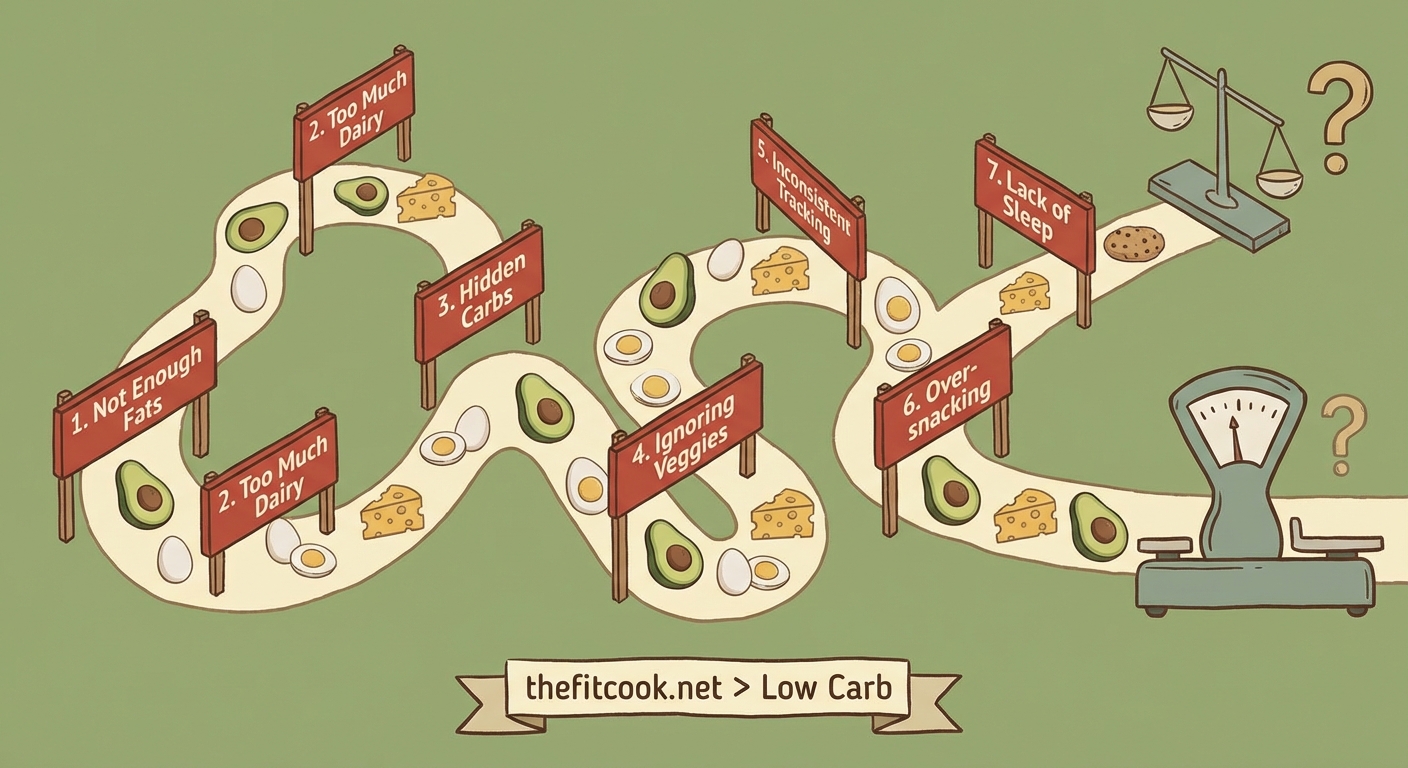
Decades of bad advice taught you that fat makes you fat. Now you’re eating low carb AND low fat, which leaves you starving and miserable.
When you cut carbs, fat becomes your primary fuel source. Without enough of it, your body has nothing to burn. You end up tired, hungry, and reaching for snacks that kick you out of ketosis.
This fear shows up in real meals. You order a salad with grilled chicken and skip the dressing. You trim every bit of fat off your steak. You buy fat-free cheese and wonder why you’re never satisfied.
Your body needs fat for hormone production, brain function, and sustained energy. Restricting it while also restricting carbs is a recipe for failure.
Healthy fat sources to embrace:
- Avocado and avocado oil
- Olive oil and olives
- Fatty fish like salmon and mackerel
- Nuts and nut butters (measured portions)
- Full-fat dairy if you tolerate it
- Grass-fed butter or ghee
- Coconut oil for cooking
Aim for 70 to 75 percent of your calories from fat when eating very low carb. That might sound extreme, but it’s what keeps hunger away and energy stable.
Mistake 3: Your Electrolytes Are Tanked
You feel foggy, tired, and irritable. You blame the diet. Actually, you’re just depleted.
Cutting carbs drops insulin levels, which signals your kidneys to dump sodium. That sodium takes potassium and magnesium with it. Within days, you’re deficient in all three, and you feel terrible.
This is what people call the “keto flu,” but it’s not the diet’s fault. It’s a mineral deficiency that’s completely preventable.
Most people don’t realize how much sodium they need on low carb. The standard recommendation of 2,300 milligrams per day is far too low when you’re not eating processed carbs that come pre-salted.
| Electrolyte | Daily Target on Low Carb | Common Sources |
|---|---|---|
| Sodium | 4,000 to 6,000 mg | Sea salt, bone broth, pickles |
| Potassium | 3,000 to 4,000 mg | Avocado, spinach, salmon |
| Magnesium | 400 to 500 mg | Pumpkin seeds, dark chocolate, almonds |
Add a half teaspoon of sea salt to your water twice daily. Sip bone broth in the afternoon. Take a magnesium supplement before bed. These small changes eliminate brain fog and restore your energy within 24 hours.
Mistake 4: You’re Eating Too Much Protein
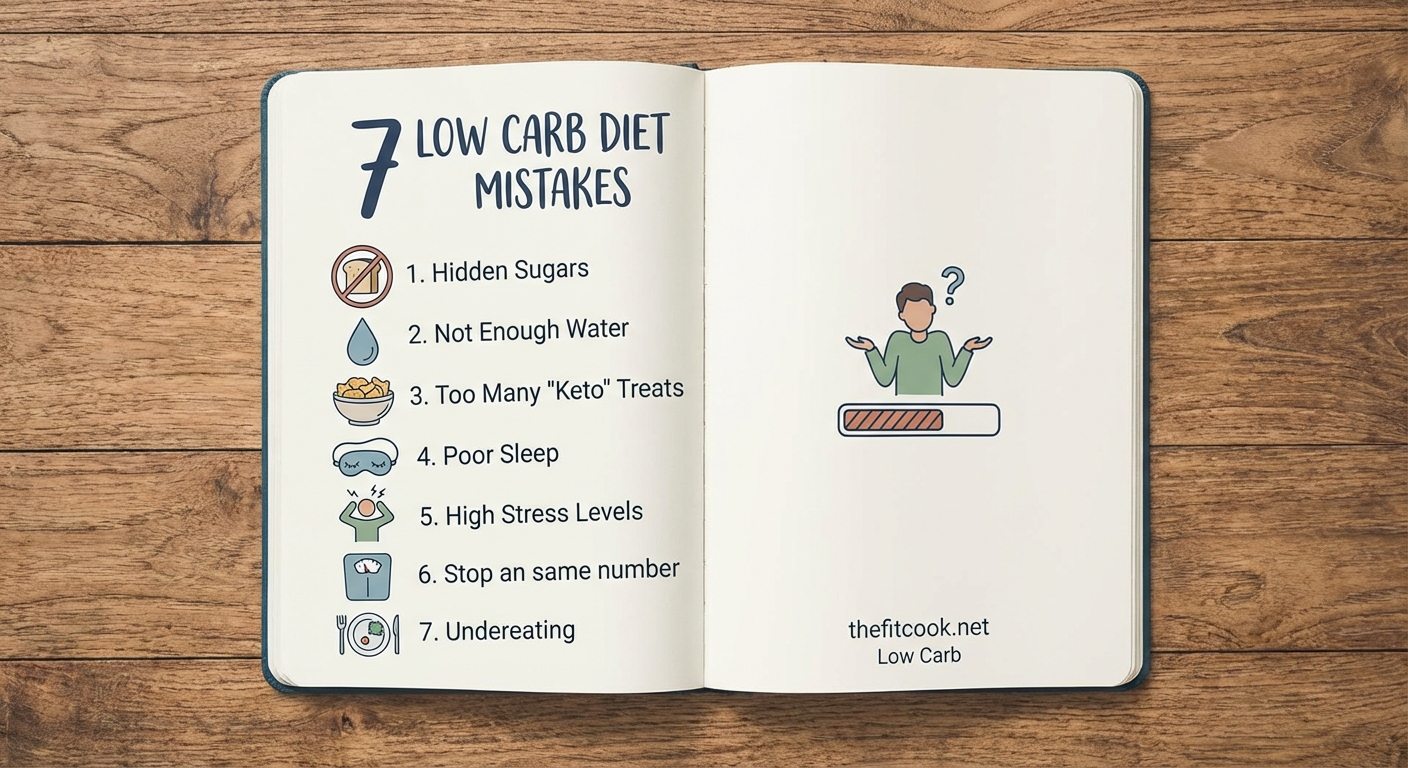
Protein is good, but more isn’t always better.
When you eat excessive protein, your body converts some of it into glucose through a process called gluconeogenesis. That glucose can interfere with ketosis and slow fat loss, especially if you’re insulin resistant.
This mistake happens when people swap carbs for protein without adding enough fat. A chicken breast becomes the entire meal. Protein shakes replace breakfast. Lean ground turkey replaces fattier beef.
You need protein for muscle retention and satiety, but there’s a sweet spot. Most people do best with 0.6 to 1.0 grams per pound of lean body mass. An active 150-pound person needs roughly 90 to 120 grams daily, not 200.
Signs you’re overdoing protein:
- Stalled weight loss despite low carbs
- Difficulty staying in ketosis
- Digestive discomfort after meals
- Relying on protein bars and shakes
Balance your plate with fat as the main energy source, moderate protein for muscle maintenance, and minimal carbs from vegetables.
Mistake 5: You’re Skipping Vegetables and Fiber
Bacon and eggs taste great, but they don’t give you fiber.
Many people go low carb and accidentally go low fiber, too. They avoid all plant foods because they’re scared of carbs. Constipation follows. Gut health suffers. Nutrient deficiencies creep in.
Fiber doesn’t raise blood sugar the way starchy carbs do. It feeds beneficial gut bacteria, supports digestion, and keeps you full between meals. You can eat plenty of it and still stay in ketosis.
Non-starchy vegetables are your best source. They provide fiber, vitamins, minerals, and antioxidants without spiking insulin.
High-fiber, low-carb vegetables:
- Leafy greens (spinach, kale, arugula)
- Cruciferous vegetables (broccoli, cauliflower, Brussels sprouts)
- Zucchini and summer squash
- Asparagus and green beans
- Bell peppers and cucumbers
- Mushrooms and celery
Aim for at least five servings of vegetables daily. That’s not hard when you load your plate with greens at lunch and roast a pan of broccoli for dinner.
“Fiber is the most underrated nutrient on a low carb diet. It’s what separates people who feel amazing from those who struggle with energy and digestion.” – Registered Dietitian Nutritionist
Mistake 6: You Quit Before Adaptation Happens
You tried low carb for a week. You felt awful. You quit.
Here’s what you missed: fat adaptation takes time.
Your body has been burning glucose for fuel your entire life. Switching to fat as the primary energy source doesn’t happen overnight. It takes two to four weeks for your metabolism to adjust, your mitochondria to upregulate fat-burning enzymes, and your brain to efficiently use ketones.
During that transition, you might feel sluggish. Workouts might feel harder. Sleep might be disrupted. This is temporary, but most people bail before they get to the other side.
After adaptation, energy stabilizes. Mental clarity improves. Hunger decreases. Fat loss becomes consistent. But you only get there if you stick with it long enough.
Give yourself at least 30 days before deciding if low carb works for you. Support your body with electrolytes, adequate fat, and enough sleep. The first week is the hardest, but it gets easier.
Mistake 7: You’re Relying on Processed “Keto” Products
The grocery store shelves are packed with keto cookies, keto ice cream, and keto bread. Most of it is garbage.
These products are designed to mimic the foods you’re trying to avoid. They’re loaded with artificial sweeteners, inflammatory seed oils, and mystery fibers that cause digestive distress. They keep you craving sweets instead of breaking the sugar addiction.
Worse, many of them aren’t even low carb. Manufacturers use labeling tricks to hide carbs or claim that certain ingredients “don’t count.” Your body doesn’t care about marketing claims. It responds to what you actually eat.
Processed keto products also teach you nothing about real food. You never learn to cook satisfying meals from whole ingredients. You stay dependent on packaged convenience, which is expensive and unsustainable.
What to do instead:
- Build meals around whole foods: meat, fish, eggs, vegetables, healthy fats
- Save treats for special occasions, and make them yourself
- Use simple ingredients you can pronounce
- Focus on nutrient density, not just hitting macros
Real food doesn’t need a keto label. A grass-fed steak, a side of roasted Brussels sprouts with butter, and a simple salad will always outperform a box of keto crackers.
How to Know If You’re Making Progress
Weight on the scale tells part of the story, but not all of it.
Low carb causes water weight fluctuations that have nothing to do with fat loss. You might drop five pounds in the first week, then see no change for ten days. That doesn’t mean you’re failing. It means your body is adjusting.
Better progress markers:
- How your clothes fit around the waist and hips
- Energy levels throughout the day
- Mental clarity and focus
- Hunger and cravings between meals
- Sleep quality and recovery
- Strength and performance in workouts
Take measurements every two weeks. Notice how you feel, not just what you weigh. Fat loss is rarely linear, but the trend should move in the right direction over time.
If you’ve fixed the seven mistakes above and still aren’t seeing results after six weeks, it’s time to look at total calories. Low carb makes it easier to eat less, but you can still overeat. Track your portions for a few days to see where you stand.
Your Low Carb Diet Should Feel Sustainable
The best diet is the one you can stick with long enough to see results.
Low carb works because it controls insulin, reduces hunger, and makes fat burning easier. But it only works when you avoid the mistakes that sabotage most people: hidden carbs, fat phobia, electrolyte depletion, excess protein, missing fiber, quitting too early, and relying on junk food with a keto label.
Fix these errors, give your body time to adapt, and measure progress beyond the scale. You’ll break through plateaus, regain your energy, and finally see the results you’ve been working toward.