How to Build the Perfect Post-Workout Smoothie for Muscle Recovery
You just crushed your workout. Your muscles are tired, your energy is drained, and your body is screaming for nutrients. What you eat in the next hour can make or break your recovery. A well-built post workout smoothie for muscle recovery delivers exactly what your body needs when it needs it most.
A post workout smoothie for muscle recovery should combine 20-30g of protein, 30-40g of fast-digesting carbs, and anti-inflammatory ingredients within 30-60 minutes after training. The right blend replenishes [glycogen](https://en.wikipedia.org/wiki/Glycogen) stores, kickstarts [muscle protein synthesis](https://www.ncbi.nlm.nih.gov/pmc/articles/PMC3577439/), and reduces soreness. This guide breaks down the science-backed formula, essential ingredients, and common mistakes that sabotage your gains.
Why Your Body Craves Nutrients After Training
When you finish a workout, your muscles are in a catabolic state. They’ve burned through glycogen stores and created tiny tears in muscle fibers. This is normal. It’s how you get stronger.
But here’s the catch: without proper nutrition, your body stays in breakdown mode longer than it should.
A post workout smoothie for muscle recovery stops this process. It shifts your body from breakdown to repair. Protein provides amino acids to rebuild muscle tissue. Carbohydrates restore glycogen and trigger insulin release, which helps shuttle nutrients into cells faster.
Timing matters too. Research shows that consuming protein and carbs within 30 to 60 minutes after exercise maximizes recovery benefits. Your muscles are primed to absorb nutrients during this window.
The Essential Building Blocks
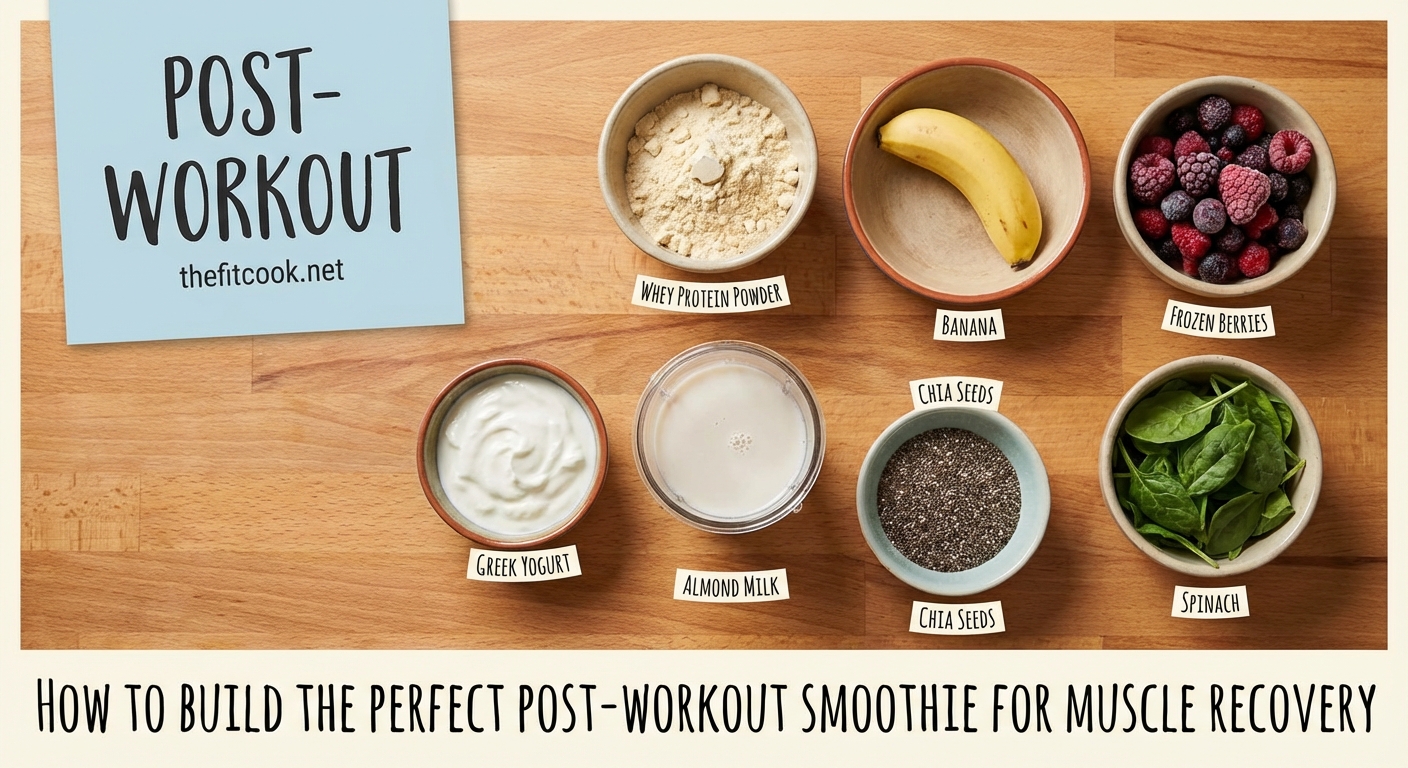
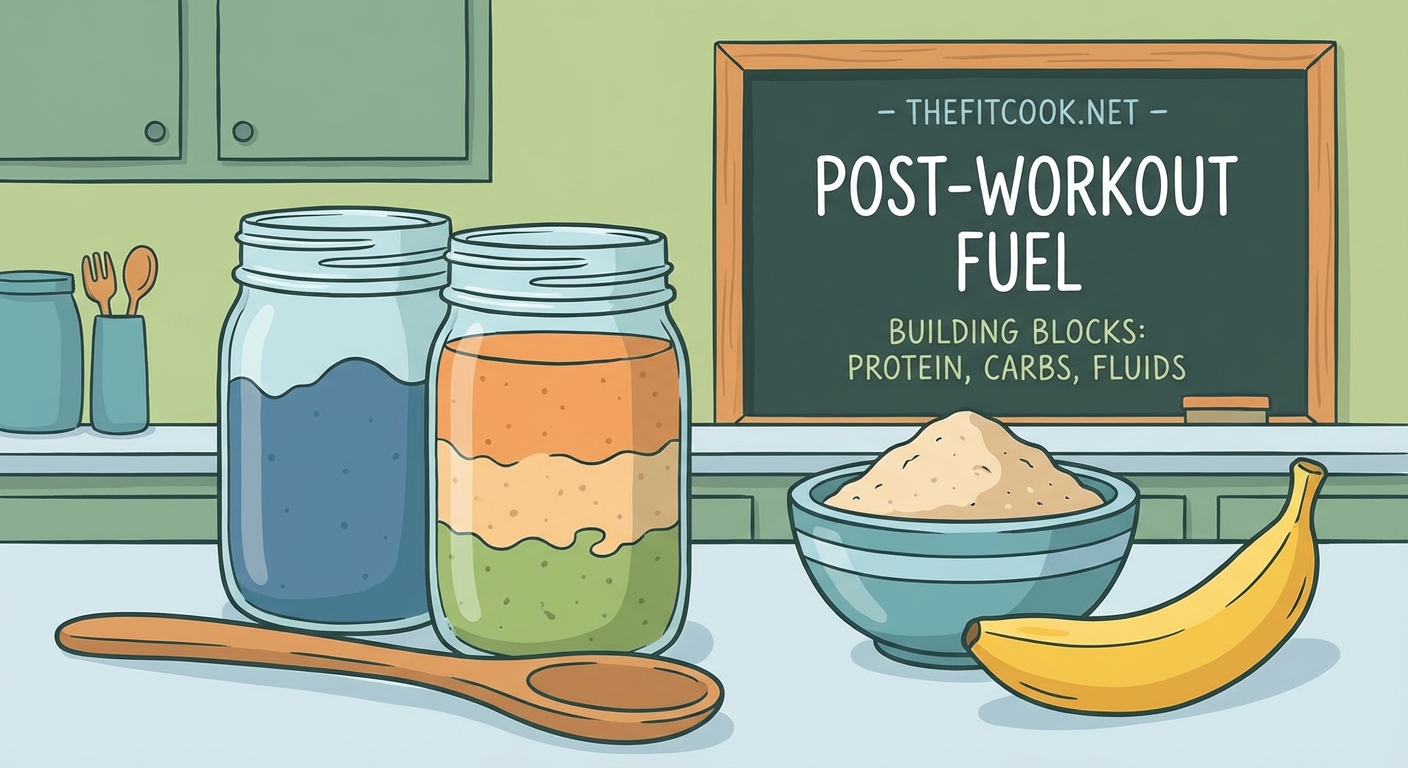
Every effective recovery smoothie needs three core components. Miss one, and you’re leaving gains on the table.
Protein
This is your foundation. Aim for 20 to 30 grams per smoothie. This amount provides enough amino acids to trigger muscle protein synthesis without overwhelming your digestive system.
Best sources include:
- Whey protein isolate (fast-absorbing, complete amino acid profile)
- Plant-based protein blends (pea, rice, hemp combined for completeness)
- Greek yogurt (adds protein plus probiotics)
- Cottage cheese (slow-release casein for extended recovery)
If you’re tracking your protein intake throughout the day, how much protein do you really need after a workout breaks down the exact calculations based on your training style.
Carbohydrates
Your muscles need fuel. After training, glycogen stores are depleted by 30 to 40 percent or more, depending on workout intensity.
Target 30 to 40 grams of carbs. Choose fast-digesting options that spike insulin and accelerate nutrient delivery:
- Banana (provides potassium for muscle function)
- Mango or pineapple (natural sugars plus digestive enzymes)
- Dates (concentrated energy, blends smooth)
- Honey or maple syrup (pure glucose for rapid absorption)
Healthy Fats
Keep fats minimal in your immediate post workout smoothie. While healthy fats are important for overall nutrition, they slow digestion. You want nutrients hitting your bloodstream fast.
If you do include fats, limit them to 5 to 10 grams:
- Half an avocado (adds creaminess)
- One tablespoon nut butter (satisfying texture)
- Chia or flax seeds (omega-3s and fiber)
Step-by-Step Smoothie Building Formula
Follow this simple process every time you blend. It takes the guesswork out and ensures balanced nutrition.
- Start with liquid base (1 to 1.5 cups): unsweetened almond milk, coconut water, regular milk, or plain water.
- Add protein source (1 scoop powder or 1 cup Greek yogurt).
- Include fast-digesting carbs (1 medium banana plus 1 cup berries, or 2 cups tropical fruit).
- Boost with recovery enhancers (1 cup spinach, 1 teaspoon turmeric, or fresh ginger).
- Blend on high for 45 to 60 seconds until completely smooth.
- Adjust consistency with ice or extra liquid as needed.
The order matters less than hitting your macro targets. Some people prefer adding ice first to protect blender blades. Others add greens last to ensure they blend completely.
Recovery-Boosting Ingredients That Actually Work
Beyond the basics, certain ingredients amplify recovery through different mechanisms. You don’t need all of them in one smoothie. Rotate based on what your body needs that day.
Tart cherry juice reduces muscle soreness and inflammation. Studies show athletes who consume tart cherry juice recover faster and report less pain. Add a quarter cup to your blend.
Spinach or kale provides antioxidants that combat exercise-induced oxidative stress. One cup of greens won’t change the taste when blended with fruit.
Ginger acts as a natural anti-inflammatory. A half-inch piece of fresh ginger (peeled) or a quarter teaspoon of ground ginger helps reduce muscle pain.
Turmeric contains curcumin, which decreases inflammation markers in the blood. Pair it with black pepper to increase absorption by 2000 percent. Use a quarter teaspoon of each.
Cinnamon helps regulate blood sugar and adds flavor without sugar. Half a teaspoon goes a long way.
“The best recovery smoothie is the one you’ll actually drink consistently. Start with a basic protein and carb base, then add one or two recovery boosters. Don’t overcomplicate it.” – Sports nutritionist recommendation
Common Mistakes That Sabotage Recovery
Even experienced gym-goers make these errors. Avoid them and you’ll see better results.
| Mistake | Why It Hurts Recovery | Better Approach |
|---|---|---|
| Too much protein (50g+) | Excess protein isn’t stored as muscle; your body can only process so much at once | Stick to 20-30g per smoothie |
| Skipping carbs | Without carbs, protein gets used for energy instead of muscle repair | Always pair protein with carbs post-workout |
| Adding too much fat | Slows digestion and delays nutrient absorption when you need it fast | Save high-fat smoothies for breakfast or snacks |
| Waiting 2+ hours | Delays glycogen replenishment and extends muscle breakdown phase | Blend within 60 minutes of finishing your workout |
| Using juice as base | Spikes blood sugar without fiber or protein to balance it | Choose unsweetened milk alternatives or coconut water |
Three Go-To Smoothie Recipes
These formulas work for different training styles and taste preferences. Each hits the target macros for optimal recovery.
Classic Muscle Builder
- 1 cup unsweetened almond milk
- 1 scoop vanilla whey protein
- 1 medium banana
- 1 cup frozen blueberries
- 1 tablespoon almond butter
- Handful of spinach
- Ice as needed
Macros: 28g protein, 42g carbs, 8g fat
Tropical Recovery Blend
- 1 cup coconut water
- 1 scoop vanilla or unflavored protein powder
- 1 cup frozen mango chunks
- Half cup frozen pineapple
- Quarter cup Greek yogurt
- Half teaspoon fresh grated ginger
- Ice as needed
Macros: 26g protein, 38g carbs, 3g fat
Chocolate Peanut Butter Power
- 1 cup regular milk (dairy or soy)
- 1 scoop chocolate protein powder
- 1 medium banana
- 1 tablespoon natural peanut butter
- 1 tablespoon cocoa powder
- Quarter teaspoon cinnamon
- Ice as needed
Macros: 30g protein, 36g carbs, 10g fat
If you’re prepping smoothies in advance, the ultimate macro-friendly freezer meal prep guide for beginners shows you how to batch prep smoothie packs that last weeks.
Adjusting for Your Training Type
Not all workouts demand the same recovery approach. Tailor your smoothie to match your training intensity and goals.
Heavy strength training (squats, deadlifts, bench press) depletes glycogen significantly. Bump carbs to 45-50g and keep protein at 25-30g. Your muscles need more fuel to replenish what you burned.
High-intensity interval training (HIIT, CrossFit, circuit training) creates massive metabolic demand. Prioritize fast-digesting carbs and add electrolytes through coconut water or a pinch of sea salt.
Endurance cardio (running, cycling, swimming over 45 minutes) requires more carbs than protein. Shift the ratio to 50g carbs and 20g protein. Add tart cherry juice for inflammation control.
Moderate strength or bodyweight training (lighter weights, yoga, Pilates) needs less overall volume. Scale back to 20g protein and 30g carbs. These sessions don’t deplete glycogen as dramatically.
Ingredient Swaps for Dietary Restrictions
You can build an effective post workout smoothie for muscle recovery regardless of dietary preferences. Here’s how to adapt the formula.
Dairy-free: Replace milk with almond, oat, or coconut milk. Swap Greek yogurt for coconut yogurt or extra protein powder. Choose plant-based protein blends that combine multiple sources.
Vegan: Use pea, rice, or hemp protein powders. Add nutritional yeast for B vitamins. Include spirulina for additional protein and minerals.
Low sugar: Cut back on fruit to half a banana or a third cup of berries. Add stevia or monk fruit sweetener if needed. Increase protein powder slightly to maintain satiety.
Nut-free: Skip nut butters and use seed butters like sunflower or tahini. Choose oat milk or rice milk instead of almond milk. Add extra avocado for creaminess without nuts.
Gluten-free: Most smoothie ingredients are naturally gluten-free. Just verify your protein powder is certified gluten-free if you have celiac disease or severe sensitivity.
Timing Your Smoothie for Maximum Impact
The 30 to 60 minute window after training is ideal, but life doesn’t always cooperate. Here’s how to handle different scenarios.
Immediately after training: If you can blend and drink within 15 minutes, you’re in the optimal zone. Your muscles are primed and blood flow is elevated.
30 to 60 minutes post-workout: Still excellent timing. You’re well within the window where nutrient partitioning is enhanced.
60 to 90 minutes later: Not ideal, but still beneficial. Your body will use the nutrients, just less efficiently than earlier.
More than 2 hours: You’ve missed the acute recovery window. Your smoothie still provides nutrition, but the specific recovery benefits are diminished. Focus on your next meal instead.
If you train early morning and need something substantial later, how to meal prep 20 high-protein breakfasts in under 2 hours gives you options that complement your post workout nutrition.
Pre-Portioning for Busy Schedules
You can prep smoothie ingredients in advance without sacrificing quality. This saves time and removes the excuse of not having ingredients ready.
Smoothie freezer packs: Portion all ingredients except liquid and protein powder into freezer bags. Include fruit, greens, and any add-ins. When ready, dump the frozen pack into your blender, add liquid and protein, blend.
Protein powder portioning: Pre-measure protein powder into small containers or bags. Keep them in your gym bag. Add to your smoothie at the gym using their blender or shake with ice water if blending isn’t available.
Liquid bases: Store coconut water or nut milk in your fridge at work or in a cooler bag. Combine with your pre-portioned ingredients when you’re ready.
These packs last 2 to 3 months in the freezer. Label them with contents and macro counts for easy tracking.
Smoothies vs. Whole Food Meals
Some people wonder if they should eat solid food instead. Both approaches work, but smoothies offer specific advantages post-workout.
Faster digestion: Blended food is partially broken down, so nutrients enter your bloodstream sooner. This matters when timing is critical.
Easier on your stomach: After intense training, some people feel nauseous or have reduced appetite. A cold smoothie is more appealing than a full meal.
Precise macro control: You know exactly what’s going into your blend. This makes tracking easier if you’re following a structured nutrition plan.
Convenience: You can drink a smoothie on the way home from the gym or while showering. Solid meals require sitting down and more time.
That said, whole foods have benefits too. They provide more satiety and require chewing, which triggers different digestive signals. If you prefer solid food and can eat within the recovery window, 15 high-protein post-workout snacks you can make in under 10 minutes offers alternatives.
Tracking Your Recovery Progress
The only way to know if your nutrition strategy works is to measure results. Pay attention to these indicators over 2 to 4 weeks.
Muscle soreness duration: Are you recovering faster between workouts? Less soreness 24 to 48 hours after training suggests better recovery nutrition.
Performance improvements: Can you lift heavier weights or complete more reps? Progressive overload requires adequate recovery fuel.
Energy levels: Do you feel depleted all day after morning workouts? Your post workout smoothie should restore energy within an hour.
Body composition changes: Are you gaining muscle while maintaining or losing fat? Proper recovery nutrition supports muscle growth without excess fat gain.
Keep notes in your phone or training journal. Track what you eat post-workout and how you feel the next day. Patterns emerge after a few weeks.
Budget-Friendly Ingredient Choices
Building an effective post workout smoothie for muscle recovery doesn’t require expensive superfoods. Focus on these cost-effective staples.
- Frozen fruit: Cheaper than fresh, lasts months, and already prepped. Buy store brands in bulk bags.
- Whey protein concentrate: Less expensive than isolate and still highly effective for most people. Shop sales and buy large containers.
- Bananas: One of the cheapest fruits per serving. Buy in bulk when they’re on sale and freeze overripe ones for smoothies.
- Frozen spinach: Costs less than fresh and blends just as well. One bag lasts for multiple smoothies.
- Regular milk: If you tolerate dairy, it’s often cheaper than plant-based alternatives and provides protein plus carbs.
If you’re managing nutrition on a tight budget, 5-day muscle building meal prep on a budget: complete shopping list included extends these principles to your entire week.
Equipment That Makes Blending Easier
You don’t need a $400 blender to make great smoothies. A basic model works fine if you follow a few guidelines.
Minimum power: Look for at least 500 watts. This handles frozen fruit and ice without burning out the motor.
Blade quality: Stainless steel blades stay sharp longer. Some cheaper blenders use plastic blades that dull fast.
Container size: A 32-ounce container fits most single-serving smoothies comfortably. Smaller containers require multiple batches.
Pulse function: Helps break down frozen ingredients before full blending. Prevents motor strain.
Easy cleaning: Removable blades or dishwasher-safe parts save time. The easier it is to clean, the more likely you’ll use it consistently.
If your blender struggles with frozen ingredients, let them thaw for 5 minutes before blending. Or add extra liquid to reduce strain on the motor.
Flavor Combinations That Never Get Old
Drinking the same smoothie every day gets boring. Rotate through these proven flavor profiles to keep things interesting.
- Berry vanilla: Strawberries, blueberries, vanilla protein, almond milk
- Tropical paradise: Mango, pineapple, coconut milk, vanilla or unflavored protein
- Chocolate cherry: Dark cherries, chocolate protein, cocoa powder, milk
- Peanut butter banana: Banana, peanut butter, chocolate or vanilla protein, milk
- Green machine: Spinach, banana, mango, vanilla protein, coconut water
- Apple pie: Apple slices, cinnamon, vanilla protein, oat milk, dates
- Coffee boost: Cold brew coffee, banana, chocolate protein, milk, ice
Experiment with spices like nutmeg, cardamom, or vanilla extract. A quarter teaspoon transforms the entire flavor profile without adding calories.
When Smoothies Aren’t Enough
Sometimes a smoothie alone won’t meet your recovery needs. Recognize when you need more substantial nutrition.
After extremely long workouts (90+ minutes of intense training), you may need additional food within 2 to 3 hours. Your smoothie covers immediate needs, but follow up with a balanced meal.
When cutting calories aggressively, a smoothie might not provide enough satiety. You may need to eat solid protein and vegetables to feel satisfied.
If you’re underweight or struggling to gain muscle, add a second smoothie or increase portion sizes. Some athletes need 40 to 50g of protein post-workout.
During illness or injury recovery, your body has additional demands. Consult with a healthcare provider about adjusting your nutrition.
For those days when you’re completely drained and need something more filling, what to cook when you have zero energy after the gym provides simple meal options.
Hydration Matters Just as Much
Don’t forget about fluids. Dehydration impairs recovery just as much as poor nutrition. Your smoothie contributes to hydration, but it’s not enough on its own.
Aim to drink 16 to 24 ounces of water during and immediately after your workout. Then consume your smoothie within 30 to 60 minutes. Continue sipping water throughout the day.
Signs you’re not hydrating enough:
- Dark yellow urine
- Persistent fatigue hours after training
- Headaches in the afternoon
- Difficulty concentrating
- Muscle cramps during or after exercise
If you sweat heavily, add a pinch of sea salt to your smoothie or choose coconut water as your base. This replaces electrolytes lost through sweat.
Making Recovery Nutrition a Habit
Consistency beats perfection. You don’t need a perfect smoothie every single time. You need a good-enough smoothie that you actually make and drink regularly.
Prep ingredients on Sunday: Wash fruit, portion greens, organize your freezer. When everything’s ready, you’re more likely to follow through.
Keep backup options: Store shelf-stable protein powder and frozen fruit at work or in your car. You’ll always have a recovery option available.
Set a phone reminder: Schedule an alarm for 15 minutes after your typical workout end time. This creates a habit trigger.
Make it enjoyable: If you hate the taste, you won’t stick with it. Experiment until you find flavors you genuinely look forward to drinking.
Track your streaks: Mark each day you consume your post workout smoothie. Seeing a streak builds momentum to continue.
Small consistent actions compound over weeks and months. Your body adapts to the regular influx of nutrients and recovers more efficiently over time.
Your Recovery Starts Now
Building the perfect post workout smoothie for muscle recovery isn’t complicated. You need protein, fast-digesting carbs, minimal fat, and consistency. Everything else is optimization.
Start with a basic formula: protein powder, banana, frozen berries, liquid base. Blend it. Drink it within an hour of training. Do this consistently for two weeks and pay attention to how you feel.
Your muscles are waiting for the nutrients they need to rebuild stronger. Give them the fuel, and your body will do the rest.