7-Day Clean Eating Challenge for Beginners with Simple Whole Food Recipes
Starting clean eating feels overwhelming when you’re staring at conflicting advice online. You want simple meals that taste good and don’t require a culinary degree. This 7 day clean eating meal plan for beginners gives you exactly that: straightforward recipes, realistic portions, and a plan you can actually follow.
This 7 day clean eating meal plan for beginners focuses on whole foods and simple cooking techniques. You’ll eat balanced meals built from lean proteins, vegetables, fruits, whole grains, and healthy fats. Each day includes breakfast, lunch, dinner, and a snack. The plan requires minimal cooking skills and uses ingredients you can find at any grocery store. Prep takes under two hours on Sunday.
What Clean Eating Actually Means for Beginners
Clean eating strips away processed foods and focuses on ingredients you recognize. Think chicken breast instead of chicken nuggets. Steel-cut oats instead of sugary cereal. Olive oil instead of margarine.
You’re not counting every calorie or banning entire food groups. You’re choosing foods closer to their natural state. This approach naturally reduces added sugars, artificial ingredients, and excess sodium.
The benefits show up fast. Better energy levels. Clearer skin. Improved digestion. More stable moods throughout the day.
For a deeper look at the principles behind this approach, check out what exactly is clean eating and why does it matter for fitness results.
Your Complete 7 Day Clean Eating Meal Plan
This plan serves one person. Scale up portions if you’re feeding a family or want leftovers.
Day 1
Breakfast: Scrambled eggs (2 whole eggs) with spinach and cherry tomatoes, served with half an avocado and a slice of whole grain toast
Lunch: Grilled chicken salad with mixed greens, cucumber, bell peppers, shredded carrots, and olive oil vinaigrette
Dinner: Baked salmon with roasted sweet potato and steamed broccoli
Snack: Apple slices with 2 tablespoons almond butter
Day 2
Breakfast: Greek yogurt bowl with fresh berries, sliced banana, and a handful of raw almonds
Lunch: Turkey and hummus wrap using a whole wheat tortilla, packed with lettuce, tomato, and cucumber
Dinner: Stir-fried chicken with snap peas, carrots, and brown rice, seasoned with ginger and garlic
Snack: Carrot sticks with 3 tablespoons hummus
Day 3
Breakfast: Overnight oats made with rolled oats, almond milk, chia seeds, and topped with sliced strawberries
Lunch: Quinoa bowl with black beans, diced tomatoes, corn, cilantro, and lime juice
Dinner: Lean ground turkey meatballs with zucchini noodles and marinara sauce
Snack: Handful of mixed nuts (about 1/4 cup)
Day 4
Breakfast: Smoothie with spinach, frozen mango, banana, protein powder, and unsweetened almond milk
Lunch: Tuna salad (made with Greek yogurt instead of mayo) on a bed of mixed greens
Dinner: Grilled chicken breast with roasted Brussels sprouts and quinoa
Snack: Celery sticks with 2 tablespoons natural peanut butter
Day 5
Breakfast: Veggie omelet (2 eggs) with mushrooms, onions, and bell peppers, plus a side of fresh fruit
Lunch: Lentil soup with a side salad dressed in olive oil and lemon juice
Dinner: Baked cod with roasted asparagus and wild rice
Snack: Greek yogurt with a drizzle of honey
Day 6
Breakfast: Whole grain toast topped with mashed avocado, sliced hard-boiled egg, and everything bagel seasoning
Lunch: Chicken and vegetable soup with a slice of whole grain bread
Dinner: Lean beef stir-fry with broccoli, snap peas, and cauliflower rice
Snack: Orange slices with a small handful of walnuts
Day 7
Breakfast: Protein pancakes made with banana, eggs, and oats, topped with fresh berries
Lunch: Spinach salad with grilled shrimp, cherry tomatoes, cucumber, and balsamic vinaigrette
Dinner: Baked chicken thighs with roasted root vegetables (carrots, parsnips, sweet potato)
Snack: Sliced bell peppers with guacamole
Shopping List for the Week
Organizing your grocery trip saves time and money. Here’s everything you need.
Proteins:
– Eggs (1.5 dozen)
– Chicken breast (1.5 lbs)
– Chicken thighs (4 pieces)
– Salmon fillets (2)
– Cod fillet (1)
– Ground turkey (1 lb)
– Deli turkey slices (6 oz)
– Canned tuna (1 can)
– Shrimp (8 oz)
– Lean ground beef (8 oz)
Vegetables:
– Spinach (2 bunches)
– Mixed greens (2 containers)
– Cherry tomatoes (1 pint)
– Cucumber (3)
– Bell peppers (5)
– Carrots (2 lbs)
– Broccoli (2 heads)
– Sweet potatoes (3)
– Snap peas (1 lb)
– Zucchini (3)
– Brussels sprouts (1 lb)
– Asparagus (1 bunch)
– Mushrooms (8 oz)
– Onions (2)
– Celery (1 bunch)
– Cauliflower (1 head)
– Root vegetables mix (2 lbs)
Fruits:
– Avocados (3)
– Apples (3)
– Bananas (6)
– Berries (mixed, 2 containers)
– Strawberries (1 container)
– Mango (frozen, 1 bag)
– Oranges (3)
– Lemons (2)
– Limes (2)
Grains & Legumes:
– Whole grain bread (1 loaf)
– Whole wheat tortillas (1 package)
– Brown rice (1 bag)
– Quinoa (1 bag)
– Rolled oats (1 container)
– Wild rice (1 bag)
– Black beans (1 can)
– Lentils (dried, 1 bag)
Dairy & Alternatives:
– Greek yogurt (32 oz)
– Almond milk (unsweetened, 1 carton)
Pantry Items:
– Olive oil
– Almond butter
– Peanut butter (natural)
– Hummus (1 container)
– Marinara sauce (1 jar)
– Chia seeds
– Mixed nuts
– Walnuts
– Raw almonds
– Protein powder
– Honey
– Everything bagel seasoning
– Garlic
– Ginger
– Spices (salt, pepper, cumin, paprika)
If you’re working within a tight budget, clean eating on a budget shows you how to afford whole foods without breaking the bank.
Meal Prep Strategy for Sunday Success
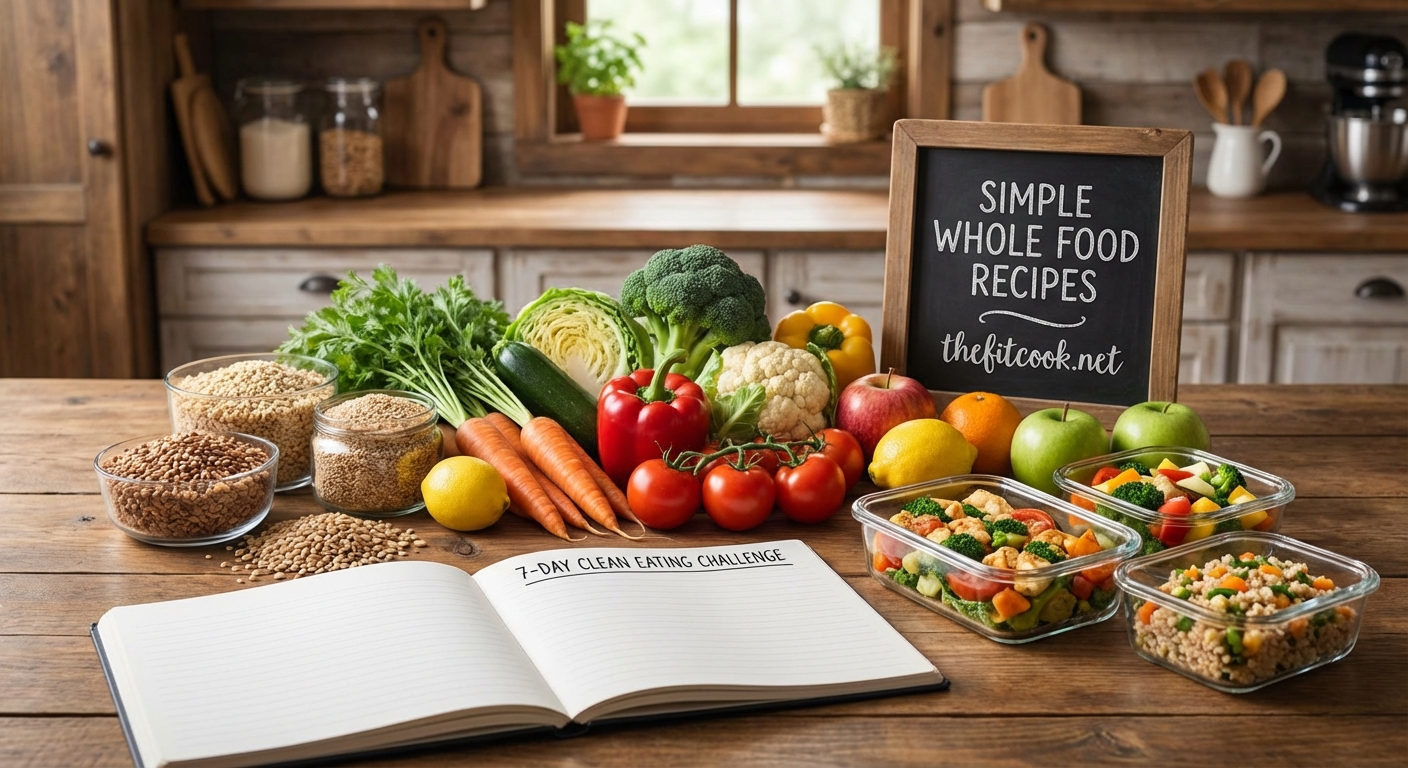
Spending two hours on Sunday sets you up for an easy week. Here’s the exact order to follow.
- Start the overnight oats (5 minutes). Mix and refrigerate for Day 3 breakfast.
- Prep all vegetables (30 minutes). Wash, chop, and store in containers. Cut bell peppers, carrots, cucumbers, and celery into snack-sized pieces.
- Cook grains in batches (15 minutes active, 45 minutes cooking). Make brown rice, quinoa, and wild rice. These reheat perfectly.
- Hard-boil eggs (15 minutes). Cook 6 eggs at once for easy breakfasts and snacks.
- Prepare proteins (30 minutes). Grill chicken breasts, bake salmon, and cook ground turkey meatballs. Store separately.
- Make salad dressings (10 minutes). Whisk together olive oil vinaigrettes and store in small jars.
- Portion snacks (10 minutes). Divide nuts, cut fruit, and portion hummus into small containers.
For more detailed prep techniques, sunday meal prep blueprint walks you through 3 hours to a week of clean eating success.
Common Mistakes and How to Avoid Them
New clean eaters make predictable errors. Here’s how to sidestep them.
| Mistake | Why It Happens | The Fix |
|---|---|---|
| Skipping meals | Thinking fewer meals means faster results | Eat every 3-4 hours to maintain energy and prevent overeating later |
| Not prepping vegetables | Assuming you’ll chop fresh daily | Wash and cut all vegetables on Sunday; they stay fresh for 5 days |
| Buying too many new ingredients | Getting excited about fancy recipes | Stick to 15-20 core ingredients your first week |
| Under-seasoning food | Fear that spices aren’t “clean” | Use herbs, garlic, lemon, and spices generously; they’re all clean |
| Forgetting healthy fats | Focusing only on protein and vegetables | Include avocado, nuts, olive oil, or seeds at every meal |
Building Your Clean Eating Pantry
Stock these staples and you’ll always have meal options ready.
Cooking oils and fats:
– Extra virgin olive oil
– Avocado oil
– Coconut oil
Proteins:
– Canned wild-caught salmon
– Canned tuna
– Dried lentils
– Black beans
– Chickpeas
Grains:
– Brown rice
– Quinoa
– Steel-cut oats
– Whole wheat pasta
Flavor makers:
– Garlic powder
– Onion powder
– Cumin
– Paprika
– Turmeric
– Cinnamon
– Sea salt
– Black pepper
– Hot sauce
– Dijon mustard
– Apple cider vinegar
– Balsamic vinegar
Nuts and seeds:
– Almonds
– Walnuts
– Chia seeds
– Flax seeds
– Pumpkin seeds
The complete list of essentials lives in 15 clean eating pantry staples every health-conscious cook needs.
Making This Plan Work for Your Life
Real life doesn’t follow perfect meal plans. Here’s how to adapt.
If you hate a certain food: Swap it for something similar. Don’t like salmon? Use chicken or turkey instead. Hate Brussels sprouts? Try green beans or asparagus.
If you eat out: Choose grilled proteins, ask for vegetables instead of fries, and request dressing on the side. Most restaurants accommodate these requests easily.
If you travel: Pack nuts, fruit, and protein bars. Book hotels with mini fridges. Buy pre-cut vegetables and rotisserie chicken at grocery stores.
If you work long hours: Double the Sunday prep recipes. Freeze half for week two. Breakfast and lunch should take under 5 minutes to assemble.
If you lift weights or do intense training: Add an extra snack or increase portion sizes by 25%. You need more fuel. Check out how much protein do you really need after a workout to dial in your needs.
“The best meal plan is the one you’ll actually follow. Start with 80% adherence and build from there. Perfection kills progress.”
Simple Cooking Techniques That Make Everything Taste Better
You don’t need advanced skills. Master these five methods.
Roasting vegetables: Toss with olive oil, salt, and pepper. Spread on a baking sheet. Roast at 425°F for 20-25 minutes. Flip halfway through.
Pan-searing proteins: Heat a skillet over medium-high heat. Add a teaspoon of oil. Season your protein. Cook 4-5 minutes per side for chicken, 3-4 minutes per side for fish.
Making grain bowls: Start with a base of cooked grains. Add protein. Top with vegetables. Drizzle with olive oil and lemon juice or your favorite dressing.
Batch cooking proteins: Season multiple chicken breasts or fish fillets the same way. Bake all at once at 375°F for 25-30 minutes.
Quick stir-fries: Heat oil in a large pan or wok. Add protein first, cook until done, remove. Add harder vegetables (carrots, broccoli), cook 3 minutes. Add softer vegetables (snap peas, spinach), cook 2 minutes. Return protein to pan, season, serve.
For more hands-off approaches, one-pan meal prep recipes that actually taste good reheated will save you cleanup time.
Staying Full Between Meals
Hunger between meals derails clean eating faster than anything else. Here’s how to stay satisfied.
- Eat enough protein at each meal. Aim for 20-30 grams. Protein keeps you full longer than carbs alone.
- Don’t fear healthy fats. A tablespoon of almond butter or half an avocado adds satiety without excess calories.
- Drink water consistently. Sometimes thirst masquerades as hunger. Keep a water bottle handy.
- Plan your snacks. Don’t wait until you’re starving. Eat a planned snack between lunch and dinner.
- Get enough sleep. Poor sleep increases hunger hormones and makes clean eating feel impossible.
If you need portable options, 30 high protein snacks that actually taste like treats offers grab-and-go ideas.
How to Handle Social Situations
Eating clean doesn’t mean avoiding friends and family. It means planning ahead.
At restaurants: Look at the menu online before you go. Choose grilled, baked, or roasted proteins. Ask for substitutions. Request sauces on the side.
At parties: Eat a small clean meal before you arrive. You won’t show up starving. Focus on vegetable platters, fruit, nuts, and proteins if available.
At family dinners: Bring a clean dish to share. Fill half your plate with vegetables. Take smaller portions of less-clean options.
When someone offers food you don’t want: A simple “I’m good, thanks” works. You don’t owe anyone an explanation about your food choices.
Tracking Your Progress Beyond the Scale
The scale doesn’t tell the whole story. Watch for these changes instead.
- Energy levels throughout the day
- Quality of sleep
- Digestion and bloating
- Skin clarity
- Mood stability
- How your clothes fit
- Strength in workouts
- Recovery time after exercise
Take photos on Day 1 and Day 7. The visual difference often surprises people more than the number on the scale.
What Happens After Week One
Seven days builds the foundation. Here’s what to do next.
If you loved it: Repeat the plan for another week. Familiarity makes it even easier. Then start experimenting with new recipes while keeping the same structure.
If you felt hungry: Increase portions by 20%. Add an extra snack. Make sure you’re eating enough protein and healthy fats.
If you got bored: Keep the meal structure but swap in different proteins and vegetables. Use the same cooking methods with new ingredients.
If you want more variety: Try macro-friendly meal prep with 5 days of perfectly balanced lunches for different flavor combinations.
If you’re ready for more protein: Consider how to meal prep 150g protein daily without getting bored as your next step.
Foods to Keep on Hand for Easy Meal Assembly
These ingredients turn into meals in under 10 minutes.
- Pre-washed salad greens
- Rotisserie chicken (check ingredients; choose plain)
- Canned beans (rinse to remove excess sodium)
- Frozen vegetables (no sauce)
- Pre-cooked brown rice or quinoa
- Eggs
- Greek yogurt
- Fresh fruit
- Raw nuts
- Hummus
- Avocados
Having these ready means you can throw together a clean meal even when Sunday prep didn’t happen.
Your Week One Checklist
Use this to stay on track.
- [ ] Read through the entire meal plan
- [ ] Make your shopping list
- [ ] Shop for all ingredients
- [ ] Block 2 hours on Sunday for meal prep
- [ ] Prep vegetables and proteins
- [ ] Cook grains in batches
- [ ] Portion snacks into containers
- [ ] Set daily reminders to eat meals on time
- [ ] Drink at least 8 glasses of water daily
- [ ] Take before photos
- [ ] Track how you feel each day
Making Clean Eating Fit Your Budget
Whole foods don’t have to cost more. Here’s how to keep costs down.
Buy in bulk: Oats, rice, quinoa, nuts, and dried beans cost less per serving when purchased in larger quantities.
Choose frozen vegetables: They’re picked at peak ripeness, frozen immediately, and often cheaper than fresh. Nutritionally, they’re just as good.
Buy seasonal produce: Strawberries cost less in summer. Root vegetables are cheaper in fall and winter. Shop what’s in season.
Skip pre-cut items: Whole vegetables cost significantly less than pre-chopped versions. The 20 minutes you spend chopping saves real money.
Use cheaper proteins: Eggs, canned tuna, chicken thighs, and ground turkey cost less per serving than salmon and steak. Save premium proteins for once or twice a week.
Shop sales and freeze: When chicken goes on sale, buy extra and freeze it. Same with ground turkey and fish.
Starting Your Clean Eating Journey Today
This 7 day clean eating meal plan for beginners removes the guesswork. You know exactly what to eat, when to eat it, and how to prepare it. The recipes use simple ingredients and basic cooking methods.
Your first week won’t be perfect. You might forget a meal prep step or eat out unexpectedly. That’s normal. The goal is progress, not perfection. Each clean meal moves you closer to better energy, clearer thinking, and a healthier body. Start with Sunday prep, follow the plan, and notice how you feel by Day 7.