High-Protein Meal Prep for the Week Without Losing Your Whole Sunday
It’s 11 PM on a Tuesday. You just finished a hard session at the gym, you’re starving, and the fridge has three limp vegetables and some questionable leftovers from last week. You end up ordering takeout again, and by Thursday morning your macros look like a scatter plot. The problem isn’t willpower. The problem is that you don’t have food ready. One focused 90-minute Sunday session can fix all of that for the entire week.
Your Sunday Batch-Cook Game Plan
- Stagger your cook start times so every protein, carb, and vegetable finishes close together.
- Use a cooking timer with separate countdowns per item so nothing overcooks while you portion containers.
- Match your portioned meals to your weekly macro targets before you even start cooking.
Why Sunday Batch Cooking Works So Well for Gym Goals
The fitness world loves to talk about progressive overload and periodization. The same logic applies to your food. Consistency beats perfection every time. When protein-rich meals are already waiting in your fridge, you stop making desperate decisions at 6 PM. You hit your targets almost by accident.
Research on dietary adherence shows consistently that people who prepare food in advance consume more protein and fewer processed calories than those who cook daily. The math is simple. Decision fatigue is real, and prepped food removes the decision entirely. You open the fridge, grab a container, and move on with your evening.
Sunday is the sweet spot for most people. The workweek hasn’t started, groceries have been restocked, and a 90-minute block is genuinely manageable even if you slept in. The goal is not to transform your kitchen into a commercial operation. The goal is to have five reliable food sources ready to grab every single day from Monday through Friday.
The Five Staples That Carry Your Macros All Week
Keep this list tight. You don’t need variety in your prep phase. You need reliability. Variety comes when you plate the food, add sauces, and combine ingredients in different ways throughout the week.
Chicken thighs are the workhorse of any prep session. Bone-in, skin-on thighs are forgiving. They stay moist in the fridge for four to five days without drying out. One oven tray roasted at 425°F gives you roughly 30 to 35 grams of protein per two thighs. Season them simply at first, so they pair with anything you reach for later in the week.
White rice is not the enemy. Cooked in bulk, one cup of dry rice yields about three cups cooked and roughly 40 grams of carbohydrate per cup. For anyone in a building phase, rice is reliable, fast to cook, and easy on the stomach after heavy training.
Roasted vegetables round out every plate without blowing your fat budget. Sheet-pan broccoli, bell peppers, and zucchini take about 20 minutes at high heat. They add fiber, volume, and micronutrients that keep digestion smooth during weeks with a lot of volume in the gym.
Hard-boiled eggs are your protein safety net. A batch of a dozen takes 12 minutes of active effort. They travel well, need no reheating, and deliver about 6 grams of protein per egg. Keep them in the shell until you need them. They stay fresh noticeably longer that way.
A grain like quinoa can round out the rotation if you want something beyond plain rice. Quinoa brings about 8 grams of protein per cooked cup, which adds up fast when you stack it under chicken and add a hard-boiled egg on the side.
Running Multiple Dishes Simultaneously Without the Chaos
This is where most people trip up. They start everything at the same time, realize the eggs finished 20 minutes ago, and end up eating rubbery eggs while the chicken still has 15 minutes left. Staggering your start times is the whole game.
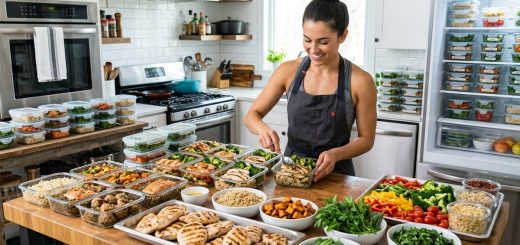
Start with the chicken. Get it into the oven at minute zero. It needs the longest time: between 35 and 45 minutes depending on piece size. While it cooks, put your rice on the stovetop. Rice takes about 18 minutes and can sit covered afterward without turning gummy. Then slide the vegetable trays in, which finish fastest at around 20 minutes. Drop the eggs into boiling water last, at about the 60-minute mark, so everything lands close together.
To manage all four items without losing track, pull up a cooking timer that lets you run multiple separate countdowns at once. Label each one: chicken, rice, veggies, eggs. That way you can portion your first batch of containers, wipe down the counter, or check your macros in an app without mentally tracking four different timelines at the same time. Miss one countdown and you’ll be eating dry rice and chalky chicken all week.
The whole session runs smoother when you prep your mise en place first. That means trays lined and oiled, rice measured and rinsed, and containers stacked and ready before the oven even hits temperature. Spending five minutes on setup at the start saves ten minutes of scrambling later.
Portioning Containers Without Getting Lost in the Numbers
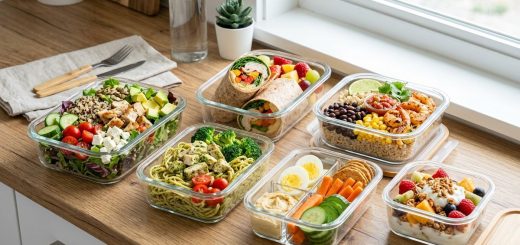
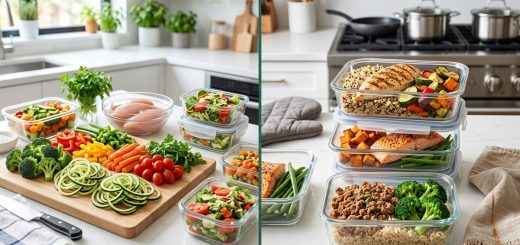
Once everything is cooked and slightly cooled, set up your containers in an assembly line. Line up five to seven containers depending on how many meals per day you’re building. Each container gets a base of rice or quinoa, a portion of chicken, and a scoop of roasted vegetables.
For tracking, the goal is consistency, not gram-perfect precision. If you weigh your chicken before cooking, remember that meat loses roughly 25 to 30 percent of its weight during the cooking process. That means 200 grams raw becomes about 140 to 150 grams cooked. Account for that or you’ll be logging your macros wrong all week and wondering why progress stalls.
Official protein intake guidance for active adults starts at around 1.2 grams per kilogram of body weight daily and climbs higher depending on training intensity and goals. For someone at 175 pounds (roughly 80 kg), that means hitting somewhere between 96 and 136 grams of protein every day. Your prepped meals should cover most of that range without any scrambling on weeknights.
Macro Splits for Bulking vs. Cutting Phases
Not everyone preps with the same goal in mind. Someone building muscle needs more total calories and more carbohydrates timed around training. Someone in a cutting phase needs more protein relative to total calories to preserve what they’ve already built. The same five staples work for both. The portions change.
For a building phase, each container might hold one and a half cups of cooked rice, two chicken thighs worth of shredded or sliced meat, and a generous serving of roasted vegetables. Total per meal: roughly 600 to 700 calories and 45 to 55 grams of protein. That kind of container, eaten three times a day alongside snacks, stacks up fast toward a solid calorie surplus.
For a cutting phase, scale the rice back to half a cup and swap one full meal container per day for two hard-boiled eggs plus a large serving of vegetables. This keeps protein high and total calories lower without leaving you starving after training sessions. The goal during a cut is to protect your muscle tissue. That means protein never decreases even when overall food intake does.
Approximate Per-Meal Targets by Training Phase
| Training Phase | Calories per Meal | Protein | Carbohydrates | Fat |
|---|---|---|---|---|
| Bulking | 600 to 700 | 45 to 55g | 65 to 80g | 15 to 20g |
| Cutting | 350 to 450 | 40 to 50g | 20 to 30g | 10 to 15g |
What to Stack Onto the Core Five
Once the five staples are locked in, a few additions make the week feel less like you’re eating from a cafeteria rotation:
- Greek yogurt portioned into small containers delivers a fast 15-gram protein hit between meals with zero prep beyond a spoon.
- Pre-measured almond butter packets or small jars with tape labels give you a reliable fat and calorie top-up after heavy sessions.
- Overnight oats stirred with a scoop of protein powder handle three or four breakfasts with no morning effort at all.
- Frozen edamame bags you can microwave in minutes add another 17 grams of plant protein per cup when your chicken container is already gone by midday.
Building the Template You Repeat Every Week
The best prep system is one you repeat almost identically every Sunday. Once the template is locked in, the session stops feeling like a project and starts feeling like routine maintenance. Your body adapts to consistent training stimuli, and your cooking schedule works the same way.
Week one, you might forget to start the rice at the right moment. Week two, you’ll know exactly when to drop the eggs. By week four, the whole session runs on autopilot. You’ll finish with portioned containers, a fridge that makes every weeknight trivial, and macros that actually reflect what you’re doing in the gym.
Write the template down. Tape it to a cabinet door if that’s what it takes. Note your oven temperature, your staggered start times, your portion weights, and your target macros for the current phase. Every Sunday, you reference the same card and execute. No improvising, no guessing, no burning the chicken because you drifted into your phone.
From One Focused Session to a Week That Pays You Back
Meal prep doesn’t have to consume your weekend. It doesn’t require chef-level technique, expensive equipment, or four hours standing over a stove. What it requires is a simple plan, a reliable set of staples, and a system for running multiple items simultaneously without losing track of any of them.
Get the chicken in the oven, set your timers, portion your containers with intention, and match those portions to the phase you’re in. Consistent protein hits drive consistent results in the gym. That’s not a complicated idea. It’s just hard to execute without the right system behind it.
This Sunday, block off 90 minutes. Follow the staggered timeline. Use separate countdowns for each item. Load up your containers. You’ll walk into Monday with food already handled, and every decision between now and Friday just got easier.