15 Macro-Balanced Breakfast Recipes Under 400 Calories
Sticking to 400 calories at breakfast sounds restrictive until you learn the right combinations. The truth is, you can build a filling, delicious morning meal that fits your calorie goals without leaving you hungry by 10 a.m. The secret lies in balancing protein, healthy fats, and smart carbs in the right proportions.
Building satisfying 400 calorie breakfast recipes requires balancing 20-30g protein, 10-15g healthy fats, and 30-40g carbs. Focus on whole foods like eggs, Greek yogurt, oats, and vegetables. These macro-balanced meals keep you full for 3-4 hours while supporting your fitness goals. Meal prep options make busy mornings manageable without sacrificing nutrition or taste.
Why 400 Calories Works for Most Breakfast Goals
Four hundred calories represents roughly 20-25% of a typical 1,600-2,000 calorie daily target. This range works whether you’re cutting, maintaining, or building muscle with adjusted portions throughout the day.
Most people underestimate breakfast portions or skip it entirely. Both approaches backfire. A proper breakfast stabilizes blood sugar and prevents the mid-morning energy crash that leads to poor food choices later.
The calorie target matters less than what fills those calories. A 400-calorie pastry leaves you hungry in an hour. A 400-calorie egg scramble with vegetables and whole grain toast keeps you satisfied until lunch.
Building Blocks of a Satisfying 400 Calorie Breakfast
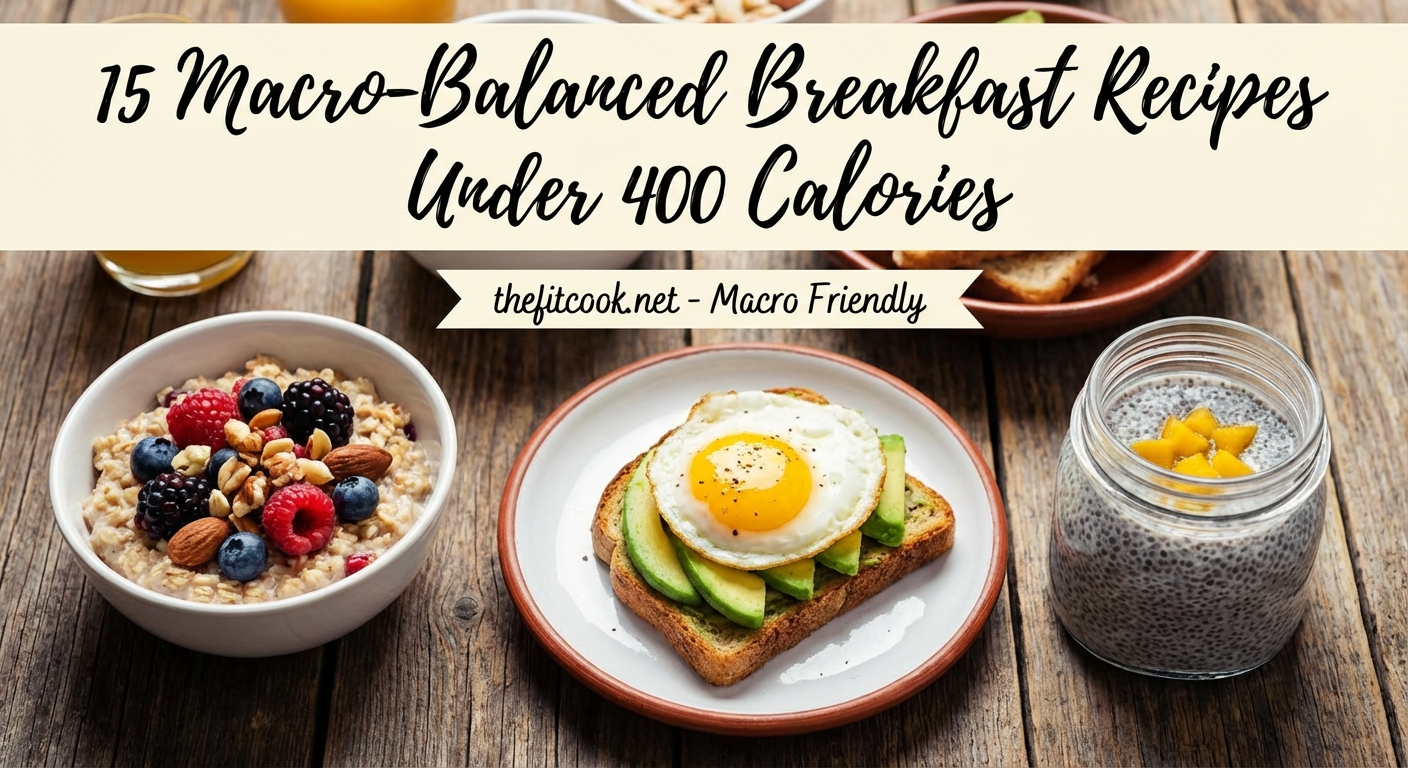
Every successful breakfast under 400 calories shares three core components. Get these right and you’ll never feel deprived.
Protein foundation: Aim for 20-30 grams minimum. This could be 3 whole eggs, 1 cup Greek yogurt, or 4 ounces lean turkey. Protein triggers satiety hormones and prevents muscle breakdown during morning fasted cardio or your commute.
Healthy fats: Include 10-15 grams from sources like avocado, nuts, or olive oil. Fat slows digestion and helps absorb fat-soluble vitamins from vegetables. Skip the fat and you’ll be hungry faster.
Strategic carbs: Choose 30-40 grams from oats, sweet potato, or whole grain bread. These provide energy without spiking blood sugar when paired with protein and fat.
Here’s how different breakfast types stack up:
| Breakfast Type | Protein (g) | Carbs (g) | Fat (g) | Satiety Rating |
|---|---|---|---|---|
| Egg scramble with veggies | 24 | 12 | 18 | High |
| Greek yogurt bowl | 20 | 35 | 8 | Medium-High |
| Protein pancakes | 28 | 32 | 10 | High |
| Oatmeal with protein powder | 25 | 38 | 9 | Medium-High |
| Breakfast burrito (small) | 22 | 28 | 14 | High |
Simple Swaps That Cut Calories Without Losing Flavor
You don’t need special ingredients to hit 400 calories. Small substitutions make traditional breakfasts work within your target.
Replace regular bacon with turkey bacon and save 60 calories per serving. The texture differs slightly but seasoning bridges the gap. Add smoked paprika or a dash of liquid smoke to boost flavor.
Use one whole egg plus two egg whites instead of three whole eggs. You’ll get the same volume and similar protein while cutting 90 calories. The yolk provides flavor and nutrients, so keep at least one.
Swap half your cheese for nutritional yeast. This adds a savory, cheesy taste with B vitamins and only 20 calories per tablespoon compared to 110 for shredded cheddar.
Choose English muffins over bagels. A whole wheat English muffin has 120 calories versus 280 for a standard bagel. Toast it well and add volume with vegetables.
Protein-Forward Breakfast Formulas Under 400 Calories
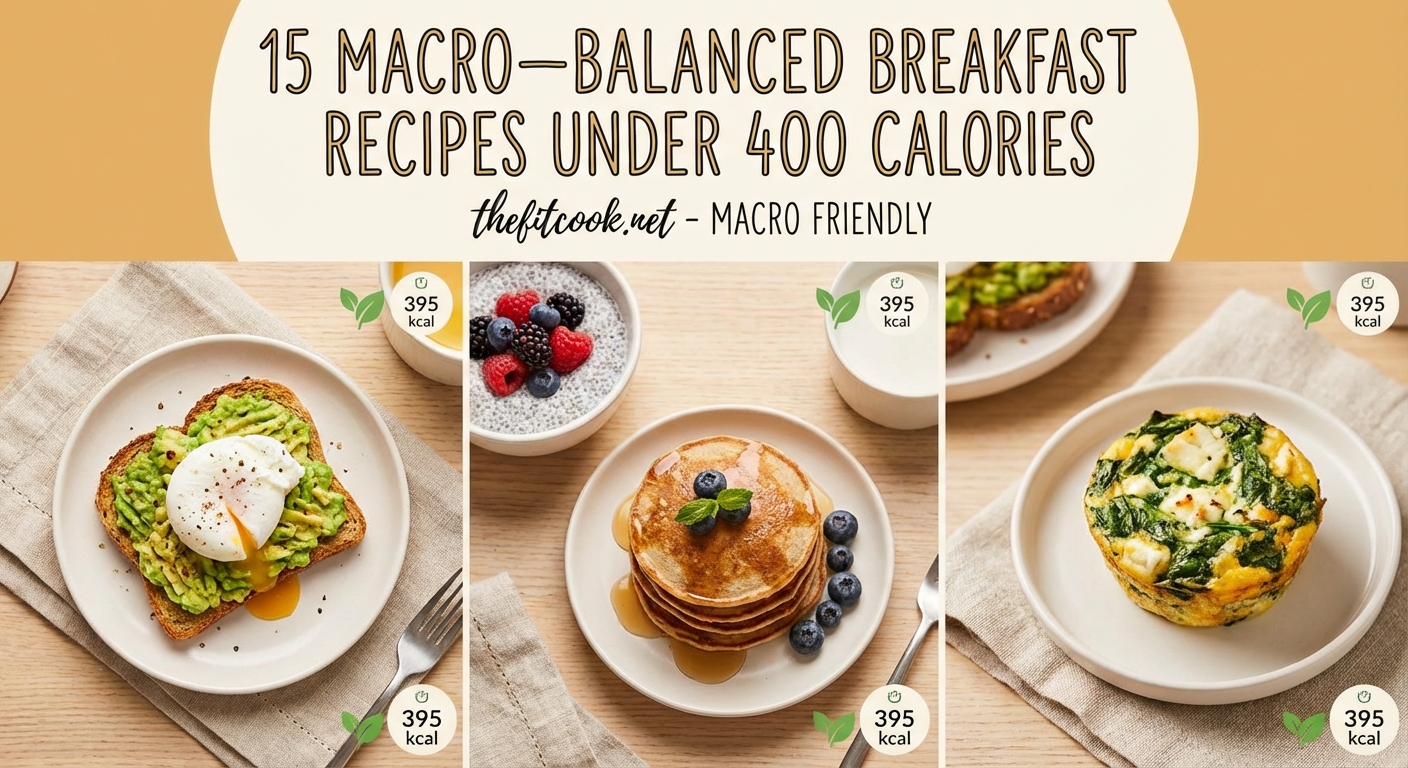
Starting with protein simplifies the math. Once you nail your protein source, the remaining calories fill in naturally.
The egg base formula: 2-3 whole eggs (140-210 cal) + unlimited non-starchy vegetables (20-40 cal) + 1 slice whole grain toast (80-100 cal) + 1 tsp butter or oil (40 cal) = 280-390 calories total.
Add spinach, tomatoes, mushrooms, and bell peppers without worry. These vegetables add volume and micronutrients with minimal calorie impact. Season aggressively with herbs and spices.
The Greek yogurt formula: 1 cup nonfat Greek yogurt (100 cal) + 1/2 cup berries (40 cal) + 1/4 cup granola (120 cal) + 1 tbsp almond butter (95 cal) = 355 calories total.
This combination delivers 20+ grams of protein and feels indulgent. The granola provides crunch while almond butter adds healthy fats that extend satiety.
The protein pancake formula: 1 scoop protein powder (120 cal) + 1 banana (105 cal) + 2 eggs (140 cal) + cooking spray (10 cal) = 375 calories for 4-5 pancakes.
Blend everything and cook like regular pancakes. Top with sugar-free syrup or fresh berries. This formula works for meal prep since pancakes reheat well.
“The biggest mistake people make with calorie-controlled breakfasts is cutting fat completely. You need 10-15 grams of healthy fat to stay full and absorb nutrients properly. Without it, you’ll be raiding the snack drawer by 10 a.m.”
Meal Prep Strategies for 400 Calorie Breakfasts
Batch cooking breakfast saves time and ensures you hit your targets even on rushed mornings. Three approaches work best depending on your schedule.
Egg muffin method
- Whisk 12 eggs with salt, pepper, and your favorite seasonings
- Divide chopped vegetables and cooked protein among 12 muffin cups
- Pour egg mixture over fillings until cups are 3/4 full
- Bake at 350°F for 22-25 minutes until set
- Cool completely and store in containers with calorie counts written on top
Two muffins typically equal 200-250 calories. Pair with a piece of fruit or slice of toast to reach 400. These last five days in the refrigerator or three months frozen.
If you’re serious about streamlining your morning routine, check out how to meal prep 20 high-protein breakfasts in under 2 hours for a complete system.
Overnight oats assembly line
Mix dry ingredients for five servings in individual containers. Each container gets 1/2 cup oats, 1 scoop protein powder, cinnamon, and a pinch of salt. Store these in the pantry.
The night before, add 3/4 cup unsweetened almond milk and refrigerate. In the morning, top with fresh fruit. This method takes 30 seconds of evening prep for a complete breakfast.
Freezer breakfast burritos
Scramble 18 eggs with vegetables and cooked turkey sausage. Divide among 12 small whole wheat tortillas with a sprinkle of cheese. Roll tightly, wrap in foil, and freeze.
Microwave for 90 seconds from frozen. Each burrito contains roughly 300 calories, leaving room for a piece of fruit or small smoothie.
For more freezer-friendly options, the ultimate macro-friendly freezer meal prep guide for beginners covers storage techniques that maintain quality.
Common Breakfast Mistakes That Waste Your 400 Calories
Even with good intentions, certain habits sabotage your calorie budget before you realize it.
Liquid calories add up invisibly. A large latte with whole milk and flavored syrup contains 250-300 calories before food touches your plate. Switch to black coffee with a splash of almond milk or choose Americanos with sugar-free flavoring.
Portion creep happens gradually. That “small” bowl of cereal actually holds 2.5 servings when you pour freely. Measure your portions for two weeks to recalibrate your eye. Most people overestimate by 30-40%.
Healthy halos mislead you. Acai bowls, avocado toast, and smoothie bowls sound nutritious but often contain 600-800 calories. Restaurants add extra granola, honey, and nut butter to improve taste. Make these at home where you control portions.
Skipping vegetables leaves you hungry. Vegetables add volume and fiber with minimal calories. A two-egg omelet feels small, but add a cup of sautéed vegetables and suddenly it’s satisfying. Always include at least one cup of non-starchy vegetables.
Sweet Breakfast Options That Stay Under 400 Calories
You don’t have to choose savory every morning. Sweet breakfasts work when built around protein and whole foods.
Protein French toast: Whisk 2 eggs with 1/4 cup milk, vanilla, and cinnamon. Dip 2 slices whole grain bread and cook in a nonstick pan. Top with 1/2 cup berries and 2 tbsp sugar-free syrup. Total: 320 calories, 24g protein.
Cottage cheese bowl: Combine 1 cup low-fat cottage cheese with 1/2 sliced banana, 1 tbsp chopped walnuts, and a drizzle of honey. Add cinnamon and vanilla extract. Total: 285 calories, 28g protein.
Protein smoothie bowl: Blend 1 scoop protein powder, 1/2 frozen banana, 1/2 cup frozen berries, and 3/4 cup unsweetened almond milk until thick. Pour into a bowl and top with 1 tbsp sliced almonds and 2 tbsp granola. Total: 340 calories, 28g protein.
Apple cinnamon baked oats: Mix 1/2 cup oats, 1 scoop vanilla protein powder, 1/2 diced apple, 3/4 cup almond milk, 1 egg, cinnamon, and baking powder. Bake at 350°F for 25 minutes. Total: 380 calories, 32g protein.
These recipes satisfy sweet cravings while delivering the protein and fiber you need. The key is using protein powder or Greek yogurt as the base rather than relying solely on carbs.
Savory Breakfast Bowls for Maximum Satisfaction
Bowl-style breakfasts let you mix textures and flavors while controlling portions easily. The formula stays consistent across variations.
Start with a base of 1/2 cup cooked grains or 1 cup leafy greens (50-100 cal). Add 4-5 oz protein like eggs, chicken, or tofu (140-180 cal). Include 1/2 cup roasted vegetables (30-50 cal). Top with 1/4 avocado or 1 tbsp dressing (50-70 cal).
Southwestern breakfast bowl: Scrambled eggs over spinach with black beans, salsa, and a small amount of cheese. Add cilantro and lime juice. Total: 360 calories.
Mediterranean egg bowl: Soft-boiled eggs on arugula with roasted tomatoes, cucumber, olives, and 2 tbsp hummus. Total: 340 calories.
Asian-inspired bowl: Scrambled eggs with sautéed bok choy, shiitake mushrooms, and a drizzle of sesame oil. Top with everything bagel seasoning. Total: 310 calories.
Breakfast power bowl: Turkey sausage crumbles over roasted sweet potato cubes with kale and a fried egg. Total: 385 calories.
These bowls work hot or cold, making them perfect for meal prep. Cook all components on Sunday and assemble throughout the week.
Adjusting Recipes for Different Calorie Targets
Not everyone needs exactly 400 calories at breakfast. Your target depends on total daily calories, activity level, and meal timing preferences.
For a 350-calorie target, reduce portions by 12-15%. This typically means using 2 eggs instead of 3, or cutting the toast in half. The macro ratios stay similar.
For a 450-calorie target, add 50 calories of healthy carbs or fats. An extra 1/2 cup berries, small apple, or tablespoon of nut butter bridges the gap without requiring recipe changes.
Athletes training in the morning might need 500-600 calories. Add a pre-workout banana or post-workout protein shake alongside your base breakfast. Split the calories between before and after training.
Those following low carb breakfast ideas that power morning workouts without the crash can adjust these recipes by reducing grains and increasing healthy fats.
Shopping List Essentials for 400 Calorie Breakfasts
Stock these items and you’ll always have breakfast options ready.
Proteins: Eggs, Greek yogurt, cottage cheese, protein powder, turkey bacon, chicken sausage, smoked salmon
Carbs: Oats, whole grain bread, English muffins, sweet potatoes, quinoa, berries, bananas, apples
Fats: Avocados, nuts, nut butter, olive oil, coconut oil, seeds
Vegetables: Spinach, kale, bell peppers, tomatoes, mushrooms, onions, zucchini
Flavor boosters: Hot sauce, salsa, herbs, spices, vanilla extract, cinnamon, sugar-free syrup, nutritional yeast
Buy proteins and vegetables fresh weekly. Stock pantry staples monthly. Freeze bread products and use as needed to prevent waste.
Shopping strategically prevents decision fatigue. When you know these ingredients always work together, morning meal planning becomes automatic.
Balancing Macros Without Obsessing Over Numbers
Tracking macros helps initially but shouldn’t become stressful. Learn the visual cues that indicate proper balance.
Your breakfast plate should show roughly 1/4 protein, 1/4 starch, and 1/2 vegetables when eating savory options. For bowls and scrambles, this translates to a palm-sized portion of protein, a cupped handful of carbs, and unlimited non-starchy vegetables.
Sweet breakfasts need protein mixed in rather than sitting separately. If you can’t see or taste the protein source, you probably haven’t included enough.
After tracking for 2-3 weeks, most people can eyeball portions accurately. Spot-check monthly by measuring one breakfast to ensure you haven’t drifted from your targets.
Understanding what are macros and why they matter more than calories provides the foundation for intuitive eating within your goals.
Making Restaurant Breakfasts Work Within Your Budget
Eating out doesn’t mean abandoning your calorie goals. Strategic ordering keeps you on track.
Choose egg-based dishes and request cooking spray instead of butter. Ask for vegetables in place of hash browns or home fries. Request toast dry with butter on the side so you control the amount.
Order oatmeal with berries and ask for milk on the side. Most restaurants serve oversized portions with added butter and sugar. Control these additions yourself.
Skip breakfast sandwiches on croissants or biscuits. Choose English muffins or whole grain toast instead, saving 150-200 calories.
Request half portions or immediately box half your meal before eating. Restaurant breakfasts often contain 800-1,200 calories as served.
Coffee shops pose unique challenges. Plain coffee with a splash of milk has 10-20 calories. Flavored lattes can hit 400 calories alone. Choose Americanos with sugar-free syrup and a splash of milk to save 200+ calories for actual food.
Breakfast Timing and Workout Considerations
When you eat matters as much as what you eat, especially around training.
Pre-workout breakfast (eaten 60-90 minutes before training): Focus on easily digestible carbs with moderate protein. Try 1/2 cup oatmeal with 1 scoop protein powder and 1/2 banana. Total: 280 calories. Add a post-workout snack to reach 400 total.
Post-workout breakfast (eaten within 60 minutes after training): Prioritize protein and carbs to replenish glycogen. Egg white scramble with sweet potato and fruit works perfectly. Total: 380 calories.
Non-training days: Standard balanced breakfast with equal attention to all three macros. The formulas above work well.
Intermittent fasting: If breakfast is your first meal after 14-16 hours fasted, include slightly more fat to ease digestion. Start with 1/2 avocado or 2 tbsp nut butter.
Learn more about the ultimate guide to post-workout nutrition to optimize meal timing around training.
Troubleshooting Common Breakfast Challenges
Real life creates obstacles. Here’s how to handle them without derailing progress.
No appetite in the morning: Start with something small like Greek yogurt or a protein smoothie. Appetite often increases as your body adapts to morning eating. Don’t force a full meal immediately.
Limited time: Prep the night before or choose 5-minute options like Greek yogurt bowls or 10 high protein breakfast recipes ready in under 10 minutes. Having go-to options prevents skipping breakfast entirely.
Travel or hotel stays: Pack protein powder, instant oats, and nut butter packets. Most hotels offer hot water and microwaves. Combine these with fresh fruit from a grocery store for a complete breakfast.
Picky family members: Make base recipes neutral and let everyone customize. Scrambled eggs work for everyone when toppings vary. Cook once, serve multiple ways.
Budget constraints: Eggs remain the most affordable complete protein. Oats cost pennies per serving. Frozen vegetables match fresh nutrition at lower prices. Focus on these staples rather than expensive specialty items.
Making 400 Calories Feel Like More
Psychology affects satisfaction as much as nutrition does. These techniques make meals feel more substantial.
Use smaller plates and bowls. A full small plate signals abundance to your brain. The same portion on a large plate looks sparse.
Add volume with vegetables. Spinach, mushrooms, and tomatoes bulk up scrambles and omelets. You can eat a huge plate while staying within calories.
Eat slowly and mindfully. Put your fork down between bites. Chew thoroughly. A meal eaten over 15 minutes feels more satisfying than one rushed in 5 minutes.
Include variety in texture. Combine creamy (yogurt or avocado), crunchy (nuts or toast), and soft (eggs or fruit) elements. Multiple textures create a more interesting eating experience.
Drink water or tea with your meal. Fluids add volume to your stomach, triggering fullness signals. Aim for 12-16 oz with breakfast.
Plate your food intentionally. Take 30 seconds to arrange food attractively rather than eating from containers. This small act increases satisfaction.
Your Morning Routine Starts With Smart Choices
Four hundred calorie breakfasts don’t require sacrifice or complicated recipes. They need smart combinations of whole foods in proper portions.
Focus on protein first, add vegetables for volume, and include enough healthy fat to stay satisfied. The specific foods matter less than hitting these targets consistently.
Meal prep removes morning stress. Batch cook on Sunday and you’ll have grab-and-go options all week. Even preparing ingredients rather than complete meals saves valuable time when you’re rushing.
Start with three recipes you enjoy and rotate them for two weeks. Once these become automatic, add variety. Building habits matters more than perfect variety from day one.
Your breakfast sets the tone for every food choice that follows. Get this meal right and the rest of your day flows easier. Four hundred calories is enough when you build it properly.