How to Meal Prep 150g Protein Daily Without Getting Bored
Getting 150g of protein every day sounds intense until you break it down into actual meals. Most people think they need to chug shakes all day or eat nothing but chicken breasts. The truth is simpler and way more delicious than that.
Hitting 150g of protein daily requires spreading intake across 4-5 meals with 30-40g each. Focus on whole food sources like Greek yogurt, eggs, lean meats, and legumes. Strategic meal prep and smart snacking make this sustainable without relying on supplements or eating the same boring meals repeatedly.
Why 150g Matters for Your Goals
Your body needs protein for more than just building muscle. It repairs tissues, creates enzymes, and keeps you feeling full between meals.
For someone weighing around 150-180 pounds who strength trains regularly, 150g hits the sweet spot. It supports muscle growth without going overboard.
Parents juggling kids and workouts need this amount too. Protein keeps energy steady and prevents that 3pm crash when you’re shuttling kids to soccer practice.
The challenge isn’t just hitting the number. It’s doing it without eating grilled chicken for every single meal.
Breaking Down Your Daily Protein Math
Let’s make this practical. You need roughly 30-40g of protein per meal if you eat four times a day.
That’s one main protein source plus a supporting player at each meal. Breakfast might be eggs plus Greek yogurt. Lunch could be ground turkey with beans.
Here’s what different protein amounts actually look like:
| Food | Portion | Protein |
|---|---|---|
| Chicken breast | 4 oz | 35g |
| Greek yogurt | 1 cup | 20g |
| Eggs | 3 large | 18g |
| Ground beef (93% lean) | 4 oz | 24g |
| Cottage cheese | 1 cup | 28g |
| Lentils | 1 cup cooked | 18g |
| Salmon | 4 oz | 25g |
| Protein powder | 1 scoop | 20-25g |
Notice how mixing sources gives you variety and hits different nutritional needs. Red meat brings iron. Fish has omega-3s. Dairy packs calcium.
Your 150g Protein Blueprint
Here’s a realistic day that gets you to 150g without feeling like a chore.
Breakfast (35-40g)
Start strong because skipping protein at breakfast makes the rest of your day harder.
Three scrambled eggs with a cup of cottage cheese mixed in gets you to 35g before you leave the house. Add some salsa and avocado for flavor.
Or try Greek yogurt (20g) topped with a scoop of protein powder (25g) and berries. Tastes like dessert, works like fuel.
Mid-Morning Snack (15-20g)
This bridges the gap to lunch without making you feel stuffed.
String cheese (7g) plus a handful of almonds (6g) and some turkey slices (8g) keeps it simple. Pack it the night before.
Hard-boiled eggs work here too. Make a dozen on Sunday and grab two when you need them.
Lunch (35-40g)
This is where meal prep saves you. Cook once, eat three or four times.
Ground turkey (4 oz, 28g) over quinoa (1 cup, 8g) with black beans (½ cup, 7g) hits 43g. Season it differently each day. Monday gets taco spices. Wednesday goes Mediterranean with oregano and lemon.
Leftover rotisserie chicken makes this even easier. Shred it Sunday night and portion it into containers.
Afternoon Snack (15-20g)
You’re probably getting hungry around 3 or 4pm. Feed that hunger with protein instead of reaching for chips.
Protein shake made with milk instead of water bumps it from 25g to 33g. Blend in a banana and peanut butter if you need more calories.
Tuna packets (17g) with whole grain crackers work if you’re at the office. No refrigeration needed.
Dinner (35-40g)
End your day with a satisfying meal that doesn’t require much thought.
Salmon (4 oz, 25g) with edamame (1 cup, 17g) gets you to 42g. Roast some vegetables and call it done.
Beef stir-fry with mixed vegetables over cauliflower rice keeps carbs lower if that matters for your goals. Four ounces of sirloin brings 26g, and adding tofu (½ cup, 10g) to the stir-fry boosts it further.
Making Variety Actually Happen
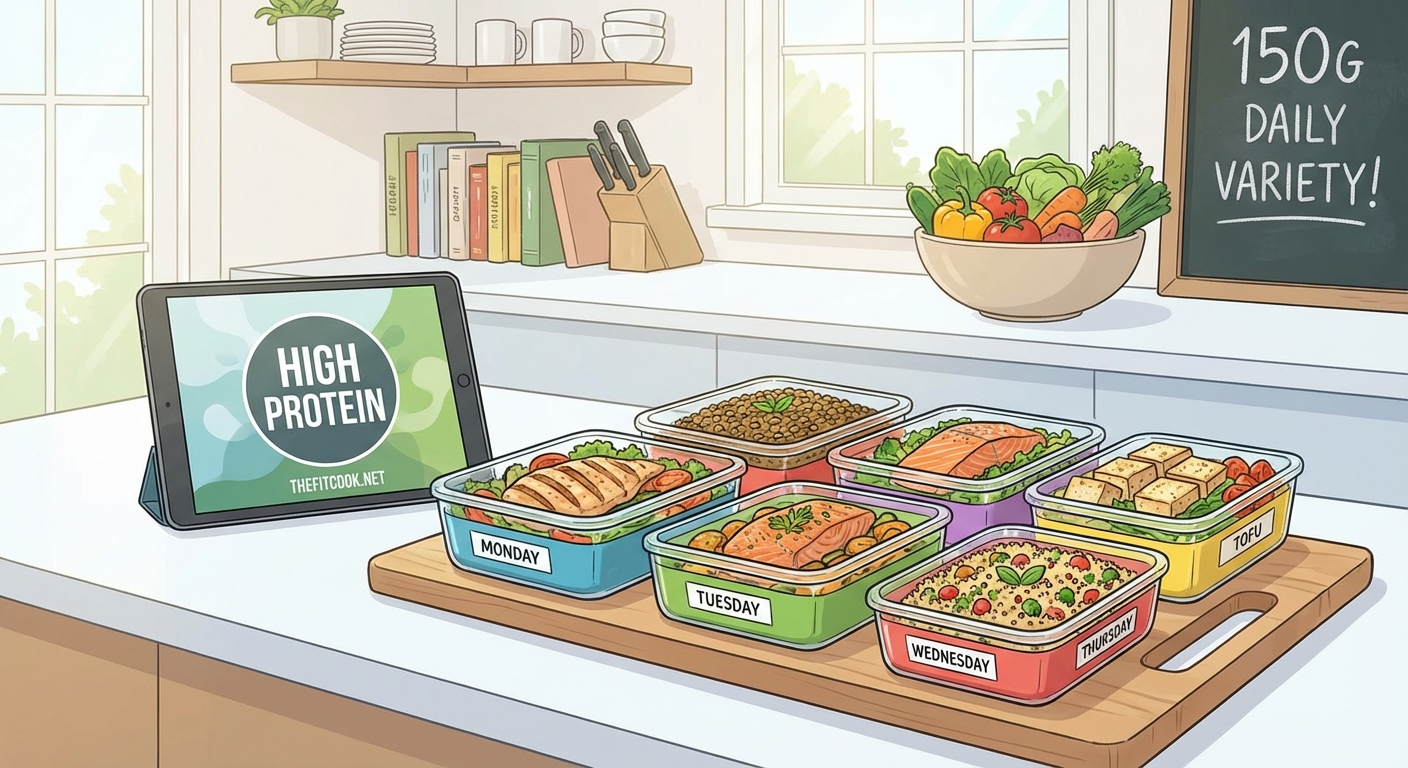
Eating the same meals every day kills motivation faster than anything else.
Rotate your protein sources by day of the week. Monday is poultry day. Tuesday brings fish. Wednesday goes vegetarian with beans and tofu.
Change your seasonings and cooking methods. Baked chicken on Monday becomes grilled chicken fajitas on Thursday. Same protein, completely different meal.
“The people who succeed with high protein intake long term are the ones who treat it like a framework, not a prison. You need structure, but you also need flexibility to enjoy your food.”
Common Mistakes That Sabotage Your Progress
Loading all your protein into one or two meals doesn’t work. Your body can only process about 30-40g effectively at once for muscle building.
Eating 80g at dinner and 20g the rest of the day wastes protein and leaves you hungry all afternoon.
Forgetting about plant proteins limits your options. Lentils, chickpeas, and quinoa add variety and bring fiber that animal proteins lack.
Ignoring preparation makes everything harder. You won’t hit 150g consistently if you’re figuring out meals on the fly every single day.
Here’s what works versus what doesn’t:
| What Doesn’t Work | What Actually Works |
|---|---|
| All protein at dinner | Spread across 4-5 meals |
| Only chicken and protein shakes | Mix of animal, dairy, and plant sources |
| Winging it daily | Prep 2-3 protein sources on Sunday |
| Skipping breakfast protein | 30g+ before 9am |
| Ignoring snacks | Strategic 15-20g snacks between meals |
Smart Swaps When You’re Bored
Swap Greek yogurt for cottage cheese in your breakfast. Different texture, same protein punch.
Replace ground beef with ground turkey or bison. Leaner options that season well with anything.
Try different fish. Cod, tilapia, and mahi-mahi all cook in under 15 minutes and taste nothing like salmon.
Use eggs differently. Scrambled gets old, but frittatas, egg muffins, and shakshuka keep things interesting.
Meal Prep Strategies That Save Time
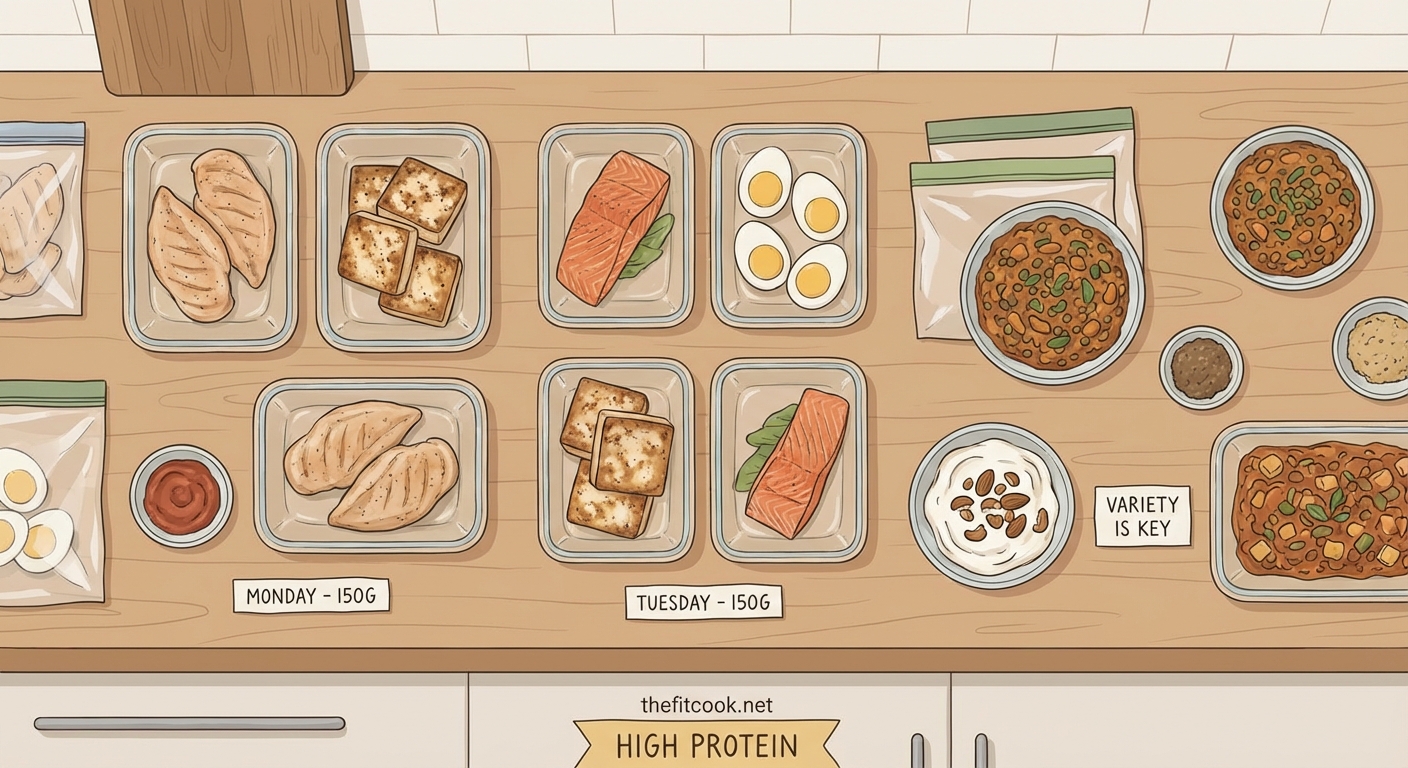
- Pick two protein sources to prep on Sunday. Maybe chicken thighs and hard-boiled eggs.
- Cook them in bulk using different methods. Bake one batch of chicken, grill another.
- Portion everything into containers immediately. Don’t wait until you’re hungry to decide serving sizes.
- Prep your snacks too. Portion out nuts, cut up cheese, make protein balls.
- Keep a backup plan in your freezer. Frozen cooked chicken or pre-portioned ground beef saves you on busy nights.
This system means you’re never more than five minutes from a high-protein meal.
Budget-Friendly Protein Sources
Eggs remain unbeatable for cost per gram of protein. A dozen gives you 72g for about three dollars.
Canned tuna and salmon cost less than fresh and last forever in your pantry. Mix with Greek yogurt instead of mayo for extra protein.
Dried beans and lentils are absurdly cheap. One pound of dried lentils makes about eight servings with 18g each.
Whole chickens cost less per pound than breasts. Roast one Sunday and use it all week in different ways.
Buy whatever meat is on sale and freeze it. Ground beef at 30% off becomes taco meat, spaghetti sauce, or burger patties.
When Life Gets Messy
You’ll have days when meal prep doesn’t happen. Kids get sick. Work explodes. Life happens.
Keep these emergency options ready:
- Rotisserie chicken from any grocery store (whole chicken has 140g protein)
- Canned chicken or tuna
- Pre-cooked frozen chicken strips (check the ingredients)
- Protein bars that actually taste good (keep three in your bag)
- Greek yogurt cups (buy the big container and portion it yourself to save money)
Having backup options prevents the drive-through from becoming your protein source.
Tracking Without Obsessing
You don’t need to weigh everything on a food scale forever. Do it for one week to calibrate your eyeballs.
After that, you’ll know what four ounces of chicken looks like on your plate. You’ll recognize a cup of Greek yogurt.
Use your hand as a guide. Your palm is roughly four ounces of meat. Your fist is about a cup.
Check in with an app once a week to make sure you’re still on track. Daily tracking burns people out unless they genuinely enjoy it.
Adjusting for Your Activity Level
Someone training for a marathon needs different timing than someone lifting weights four days a week.
Endurance athletes should spread protein even more throughout the day. Add a small protein snack before and after long runs.
Strength trainers benefit from slightly more protein right after lifting. That post-workout window matters, but it’s not as narrow as people think. Getting protein within two hours works fine.
Rest days still need 150g. Your body repairs muscle on off days, not just training days.
Plant-Based Options That Actually Work
Vegetarians and vegans can absolutely hit 150g, but it requires more planning.
Combine complementary proteins. Rice and beans together create a complete amino acid profile.
Tempeh and tofu become staples. Four ounces of tempeh packs 21g. Firm tofu brings 20g per cup.
Seitan is nearly pure protein at 25g per serving. It takes on whatever flavor you give it.
Protein powder becomes more necessary, not as a crutch but as a practical tool. Pea protein, hemp protein, and brown rice protein all work.
Nutritional yeast adds protein and a cheesy flavor to everything. Two tablespoons give you 8g.
Making It Sustainable Long Term
The goal isn’t just hitting 150g this week. It’s building habits that last months and years.
Find ten meals you actually enjoy that hit your protein target. Rotate through those instead of forcing yourself to eat things you hate.
Allow flexibility on weekends or special occasions. One lower protein day won’t ruin your progress if the other six days are solid.
Reassess every few months. Your protein needs change as your weight and activity level change.
Building Your Protein Habit
Start where you are right now. If you’re currently eating 80g daily, jumping straight to 150g will feel overwhelming.
Add one high-protein snack this week. Next week, boost your breakfast. The week after, upgrade your lunch protein.
Small changes compound. Adding 15g per week gets you to 150g in about five weeks without shocking your system or your budget.
Track how you feel. Better recovery from workouts, more stable energy, and less afternoon hunger all signal you’re on the right path.
This isn’t about perfection. It’s about progress and finding a protein intake that supports your goals without taking over your entire life. Start with one meal today, and build from there.