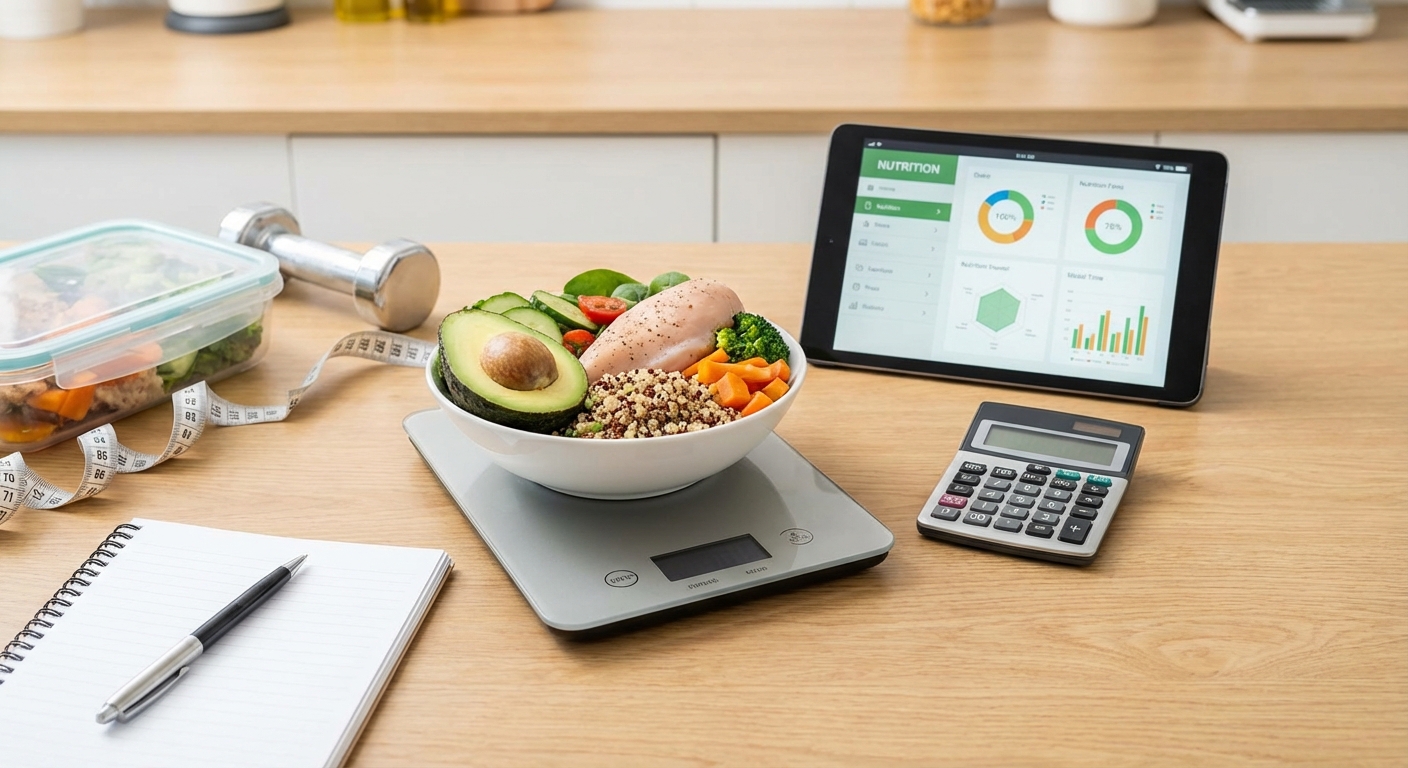
You’ve probably heard people in the gym talk about “hitting their macros” or tracking protein, carbs, and fats like it’s some secret code. The truth is, calculating your macronutrients isn’t complicated once you understand the basic math behind it. You don’t need fancy apps or expensive coaches to figure out what your body needs. Just a calculator, your current stats, and about ten minutes of focused work.
Calculating macros involves determining your total daily energy expenditure, adjusting calories based on your goal, then splitting those calories into protein, carbs, and fats. Start with your body weight and activity level, set protein first at 0.8 to 1 gram per pound, allocate fats at 25 to 30 percent of total calories, and fill the rest with carbohydrates for energy and performance.
Understanding what macros actually are
Macronutrients are the three main nutrients your body needs in large amounts: protein, carbohydrates, and fats. Each one serves a different purpose and contains a specific number of calories per gram.
Protein provides four calories per gram and helps build and repair muscle tissue. Carbohydrates also deliver four calories per gram and fuel your workouts and daily activities. Fats contain nine calories per gram and support hormone production, brain function, and nutrient absorption.
When people talk about tracking macros, they’re really talking about eating specific amounts of each macronutrient to reach a body composition goal. This approach gives you way more control than just counting calories alone.
You could eat 2,000 calories of donuts or 2,000 calories of chicken, rice, and vegetables. Same calorie count, but your body will respond completely differently. That’s why macros matter.
Calculating your baseline calorie needs
Before you can split up your macros, you need to know how many total calories your body burns each day. This number is called your Total Daily Energy Expenditure, or TDEE.
Start with your Basal Metabolic Rate, which is the energy your body uses just to stay alive. You can estimate this using the Mifflin St Jeor equation.
For men: BMR = (10 × weight in kg) + (6.25 × height in cm) – (5 × age) + 5
For women: BMR = (10 × weight in kg) + (6.25 × height in cm) – (5 × age) – 161
Let’s say you’re a 30 year old woman who weighs 150 pounds (68 kg) and stands 5’6″ (168 cm). Your BMR would be roughly 1,425 calories.
But you don’t just lie in bed all day. You need to multiply your BMR by an activity factor:
- Sedentary (little to no exercise): BMR × 1.2
- Lightly active (exercise 1 to 3 days per week): BMR × 1.375
- Moderately active (exercise 3 to 5 days per week): BMR × 1.55
- Very active (exercise 6 to 7 days per week): BMR × 1.725
- Extremely active (physical job plus daily training): BMR × 1.9
If our example person trains four days a week, her TDEE would be 1,425 × 1.55 = 2,209 calories per day.
That’s your maintenance number. Eat this amount and your weight should stay stable.
Adjusting calories for your specific goal
Now that you have your TDEE, you need to adjust it based on whether you want to lose fat, build muscle, or maintain your current physique.
For fat loss, subtract 300 to 500 calories from your TDEE. A 500 calorie deficit typically leads to about one pound of fat loss per week. Smaller deficits work better for people who don’t have much weight to lose or who want to preserve maximum muscle mass.
For muscle gain, add 200 to 300 calories to your TDEE. You don’t need a massive surplus to build muscle. Eating too much above maintenance just adds unnecessary fat.
For maintenance, stick with your TDEE number. This works well if you’re happy with your weight but want to improve body composition through training.
Using our example, if the goal is fat loss, the target would be 2,209 minus 400 = 1,809 calories per day.
Setting your protein target first
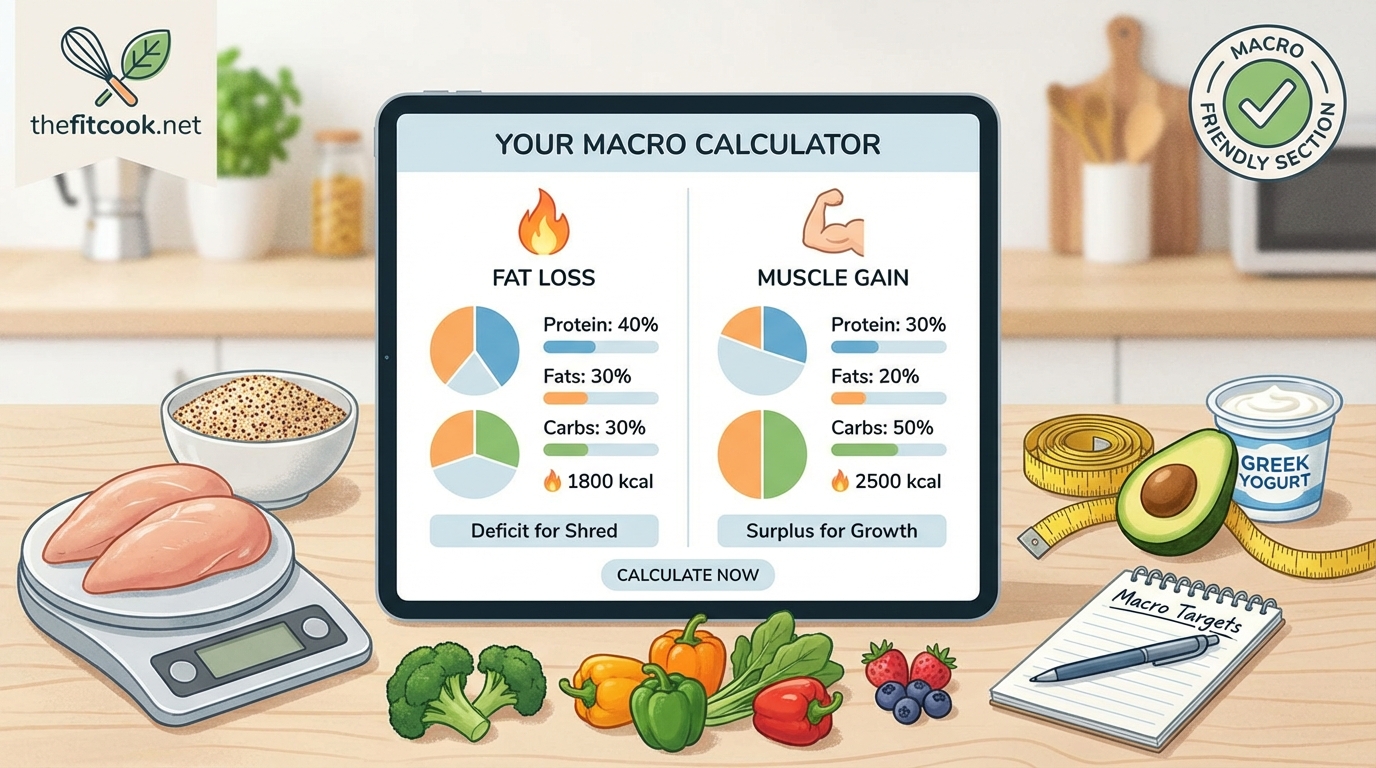
Protein should always be your first macro to calculate because it’s the most important for preserving muscle during fat loss and building new muscle during a gaining phase.
Aim for 0.8 to 1 gram of protein per pound of body weight. If you’re very overweight, use your goal body weight instead of your current weight to avoid eating excessive protein.
For our 150 pound example person, protein would be 150 × 0.9 = 135 grams per day.
Since protein contains four calories per gram, that’s 135 × 4 = 540 calories from protein.
Higher protein intakes help you feel full, prevent muscle loss during dieting, and slightly increase your metabolism through the thermic effect of food. Your body burns more calories digesting protein compared to carbs or fats.
“Setting protein first is non-negotiable. It’s the foundation that protects your muscle mass and keeps hunger in check. Everything else gets built around that number.”
Calculating your fat intake
Dietary fat supports hormone production, especially testosterone and estrogen. Going too low on fats can mess with your energy, mood, and recovery.
Set fat at 25 to 30 percent of your total calories. Some people do better with slightly more fat, especially if they’re less active or prefer lower carb approaches.
For our example with 1,809 total calories, 25 percent would be 1,809 × 0.25 = 452 calories from fat.
Since fat contains nine calories per gram, divide 452 by 9 = 50 grams of fat per day.
Don’t go below 20 percent of total calories from fat unless you have a specific reason. Your body needs fat to function properly.
Filling the rest with carbohydrates
After protein and fat are set, carbohydrates fill the remaining calories. Carbs fuel your workouts and help with recovery. They’re especially important if you do any kind of intense training.
Take your total calories and subtract the calories from protein and fat. What’s left goes to carbs.
Total calories: 1,809
Protein calories: 540
Fat calories: 452
Remaining: 1,809 – 540 – 452 = 817 calories from carbs
Since carbs contain four calories per gram, divide 817 by 4 = 204 grams of carbs per day.
Here’s the complete macro breakdown for our example:
- Protein: 135 grams (540 calories)
- Fat: 50 grams (452 calories)
- Carbs: 204 grams (817 calories)
- Total: 1,809 calories
Step by step calculation process
Let me break down the entire process into simple steps you can follow right now.
- Calculate your BMR using the Mifflin St Jeor equation based on your weight, height, age, and sex.
- Multiply your BMR by your activity factor to get your TDEE.
- Adjust your TDEE up or down based on your goal (fat loss, muscle gain, or maintenance).
- Set protein at 0.8 to 1 gram per pound of body weight and multiply by 4 to get calories.
- Set fat at 25 to 30 percent of total calories and divide by 9 to get grams.
- Subtract protein and fat calories from your total, then divide the remainder by 4 to get carb grams.
- Write down your numbers and use them as daily targets.
Common mistakes that sabotage results
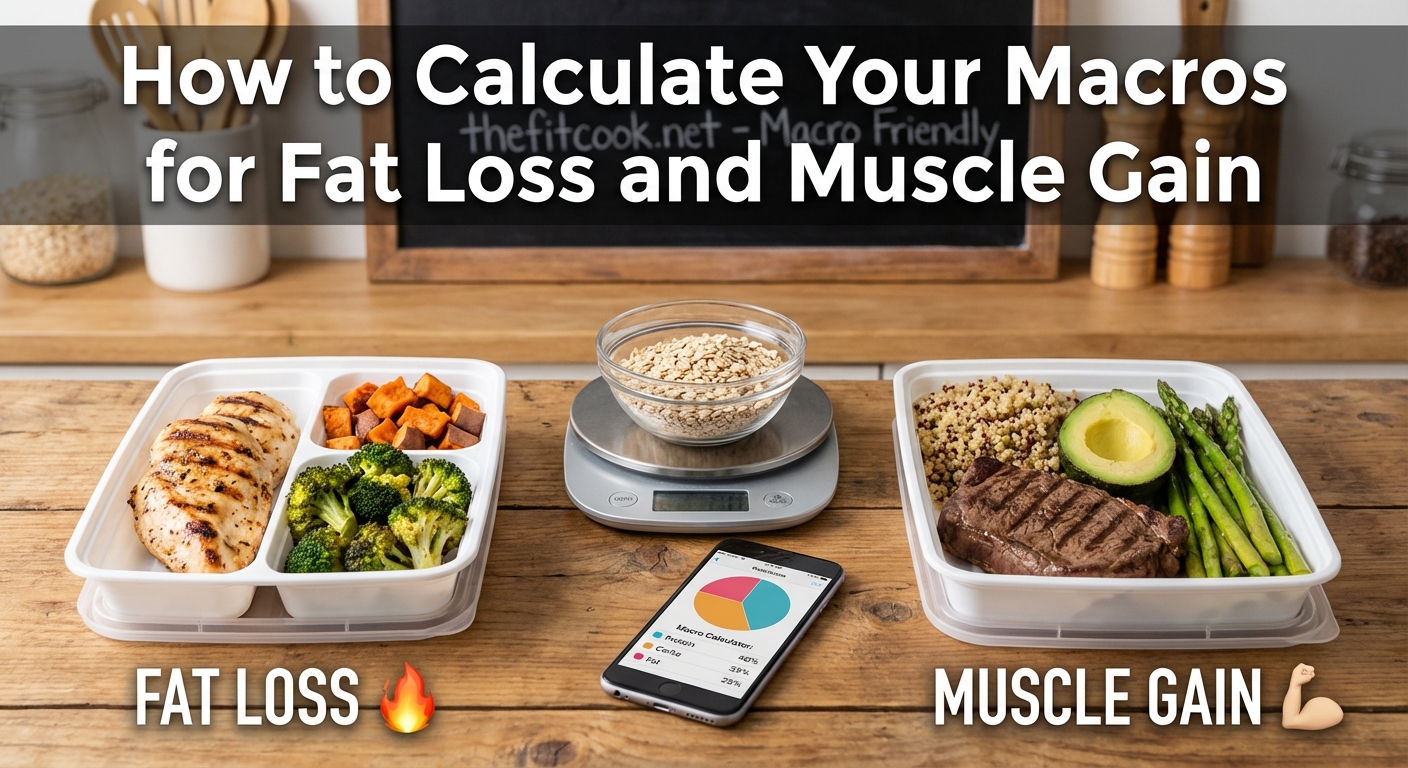
People mess up macro calculations in predictable ways. Avoid these errors and you’ll save yourself weeks of frustration.
| Mistake | Why it happens | How to fix it |
|---|---|---|
| Overestimating activity level | You want to eat more food | Be honest about your actual training volume |
| Setting protein too low | Fear of eating too much protein | Stick to 0.8 to 1 gram per pound minimum |
| Creating too large a deficit | Wanting faster results | Keep deficits at 300 to 500 calories maximum |
| Forgetting to adjust over time | Not tracking progress | Recalculate every 10 to 15 pounds of weight change |
| Using someone else’s macros | Copying a friend or influencer | Your body is different, do your own math |
| Cutting fats too low | Maximizing carbs or protein | Keep fats at 25 percent minimum for health |
The biggest mistake is probably overestimating how active you are. Unless you have a physical job and train hard six days a week, you’re probably not “very active.” Most people fall into the lightly active or moderately active categories.
Adjusting macros as you progress
Your macro needs change as your body changes. Someone who weighs 200 pounds burns more calories than someone who weighs 150 pounds, even if they do the same activities.
Recalculate your macros every time you lose or gain 10 to 15 pounds. Your TDEE will drop as you lose weight, so you’ll need to adjust your intake to keep making progress.
You might also need to adjust based on how you feel. If you’re constantly exhausted, irritable, or not recovering from workouts, you might need more carbs or overall calories. If you’re not losing fat after three weeks at your target macros, you might need to drop calories by another 100 to 200.
- Check your weight weekly at the same time under the same conditions
- Take progress photos every two weeks
- Monitor your energy levels and workout performance
- Adjust calories by 100 to 200 at a time, never make huge changes
- Give each adjustment at least two weeks before changing again
Tracking your macros in real life
Knowing your numbers is one thing. Actually hitting them consistently is another.
You’ll need a food scale for accuracy, at least at first. Eyeballing portions leads to massive errors. A tablespoon of peanut butter you eyeball might actually be three tablespoons and triple the calories.
Use a tracking app like MyFitnessPal, Cronometer, or MacrosFirst. Log everything you eat, including cooking oils, condiments, and that handful of almonds you grabbed between meals.
Prep your meals ahead when possible. Cooking chicken, rice, and vegetables in bulk makes hitting your macros way easier than trying to figure it out meal by meal throughout the day.
You don’t need to be perfect every single day. If you hit within 5 to 10 grams of each macro target, you’re doing great. Some days you’ll be over, some days under. What matters is the weekly average.
Different approaches for different goals
Your macro split might look different depending on your specific goal and training style.
For aggressive fat loss, you might push protein higher (1 to 1.2 grams per pound) to preserve muscle and control hunger. Carbs would be lower, but still enough to fuel workouts.
For muscle gain, you’d increase both carbs and overall calories. Protein stays similar (0.8 to 1 gram per pound), but the extra calories from carbs support training intensity and recovery.
For endurance athletes, carbs would be higher (sometimes 50 to 60 percent of calories) to fuel long training sessions. Protein might be slightly lower since endurance training doesn’t require as much muscle repair as strength training.
For people who prefer low carb or keto approaches, fat would be much higher (60 to 75 percent of calories) with carbs under 50 grams per day. This works for some people but isn’t necessary for fat loss.
The standard approach I outlined works for most people most of the time. Don’t overcomplicate things unless you have a specific reason.
Making your macros work with your lifestyle
You don’t need to eat six small meals a day or avoid carbs after 6pm. Those are myths. What matters is hitting your daily macro targets, not when or how often you eat.
Some people prefer three larger meals. Others do better with five smaller ones. Both approaches work as long as the daily totals match your targets.
You can absolutely eat foods you enjoy. If you want pizza, ice cream, or a burger, fit it into your macros. This flexibility is what makes tracking macros sustainable long term.
The 80/20 approach works well. Get 80 percent of your food from whole, minimally processed sources like lean meats, fruits, vegetables, whole grains, and healthy fats. Use the remaining 20 percent for foods you love that might not be “clean” but keep you sane.
Meal timing matters less than total daily intake for most people. If you train hard in the morning, having carbs before and after your workout makes sense. But it won’t make or break your results.
Your numbers are just a starting point
The macros you calculate are educated estimates, not perfect prescriptions. Your actual needs might be slightly higher or lower based on genetics, stress levels, sleep quality, and dozens of other factors.
Start with the numbers you calculated, track consistently for two to three weeks, and assess your progress. Are you losing fat at a reasonable pace? Building strength? Feeling good during workouts?
If yes, keep going. If no, make small adjustments and reassess.
Your body will tell you what it needs if you pay attention. Low energy might mean you need more carbs. Constant hunger might mean you need more protein or overall calories. Poor recovery might mean your deficit is too aggressive.
Calculating your macros gives you control over your nutrition and takes the guesswork out of eating for your goals. The math is simple. The consistency is the hard part. But now you have the exact process to figure out what your body needs and a clear path to get there.
Leave a Reply