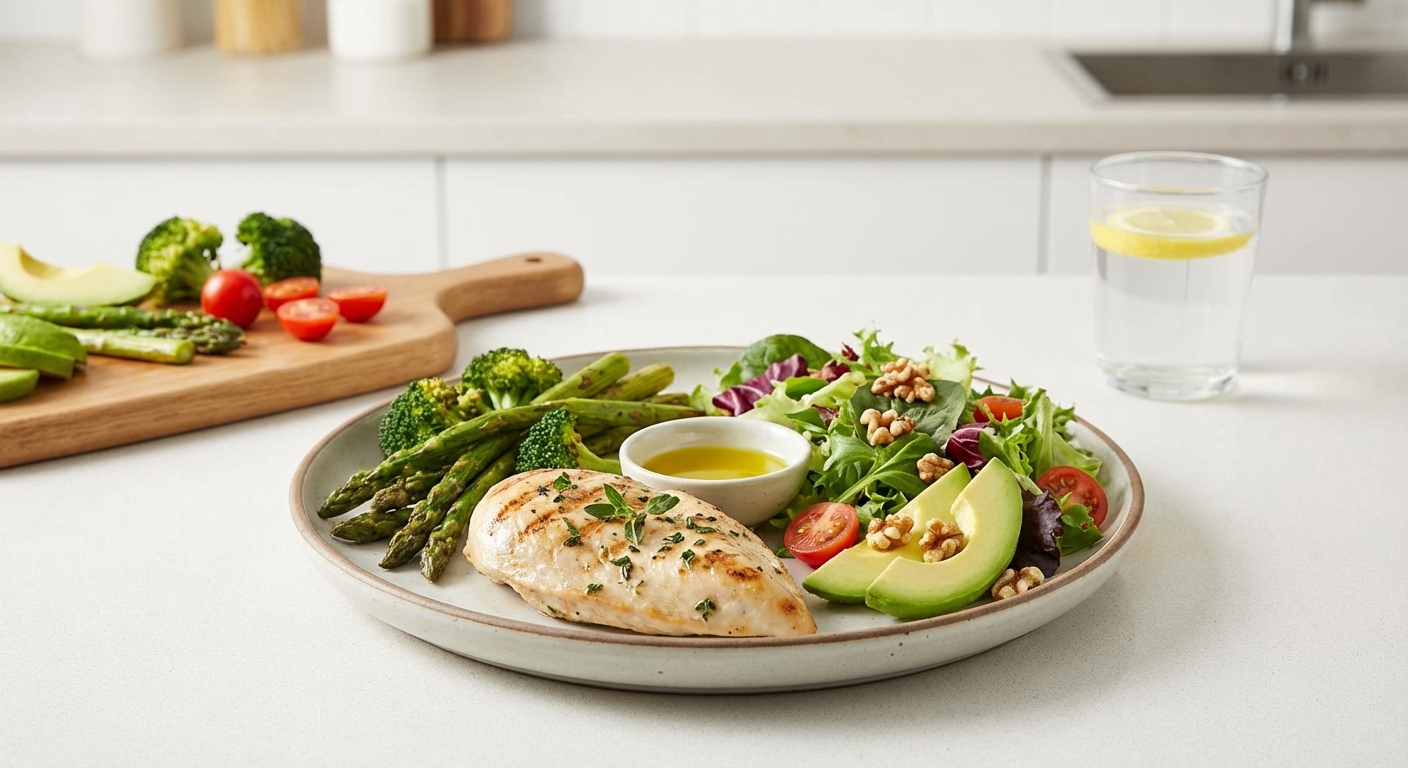
You want to drop body fat without losing the muscle you worked hard to build. That means you need more than a generic diet plan. You need a structured approach that balances macros, times nutrients around training, and keeps you full enough to stick with it for months, not just days.
A successful low carb meal plan for fat loss prioritizes high protein intake, strategic carb placement around workouts, and portion sizes that create a moderate calorie deficit. This approach preserves muscle tissue while burning fat, provided you maintain consistent strength training and adjust portions based on weekly progress rather than daily fluctuations.
Understanding how low carb supports fat loss
Reducing carbohydrates lowers insulin levels, which allows your body to access stored fat more easily. When you eat fewer carbs, your body shifts toward using fat as its primary fuel source instead of constantly relying on glucose.
But here’s what most people get wrong. They slash carbs to near zero and wonder why their workouts suffer and their muscle starts to flatten. The goal isn’t to eliminate carbs completely. The goal is to reduce them enough to trigger fat burning while keeping enough around your training sessions to fuel performance and recovery.
Your body can maintain muscle on lower carbs as long as protein stays high and training stimulus remains consistent. Studies show that adequate protein intake during calorie restriction is the most important factor for muscle retention, even more important than carb intake itself.
The sweet spot for most people sits between 50 and 100 grams of carbs per day. Athletes or people training intensely might need 100 to 150 grams. Sedentary individuals might do well with 30 to 50 grams. The right number depends on your activity level, current body composition, and how your energy feels day to day.
Building your plate for maximum results
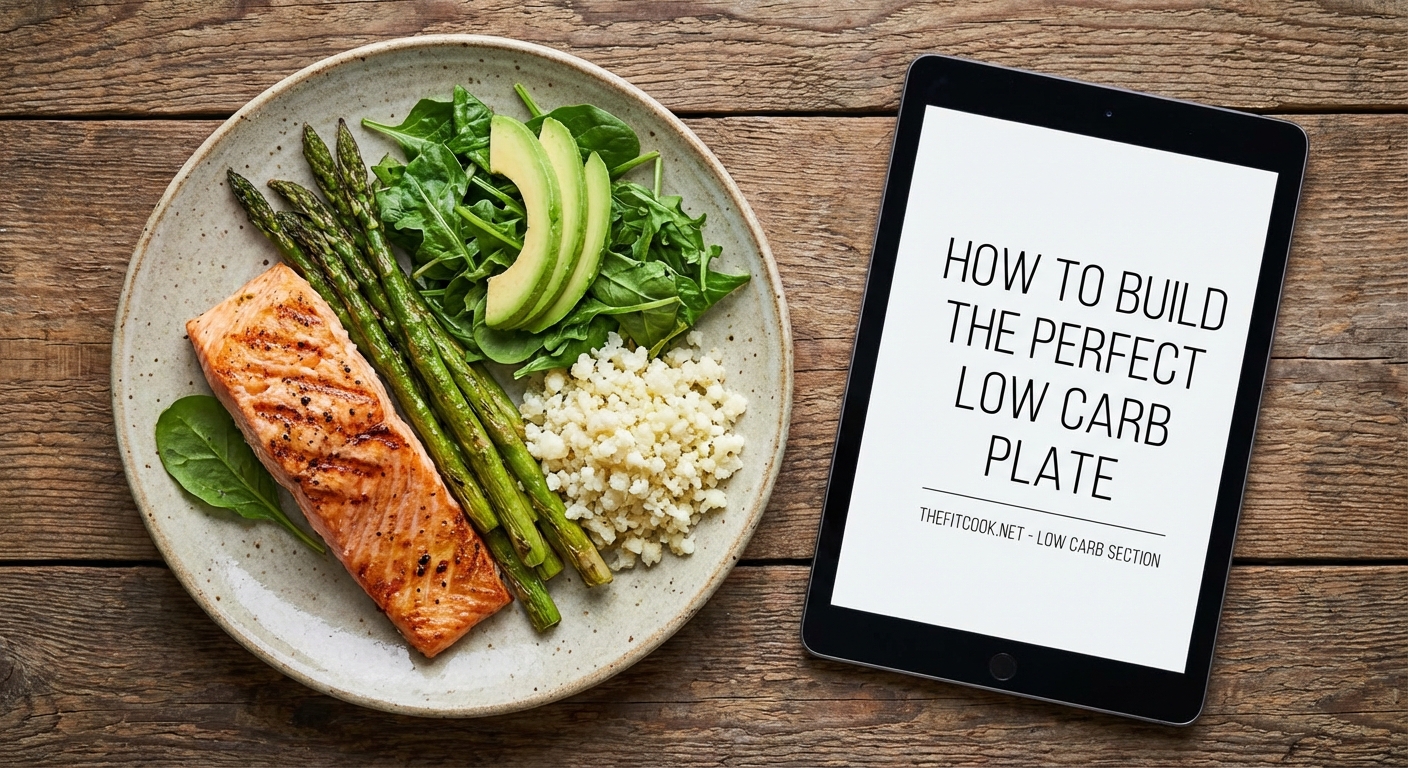
Every meal should follow a simple framework that makes portion control automatic. This takes the guesswork out of eating and ensures you hit your targets without weighing every morsel of food.
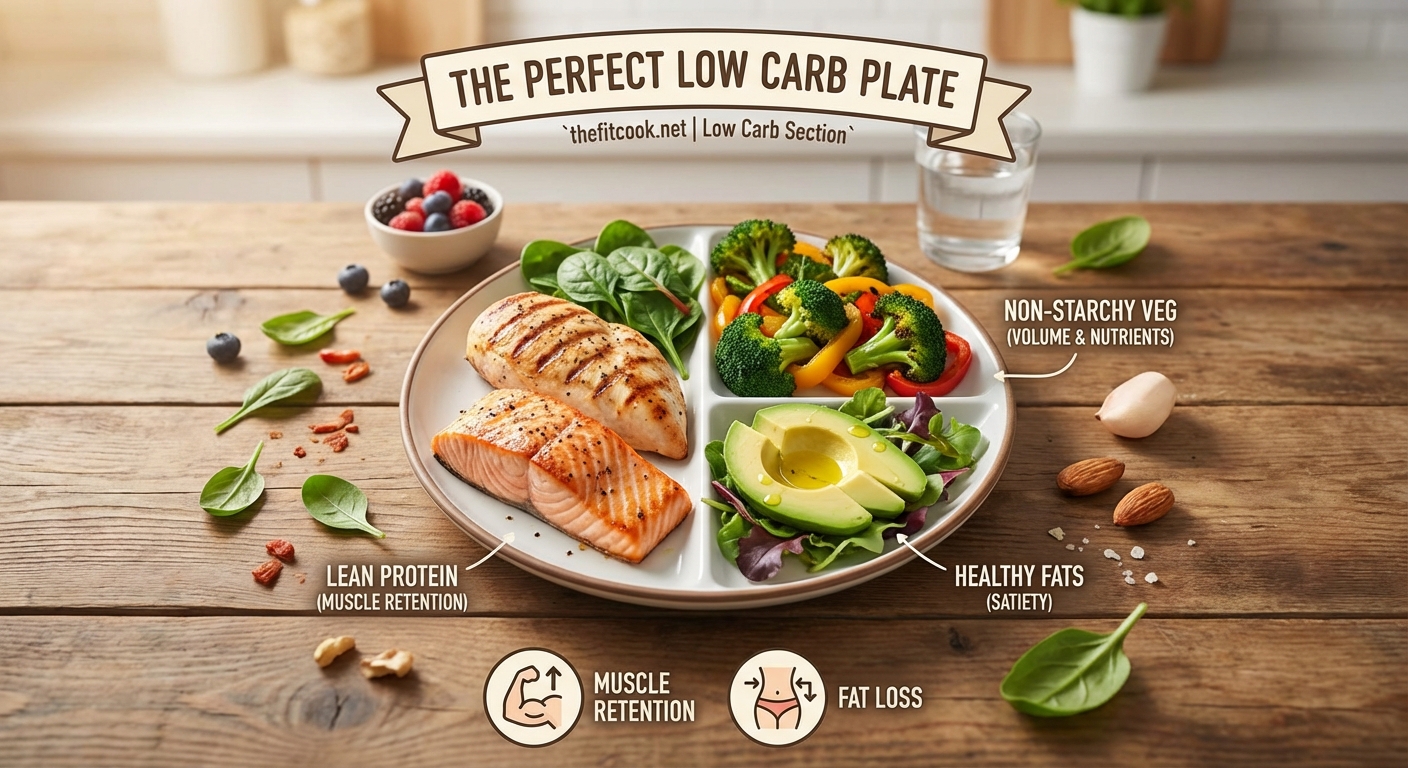
Start with protein as your anchor. Fill one third to one half of your plate with a quality protein source. This could be chicken breast, ground turkey, salmon, lean beef, or eggs. Protein keeps you full, protects muscle tissue during fat loss, and has the highest thermic effect of all macronutrients, meaning your body burns more calories just digesting it.
Next, add non-starchy vegetables to fill another third to half of your plate. Think leafy greens, broccoli, cauliflower, zucchini, bell peppers, asparagus, and mushrooms. These foods are nutrient dense, high in fiber, and so low in calories that you can eat them freely without worrying about portions.
Finally, add a small portion of healthy fats. This might be half an avocado, a tablespoon of olive oil on your salad, a handful of nuts, or butter used in cooking. Fats slow digestion, improve nutrient absorption, and help regulate hormones that control hunger and metabolism.
Your strategic carbs, if you include them in a meal, should come from whole food sources like sweet potatoes, white rice, oats, or fruit. These work best in your post-workout meal when your muscles are primed to store glycogen instead of converting carbs to fat.
Sample meal structure for different schedules
How you distribute your meals throughout the day matters less than hitting your total daily targets. Some people thrive on three square meals. Others prefer four to five smaller ones. Both approaches work as long as total protein, carbs, fats, and calories align with your goals.
Here’s a framework for someone eating three meals per day:
Breakfast (7:00 AM)
– 3 whole eggs scrambled with spinach and mushrooms
– Half an avocado
– Black coffee or green tea
Lunch (12:30 PM)
– 6 ounces grilled chicken breast
– Large mixed green salad with olive oil and vinegar
– Steamed broccoli
Dinner (6:30 PM, post-workout)
– 6 ounces salmon
– 1 cup roasted sweet potato
– Asparagus cooked in grass-fed butter
For someone who trains in the morning and prefers four meals:
Pre-workout (6:00 AM)
– 2 whole eggs
– Handful of berries
Post-workout breakfast (8:30 AM)
– Protein smoothie with whey, banana, almond butter, and spinach
Lunch (1:00 PM)
– Turkey lettuce wraps with avocado and tomato
– Side of cucumber salad
Dinner (7:00 PM)
– Grass-fed beef stir-fry with mixed vegetables
– Cauliflower rice
Notice how the person training in the morning gets more carbs in their post-workout meal. The person training in the evening saves their carb portion for dinner. This timing helps fuel recovery when your body needs it most.
Protein targets you can’t ignore
Protein intake should range from 0.8 to 1.2 grams per pound of body weight when you’re in a calorie deficit. A 180-pound person should aim for 145 to 215 grams per day, depending on training volume and how aggressive the deficit is.
Spreading protein across meals works better than loading it all into one or two sittings. Your body can only synthesize so much muscle protein at once. Aim for at least 30 to 40 grams per meal if you eat three times daily, or 25 to 30 grams if you eat four to five times.
Quality matters. Whole food sources like meat, fish, eggs, and Greek yogurt provide complete amino acid profiles and come with other nutrients. Protein powder can fill gaps, but it shouldn’t replace real food as your primary source.
“When calories are restricted for fat loss, protein becomes even more critical. It’s your insurance policy against muscle loss. Skimp on protein and your body will break down muscle tissue to meet its amino acid needs, especially if you’re training hard.”
Carb timing strategies that work
You don’t need to fear carbs, but you do need to be strategic about when and how much you eat. Timing carbs around your training sessions maximizes their benefit while minimizing fat storage potential.
The best time to eat carbs is within two hours after training. Your muscles are insulin sensitive at this point, meaning they’ll pull glucose into cells for glycogen storage rather than letting it float around in your bloodstream. This supports recovery without spiking fat storage hormones for extended periods.
On rest days, you can drop carbs lower since you’re not depleting glycogen stores. Some people cycle carbs, eating 100 to 150 grams on training days and 30 to 50 grams on rest days. This approach keeps average intake moderate while supporting performance when it matters.
If you train multiple times per day or do very high volume work, you might need carbs before training too. A small serving of easily digestible carbs 30 to 60 minutes pre-workout can improve performance without interfering with fat loss, especially if total daily intake stays controlled.
Fat sources that support hormones and satiety
Dietary fat often gets a bad reputation, but it’s essential for hormone production, vitamin absorption, and feeling satisfied after meals. The key is choosing the right types and controlling portions since fat contains nine calories per gram compared to four for protein and carbs.
Focus on these sources:
- Avocados and avocado oil
- Extra virgin olive oil
- Nuts and nut butters (measured portions)
- Fatty fish like salmon and mackerel
- Grass-fed butter or ghee
- Coconut oil for high-heat cooking
- Egg yolks
- Full-fat Greek yogurt (if dairy is tolerated)
Avoid industrial seed oils like soybean, corn, and canola when possible. These oils are high in omega-6 fatty acids that can promote inflammation when consumed in excess. Stick with more stable fats that have been part of human diets for centuries.
A good starting point for fat intake is 0.3 to 0.5 grams per pound of body weight. A 180-pound person would eat 55 to 90 grams of fat per day. This provides enough for hormonal health without crowding out protein or pushing calories too high.
Tracking progress beyond the scale
Your body weight will fluctuate daily based on water retention, sodium intake, carb consumption, stress, sleep, and hormonal cycles. Weighing yourself every day and reacting to each change is a recipe for frustration and poor decisions.
Instead, track these markers:
-
Weekly average weight: Weigh yourself at the same time each day, then average the seven numbers. Compare weekly averages, not daily weights.
-
Progress photos: Take front, side, and back photos every two weeks in the same lighting and clothing. Visual changes often show up before scale changes.
-
Measurements: Track waist, hips, chest, arms, and thighs monthly. You can lose inches while weight stays the same if you’re building muscle and losing fat simultaneously.
-
Performance metrics: Are your lifts maintaining or improving? Can you do more reps at the same weight? Strength maintenance during fat loss indicates muscle preservation.
-
How your clothes fit: The way your jeans fit your waist or how your shirts fit your shoulders tells you more than any number on a scale.
If weekly average weight drops 0.5 to 1.5 pounds per week, you’re in a good range. Faster than that and you risk losing muscle. Slower than that and you might need to adjust portions or activity.
Common mistakes that stall results
Many people sabotage their progress without realizing it. These errors are fixable once you know what to watch for.
| Mistake | Why It Hurts | The Fix |
|---|---|---|
| Protein too low | Body breaks down muscle for amino acids | Hit 0.8-1.2g per pound daily |
| Carbs too low for activity | Training performance suffers, metabolism slows | Match carbs to training volume |
| Not tracking anything | Portions creep up over time | Log food for at least two weeks |
| Changing plans weekly | No time to see what works | Stick with one approach 4-6 weeks |
| Ignoring sleep | Hormones get disrupted, hunger increases | Prioritize 7-9 hours nightly |
| Overdoing cardio | Increases hunger, doesn’t preserve muscle | Focus on lifting, add cardio sparingly |
Another common issue is eating too little for too long. Aggressive deficits work for a few weeks, but eventually your metabolism adapts, hunger skyrockets, and adherence falls apart. A moderate deficit of 300 to 500 calories below maintenance is sustainable for months and produces better long-term results.
Adjusting your plan as you progress
What works in week one won’t work forever. As you lose weight, your calorie needs decrease. A 200-pound person burns more calories at rest than a 180-pound person, even with identical activity levels.
Every four to six weeks, reassess your approach:
- Is weekly average weight still dropping at an acceptable rate?
- Are strength levels maintaining or improving?
- Is hunger manageable most days?
- Are energy levels adequate for training and daily life?
If progress stalls for two consecutive weeks, make one small adjustment. Drop carbs by 15 to 20 grams, reduce fat by 5 to 10 grams, or add 20 to 30 minutes of walking per day. Change one variable at a time so you know what’s working.
If you’ve been in a deficit for 12 to 16 weeks straight, consider a diet break. Eat at maintenance calories for one to two weeks. This can reset some metabolic adaptations, improve adherence, and set you up for another successful fat loss phase.
Meal prep strategies that save time
Cooking every meal fresh sounds ideal but rarely happens in real life. Batch cooking on weekends or one evening per week makes adherence much easier during busy workdays.
Pick one or two protein sources to cook in bulk. Grill several pounds of chicken breast, bake a large piece of salmon, or brown a few pounds of ground beef. Portion these into containers and refrigerate or freeze.
Prep vegetables by washing, chopping, and storing them in containers. Pre-cut broccoli, cauliflower, peppers, and zucchini last several days in the fridge and cut your cooking time by half.
Cook carb sources if you include them. Bake sweet potatoes, cook a pot of rice, or prepare overnight oats. These reheat well and make assembling meals faster.
Invest in quality storage containers that seal well and stack efficiently. Glass containers work great because they don’t absorb odors and can go from fridge to oven to table.
Keep emergency options available for days when meal prep fails. Canned tuna, rotisserie chicken from the grocery store, pre-washed salad greens, and frozen vegetables can save you from ordering takeout when time is tight.
Making this work for your lifestyle
A low carb meal plan for fat loss only works if you can sustain it for months. That means it needs to fit your schedule, food preferences, budget, and social life.
If you hate cooking, keep meals simple. Grilled protein, steamed vegetables, and a side of healthy fats takes 15 minutes to prepare. You don’t need elaborate recipes to get results.
If you eat out frequently, learn how to order. Ask for vegetables instead of rice or potatoes. Request sauces on the side. Order an extra side of protein instead of bread. Most restaurants will accommodate these requests without issue.
If you have family meals to consider, cook one protein and multiple sides. You can have grilled chicken with vegetables while your family has the same chicken with rice and bread. Everyone eats together without you cooking separate meals.
If weekends are social, plan for it. Eat slightly lower calories Monday through Friday so you have room for a restaurant meal or drinks on Saturday without derailing weekly totals. One higher calorie day won’t ruin progress if the other six days are solid.
Your next steps start today
Building a sustainable low carb meal plan for fat loss doesn’t require perfection. It requires consistency, patience, and willingness to adjust based on how your body responds.
Start by calculating your protein target and making that non-negotiable. Build your meals around quality protein sources, fill the rest of your plate with vegetables, and add strategic portions of healthy fats and carbs based on your training schedule. Track your progress using multiple metrics, not just the scale, and make small adjustments every few weeks as needed.
The people who succeed long term are the ones who find a system they can maintain even when motivation fades. Make your plan simple enough to follow on busy days, flexible enough to handle social situations, and structured enough to produce measurable results. That’s how you lose fat, keep muscle, and build habits that last well beyond your initial goal weight.
Leave a Reply