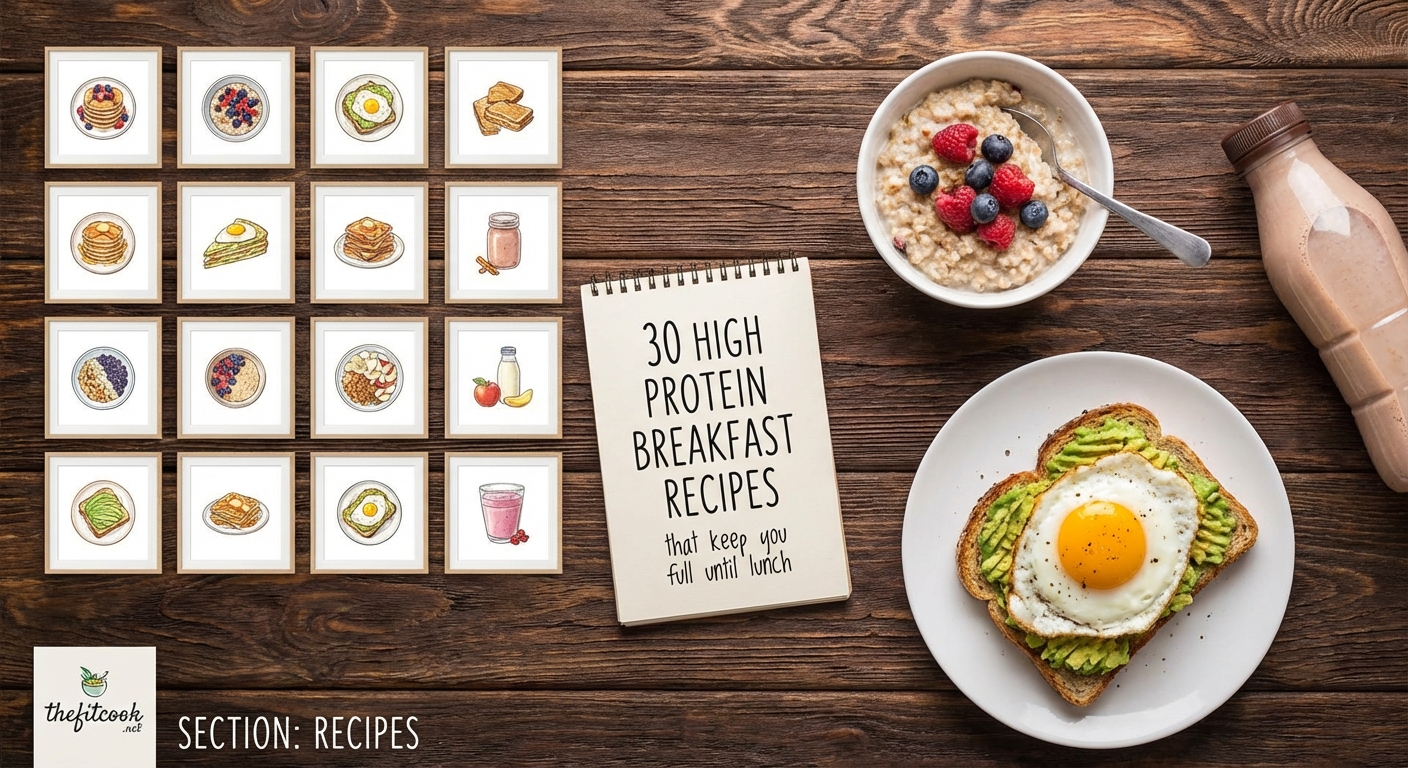
30 High Protein Breakfast Recipes That Keep You Full Until Lunch
If you’ve ever found yourself raiding the office snack drawer by 10 AM or feeling sluggish halfway through your morning, chances are your breakfast isn’t working hard enough for you. I’ve been there too, downing a quick bagel or sugary cereal only to crash before my first meeting. The game-changer? Shifting to high protein breakfasts that actually fuel my body for the long haul.
Protein is the MVP of macronutrients when it comes to satiety. It slows digestion, stabilizes blood sugar, and keeps those hunger hormones in check for hours. When you start your day with at least 20-30 grams of protein, you’re not just feeding your muscles after that morning workout, you’re setting yourself up for better focus, fewer cravings, and sustained energy that carries you through to lunch without the mid-morning slump. Whether you’re meal prepping for the week ahead or whipping up something quick before you dash out the door, these 30 high protein breakfast recipes will transform your mornings.
These recipes aren’t just protein bombs that taste like cardboard. They’re genuinely delicious, macro-balanced meals that fit into real life. From savory egg bakes and protein-packed pancakes to grab-and-go options and smoothie bowls, there’s something here for every taste preference and time constraint. Many of these are perfect for meal prep, so you can make them once and enjoy all week long.
Why High Protein Breakfasts Matter
Starting your day with adequate protein does more than just keep hunger at bay. Research shows that protein-rich breakfasts can reduce cravings by up to 60% and decrease late-night snacking. For fitness enthusiasts, that morning protein intake supports muscle protein synthesis, especially important if you’re training fasted or hitting the gym early.
Protein also has the highest thermic effect of all macronutrients, meaning your body burns more calories digesting it compared to carbs or fats. This metabolic boost, combined with improved satiety, makes high protein breakfasts a powerful tool for body composition goals. If you’re wondering how much protein you really need, aim for 25-35 grams at breakfast to maximize these benefits.
The Best High Protein Breakfast Recipes
1. Greek Yogurt Power Bowl
Protein per serving: 32g
Layer 1.5 cups plain Greek yogurt with 0.25 cup granola, 0.5 cup mixed berries, 2 tablespoons almond butter, and 1 tablespoon chia seeds. This no-cook option takes 3 minutes and delivers a perfect macro balance.
2. Veggie-Packed Egg White Scramble
Protein per serving: 28g
Sauté 1 cup diced bell peppers, 0.5 cup mushrooms, and 1 cup spinach in 1 teaspoon olive oil. Add 1.5 cups egg whites (about 10-12 whites) and 2 whole eggs. Scramble until just set. Top with 0.25 cup feta cheese.
3. Protein Pancakes with Cottage Cheese
Protein per serving: 35g
Blend 0.5 cup cottage cheese, 0.5 cup oats, 2 whole eggs, 1 scoop vanilla protein powder, 0.5 teaspoon baking powder, and 0.25 teaspoon cinnamon. Cook on a griddle at medium heat for 2-3 minutes per side. Serve with 2 tablespoons sugar-free syrup.
4. Turkey Sausage Breakfast Burrito
Protein per serving: 38g
Brown 4 ounces turkey sausage. Scramble 3 eggs. Wrap in a whole wheat tortilla with 0.25 cup black beans, 2 tablespoons salsa, and 2 tablespoons shredded cheese. Perfect for freezer meal prep.
5. Overnight Protein Oats
Protein per serving: 30g
Combine 0.5 cup oats, 1 scoop protein powder, 1 cup unsweetened almond milk, 2 tablespoons chia seeds, and 0.5 teaspoon vanilla extract. Refrigerate overnight. Top with 2 tablespoons almond butter and 0.5 cup berries.
6. Smoked Salmon Avocado Toast
Protein per serving: 26g
Top 2 slices whole grain bread with 0.5 mashed avocado, 4 ounces smoked salmon, 2 tablespoons Greek yogurt, and everything bagel seasoning. Add 2 hard-boiled eggs on the side.
7. Cottage Cheese Egg Bites
Protein per serving: 24g
Blend 1 cup cottage cheese, 6 eggs, 0.25 cup shredded cheese, 0.5 cup diced vegetables, and 0.25 teaspoon salt. Pour into muffin tins and bake at 350°F for 22-25 minutes. Makes 12 bites; serving is 3 bites.
8. Protein-Packed Breakfast Quinoa
Protein per serving: 22g
Cook 0.5 cup quinoa in 1 cup unsweetened almond milk. Stir in 1 scoop vanilla protein powder, 0.5 teaspoon cinnamon, and 2 tablespoons chopped walnuts. Top with 0.5 cup berries and 1 tablespoon almond butter.
9. High-Protein Smoothie Bowl
Protein per serving: 34g
Blend 1 scoop protein powder, 1 cup Greek yogurt, 0.5 cup frozen berries, 0.5 frozen banana, and 0.5 cup unsweetened almond milk. Pour into a bowl and top with 2 tablespoons granola, 1 tablespoon chia seeds, and fresh fruit. Learn more about building the perfect smoothie.
10. Steak and Eggs Breakfast Hash
Protein per serving: 42g
Dice 6 ounces leftover steak. Sauté 1 cup diced sweet potato until tender. Add steak to warm through. Fry 2 eggs and serve on top with 1 cup sautéed spinach.
11. Protein Waffles
Protein per serving: 28g
Mix 0.5 cup oat flour, 1 scoop protein powder, 2 eggs, 0.25 cup Greek yogurt, 0.5 teaspoon baking powder, and 0.25 cup unsweetened almond milk. Cook in waffle iron for 4-5 minutes. Top with 2 tablespoons peanut butter.
12. Mediterranean Breakfast Bowl
Protein per serving: 31g
Layer 1 cup cooked quinoa, 3 scrambled eggs, 0.25 cup hummus, 0.5 cup cherry tomatoes, 0.25 cup cucumber, 2 tablespoons feta cheese, and 5 Kalamata olives.
13. Protein French Toast
Protein per serving: 29g
Whisk 3 eggs, 0.25 cup Greek yogurt, 0.5 teaspoon cinnamon, and 0.5 teaspoon vanilla. Dip 3 slices whole grain bread and cook on griddle for 3 minutes per side. Serve with 2 tablespoons sugar-free syrup and 0.25 cup berries.
14. Turkey and Veggie Breakfast Skillet
Protein per serving: 36g
Brown 6 ounces ground turkey with 1 teaspoon olive oil. Add 1 cup diced bell peppers, 0.5 cup onions, and 1 cup spinach. Create wells and crack 2 eggs into them. Cover and cook until eggs set.
15. Peanut Butter Banana Protein Shake
Protein per serving: 32g
Blend 1 scoop protein powder, 1 medium banana, 2 tablespoons peanut butter, 1 cup unsweetened almond milk, 0.5 cup ice, and 1 tablespoon ground flaxseed. Perfect for those quick breakfast recipes.
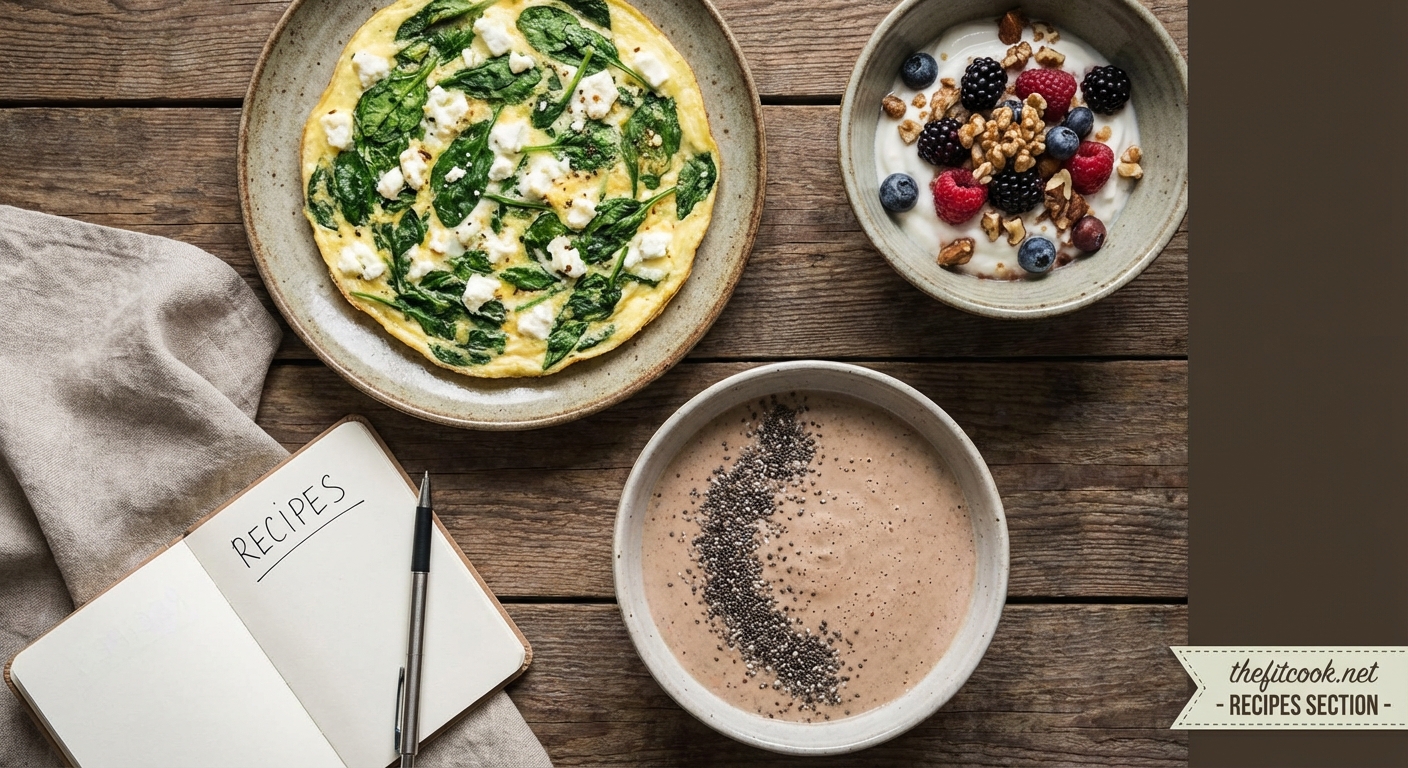
16. Spinach and Feta Frittata
Protein per serving: 27g
Whisk 8 eggs with 0.25 cup milk. Sauté 2 cups spinach and 0.5 cup diced onion. Pour eggs over vegetables, add 0.5 cup crumbled feta. Bake at 375°F for 20-25 minutes. Serves 4.
17. Chocolate Protein Chia Pudding
Protein per serving: 25g
Mix 0.25 cup chia seeds, 1 cup unsweetened almond milk, 1 scoop chocolate protein powder, and 1 tablespoon cocoa powder. Refrigerate 4 hours or overnight. Top with 2 tablespoons almond butter.
18. Breakfast Sausage and Sweet Potato Bake
Protein per serving: 33g
Dice 2 cups sweet potato and roast at 400°F for 20 minutes. Brown 8 ounces chicken sausage. Whisk 8 eggs and pour over sausage and potatoes in baking dish. Bake 25 minutes. Serves 4.
19. High-Protein Breakfast Cookies
Protein per serving: 12g (2 cookies)
Mix 1 cup oats, 1 scoop protein powder, 2 mashed bananas, 0.25 cup almond butter, 0.25 cup chocolate chips, and 1 teaspoon cinnamon. Scoop onto baking sheet and bake at 350°F for 12-15 minutes. Makes 12 cookies.
20. Tofu Scramble
Protein per serving: 24g
Crumble 14 ounces firm tofu. Sauté with 1 teaspoon turmeric, 0.5 teaspoon garlic powder, 1 cup diced vegetables, and 2 tablespoons nutritional yeast. Season with 0.25 teaspoon salt and pepper.
21. Protein-Packed Breakfast Tacos
Protein per serving: 30g
Scramble 3 eggs with 0.25 cup black beans. Fill 2 corn tortillas and top with 2 tablespoons Greek yogurt, 2 tablespoons salsa, and 2 tablespoons shredded cheese.
22. Almond Butter Protein Smoothie
Protein per serving: 31g
Blend 1 scoop vanilla protein powder, 2 tablespoons almond butter, 1 cup spinach, 0.5 frozen banana, 1 cup unsweetened almond milk, and 0.5 cup ice.
23. Egg and Turkey Bacon Muffins
Protein per serving: 26g (3 muffins)
Line muffin tin with 12 turkey bacon slices. Crack 1 egg into each. Top with 1 tablespoon shredded cheese each. Bake at 375°F for 15-18 minutes.
24. Protein Overnight Oats with Berries
Protein per serving: 28g
Combine 0.5 cup oats, 1 scoop protein powder, 1 cup Greek yogurt, 0.5 cup unsweetened almond milk, and 1 tablespoon chia seeds. Refrigerate overnight. Top with 0.5 cup mixed berries.
25. Breakfast Chicken Sausage Skillet
Protein per serving: 35g
Slice 8 ounces chicken sausage. Sauté with 1 cup diced bell peppers and 1 cup zucchini. Scramble 2 eggs and mix in. Season with 0.25 teaspoon paprika.
26. Greek Yogurt Protein Pancakes
Protein per serving: 33g
Blend 1 cup Greek yogurt, 1 cup oats, 2 eggs, 1 scoop protein powder, and 0.5 teaspoon baking powder. Cook on griddle for 2-3 minutes per side. Makes 8 small pancakes.
27. Smoked Turkey and Egg Wrap
Protein per serving: 29g
Scramble 2 eggs. Layer in whole wheat wrap with 4 ounces smoked turkey, 0.25 cup shredded cheese, and 0.5 cup spinach. Roll and enjoy.
28. High-Protein Breakfast Casserole
Protein per serving: 31g
Layer 8 ounces cooked turkey sausage, 2 cups diced vegetables, and 1 cup shredded cheese in baking dish. Whisk 12 eggs with 0.5 cup milk and pour over. Bake at 350°F for 35-40 minutes. Serves 6.
29. Protein Coffee Smoothie
Protein per serving: 27g
Blend 1 scoop chocolate protein powder, 1 cup cold brew coffee, 0.5 frozen banana, 2 tablespoons peanut butter, 0.5 cup Greek yogurt, and 0.5 cup ice.
30. Veggie Egg White Muffins
Protein per serving: 22g (3 muffins)
Whisk 2 cups egg whites with 1 cup diced vegetables, 0.25 cup shredded cheese, and 0.25 teaspoon salt. Pour into 12 muffin cups and bake at 350°F for 20-22 minutes.
Tips for High Protein Breakfast Success
1. Prep Your Protein Sources in Advance
Hard-boil a dozen eggs, cook a batch of turkey sausage, or portion out Greek yogurt on Sunday. Having protein ready to go makes assembly quick on busy mornings. Check out our guide on meal prepping like a pro for more strategies.
2. Invest in Quality Protein Powder
Not all protein powders are created equal. Look for options with at least 20g protein per scoop, minimal added sugars (under 5g), and clean ingredient lists. Whey isolate digests quickly, while casein keeps you fuller longer.
3. Combine Protein Sources for Complete Amino Acid Profiles
Pairing different proteins (like eggs with Greek yogurt, or quinoa with nuts) ensures you’re getting all essential amino acids. This is especially important for plant-based eaters.
4. Don’t Fear Whole Eggs
While egg whites are pure protein, whole eggs provide important nutrients like choline, vitamin D, and healthy fats that improve nutrient absorption and satiety. A mix of whole eggs and whites offers the best of both worlds.
5. Time Your Breakfast Right
Eating within 1-2 hours of waking helps stabilize blood sugar and metabolism. If you work out in the morning, aim to eat within 30-60 minutes post-workout to maximize muscle recovery. Learn more about avoiding common protein diet mistakes.
Substitutions and Variations
For Dairy-Free Diets:
Replace Greek yogurt with coconut yogurt or silken tofu blended smooth. Swap regular cheese for nutritional yeast or dairy-free cheese alternatives. Use unsweetened almond, oat, or coconut milk instead of cow’s milk.
For Low-Carb or Keto:
Replace oats with hemp hearts or ground flaxseed. Use almond or coconut flour instead of whole wheat flour. Swap sweet potatoes for cauliflower or additional leafy greens. Find more ideas in our low carb meal prep guide.
For Vegan Options:
Use tofu scrambles instead of eggs, plant-based protein powder, and nut butters for protein. Chickpea flour makes excellent vegan omelets. Combine legumes with whole grains for complete proteins.
For Gluten-Free:
Choose certified gluten-free oats, use gluten-free bread or tortillas, and opt for quinoa or rice-based options. Most egg-based recipes are naturally gluten-free.
For Budget-Friendly Swaps:
Canned tuna or salmon works great instead of smoked fish. Eggs are the most economical protein source. Dried beans cost less than canned. Buy frozen vegetables instead of fresh. Check out muscle building meal prep on a budget for more cost-saving tips.
Storage and Meal Prep Guidelines
Refrigerator Storage:
Most cooked egg-based breakfasts last 4-5 days in airtight containers. Overnight oats and chia puddings stay fresh for 5 days. Smoothie packs (pre-portioned frozen ingredients) last indefinitely in the freezer. If your meals are spoiling quickly, read about why meal prep goes bad after 3 days.
Freezer Storage:
Breakfast burritos, egg muffins, pancakes, and waffles freeze beautifully for up to 3 months. Wrap individually in parchment paper, then place in freezer bags. Label with date and reheating instructions.
Reheating Tips:
Microwave egg muffins for 45-60 seconds. Reheat burritos wrapped in damp paper towel for 1.5-2 minutes. Toast frozen pancakes or waffles for best texture. Thaw overnight oats in refrigerator the night before.
Meal Prep Strategy:
Dedicate 2-3 hours on Sunday to batch-cook proteins, chop vegetables, and assemble grab-and-go options. Store components separately when possible to prevent sogginess. For example, keep scrambled eggs separate from tortillas until ready to eat. Our Sunday meal prep blueprint walks you through this process step-by-step.
Portion Control:
Use meal prep containers with compartments to keep ingredients separate. Mason jars work perfectly for overnight oats and chia puddings. Muffin tins create built-in portion control for egg bites and mini frittatas.
Nutrition Information
Nutrition values vary significantly based on specific ingredients and portions, but here are approximate ranges for these high protein breakfast recipes:
Per Serving Averages:
– Calories: 350-500
– Protein: 22-42g
– Carbohydrates: 25-45g
– Fat: 12-22g
– Fiber: 4-8g
Macro Balance Tips:
For weight loss, aim for the lower calorie range (350-400) with higher protein. For muscle building, target 450-500 calories with balanced macros. If you’re tracking macros, check out our guide to flexible dieting.
Micronutrient Highlights:
These recipes provide excellent sources of B vitamins (especially B12 from eggs), vitamin D, iron, calcium, omega-3 fatty acids, and choline. The vegetable-heavy options deliver vitamin C, vitamin K, and various antioxidants.
Note: All nutrition information is approximate and calculated using standard USDA values. Actual values may vary based on specific brands, preparation methods, and portion sizes. For precise tracking, input your exact ingredients into a nutrition calculator or app.
Frequently Asked Questions
How much protein should I eat at breakfast?
Aim for 25-35 grams of protein at breakfast to maximize satiety and muscle protein synthesis. This amount has been shown in research to reduce cravings throughout the day and support lean muscle mass. If you’re very active or have higher protein needs (like athletes or those over 50), you might target the higher end of this range. Learn more about how much protein you really need based on your goals.
Can I meal prep high protein breakfasts for the whole week?
Absolutely! Most egg-based dishes last 4-5 days refrigerated, while frozen options like burritos and pancakes last up to 3 months. For best quality, prep egg muffins, frittatas, and breakfast casseroles early in the week. Save overnight oats and chia puddings for the latter half since they stay fresh up to 5 days. Our guide on prepping 20 breakfasts in under 2 hours provides detailed strategies.
What are the best protein sources for breakfast besides eggs?
Greek yogurt (17-20g per cup), cottage cheese (24g per cup), protein powder (20-25g per scoop), turkey sausage (14g per 2 ounces), smoked salmon (16g per 3 ounces), and tofu (10g per 4 ounces) are all excellent options. Plant-based choices include quinoa (8g per cup cooked), hemp hearts (10g per 3 tablespoons), and nut butters (7-8g per 2 tablespoons). Combining sources helps you hit higher protein targets.
Will eating high protein breakfasts help me lose weight?
High protein breakfasts can support weight loss by increasing satiety, reducing overall calorie intake throughout the day, and preserving lean muscle mass during calorie restriction. Protein has the highest thermic effect of all macronutrients, meaning you burn more calories digesting it. However, total daily calories still matter most for weight loss. Use these recipes as part of a balanced approach, and avoid common macro counting mistakes that can stall progress.
Can I eat high protein breakfasts if I’m vegetarian or vegan?
Definitely! Focus on eggs and dairy if you’re vegetarian (Greek yogurt, cottage cheese, and eggs are protein powerhouses). For vegan options, combine plant proteins like tofu scrambles with hemp hearts, use plant-based protein powder in smoothies and oats, and pair legumes with whole grains for complete amino acid profiles. The tofu scramble, protein smoothies, and quinoa bowls in this collection work perfectly for plant-based diets. You might also enjoy our high protein snacks for more plant-based ideas.
What if I’m not hungry first thing in the morning?
You don’t have to eat immediately upon waking. Some people do better with a later breakfast window. If you exercise in the morning, prioritize post-workout nutrition within an hour. Otherwise, eat when you feel hungry, but try to include protein whenever you do break your fast. If you consistently struggle with morning appetite, start small with a protein smoothie or Greek yogurt, and gradually increase portions as your body adapts. The key is establishing a pattern that works for your schedule and supports your goals throughout the day.