You’ve probably heard the term “clean eating” thrown around at the gym or scrolled past it on social media. But what does it actually mean? Is it just another diet trend, or is there something to it that can genuinely improve your fitness results?
Clean eating isn’t about perfection or deprivation. It’s about making smarter food choices that fuel your body, support your workouts, and help you feel better overall. Let’s break down exactly what clean eating is and why it matters for anyone serious about their fitness goals.
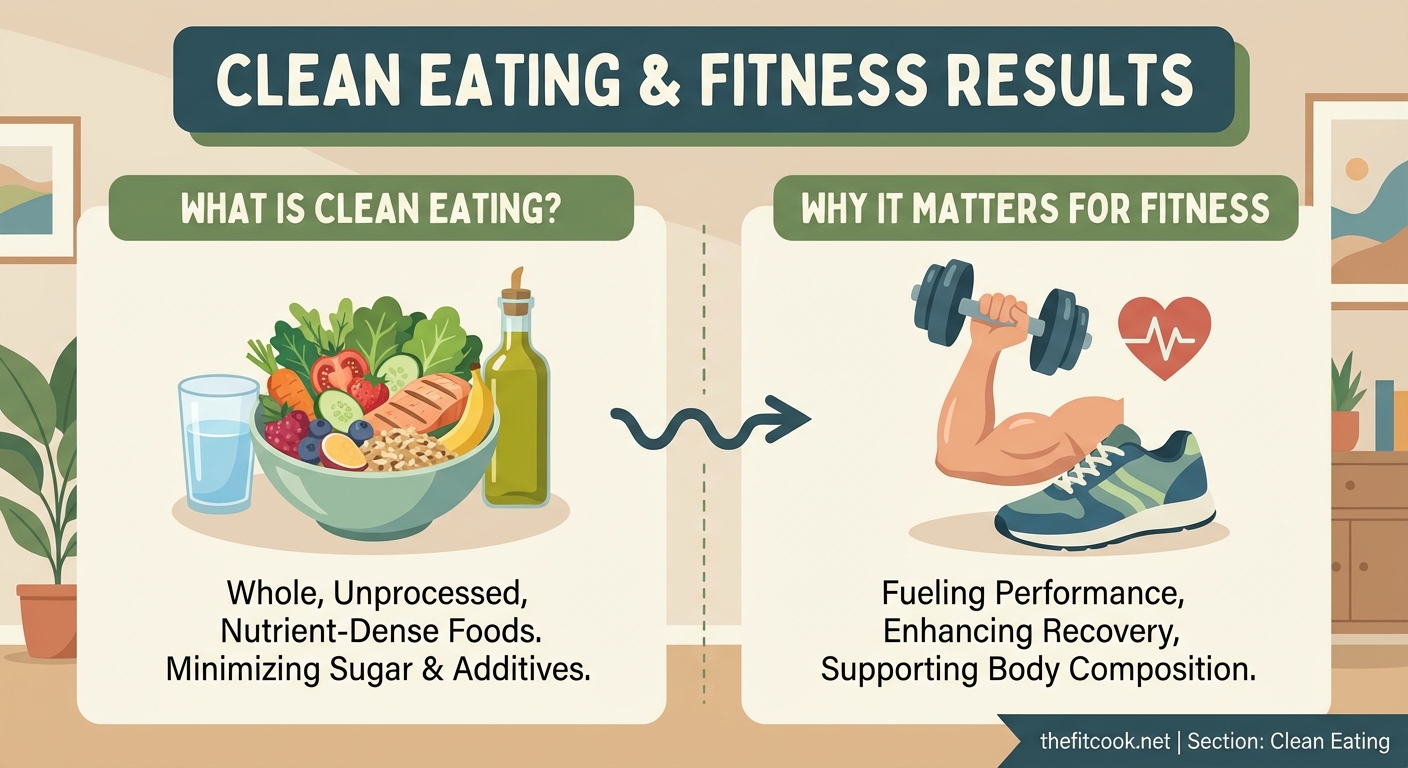
Clean eating focuses on whole, minimally processed foods that nourish your body and support fitness goals. It means choosing foods closer to their natural state, reading ingredient labels, and prioritizing nutrient-dense options over heavily processed alternatives. This approach improves energy levels, workout performance, recovery time, and body composition without requiring strict calorie counting or food restrictions.
Understanding the basics of clean eating
Clean eating is a way of choosing foods that are as close to their natural state as possible. Think fresh vegetables, whole grains, lean proteins, and healthy fats instead of packaged snacks loaded with ingredients you can’t pronounce.
The core principle is simple. You eat more whole foods and fewer processed ones.
This doesn’t mean you need to grow your own vegetables or never eat anything from a package again. It means being more mindful about what goes into your body and how those choices affect your energy, performance, and results.
Clean eating emphasizes quality over quantity. A piece of grilled chicken with roasted vegetables beats a frozen dinner with 30 ingredients and a sodium count that makes your eyes water.
What counts as whole foods
Whole foods are ingredients that haven’t been heavily altered from their original form. Fresh fruits, vegetables, nuts, seeds, eggs, fish, and meat all qualify.
Brown rice is a whole food. Instant rice in a flavored pouch with added preservatives is not.
Steel-cut oats are whole. Sugary cereal with artificial colors and flavors is not.
The difference usually comes down to processing. Minimal processing like washing, cutting, or freezing is fine. Heavy processing that strips nutrients and adds chemicals is what you want to limit.
Why processing matters for fitness
Processed foods often contain added sugars, unhealthy fats, and excessive sodium. These ingredients can interfere with your fitness goals in several ways.
Added sugars cause energy crashes that leave you dragging through workouts. Unhealthy fats promote inflammation that slows recovery. Too much sodium leads to water retention and bloating.
Processed foods also tend to be less filling despite higher calorie counts. You eat more without feeling satisfied, making it harder to maintain a healthy weight or lose fat.
Whole foods provide steady energy, better satiety, and the nutrients your muscles need to grow and recover. That’s why understanding what are macros and why they matter more than calories becomes important when you start eating cleaner.
Core principles that define clean eating
Clean eating follows several key guidelines that make it practical and sustainable. These aren’t rigid rules but helpful frameworks for making better choices.
-
Choose foods with short ingredient lists. If a packaged food has more than five ingredients, or if you can’t identify what those ingredients are, put it back. The shorter and simpler the list, the cleaner the food.
-
Prioritize nutrient density. Every food choice should deliver vitamins, minerals, fiber, or protein. Empty calories from sugary drinks and snacks don’t support your fitness goals.
-
Cook at home more often. Restaurant meals and takeout often contain hidden fats, sugars, and sodium. Cooking gives you full control over what goes into your meals.
-
Read labels carefully. Marketing terms like “natural” or “healthy” don’t guarantee clean ingredients. Flip the package and check the actual ingredient list.
-
Stay hydrated with water. Skip sugary drinks, energy drinks loaded with artificial ingredients, and excessive caffeine. Water supports every function in your body, from digestion to muscle recovery.
The role of meal preparation
Meal prep is where clean eating becomes practical for busy schedules. When you prepare meals in advance, you control ingredients and portions while saving time during the week.
Batch cooking proteins, chopping vegetables, and portioning meals into containers means you always have clean options ready. No more grabbing whatever’s convenient when you’re hungry and tired after the gym.
If you’re new to this approach, the Sunday meal prep blueprint for a week of clean eating success walks you through the entire process step by step.
Avoiding common pitfalls
Clean eating can go wrong when people become too restrictive or obsessive about food purity. This leads to stress, social isolation, and an unhealthy relationship with food.
Balance matters. Having a slice of birthday cake at a celebration doesn’t undo your progress. Refusing to eat anything unless it meets impossible standards creates problems that outweigh any benefits.
Another mistake is assuming all packaged foods are bad. Greek yogurt, canned beans, frozen vegetables, and quality protein powders are all minimally processed options that fit a clean eating lifestyle.
How clean eating supports your fitness goals
The connection between what you eat and how you perform is direct and powerful. Clean eating provides the foundation for better workouts, faster recovery, and visible results.
Improved energy and performance
Whole foods provide steady, sustained energy instead of the spikes and crashes you get from processed carbs and sugars. Your body digests them more slowly, releasing glucose gradually into your bloodstream.
This means you can power through tough workouts without hitting a wall halfway through. You maintain focus, strength, and endurance from start to finish.
Clean protein sources like chicken, fish, eggs, and legumes give your muscles the amino acids they need to repair and grow. Quality carbohydrates from sweet potatoes, oats, and brown rice replenish glycogen stores that fuel your training.
Healthy fats from avocados, nuts, and olive oil support hormone production, including testosterone, which plays a key role in muscle building for both men and women.
Faster recovery between workouts
The nutrients in whole foods reduce inflammation and speed up recovery. Antioxidants from colorful vegetables combat oxidative stress caused by intense exercise.
Omega-3 fatty acids from fish and flaxseeds reduce muscle soreness. Adequate protein intake repairs damaged muscle fibers and builds new tissue.
When you eat clean, your body gets everything it needs to bounce back faster. You can train harder and more frequently without feeling constantly run down or sore.
Understanding the ultimate guide to post-workout nutrition helps you maximize recovery with the right timing and food choices.
Better body composition
Clean eating naturally supports fat loss and muscle gain because whole foods are more filling and less calorie-dense than processed options. You feel satisfied on fewer calories, making it easier to maintain a caloric deficit if fat loss is your goal.
The higher protein content in a clean diet preserves muscle mass during weight loss. You lose fat while keeping the lean tissue that gives you a toned, athletic look.
Clean carbs and healthy fats provide energy for intense workouts that build muscle. You have the fuel to lift heavy, push hard, and see strength gains over time.
Building your clean eating foundation
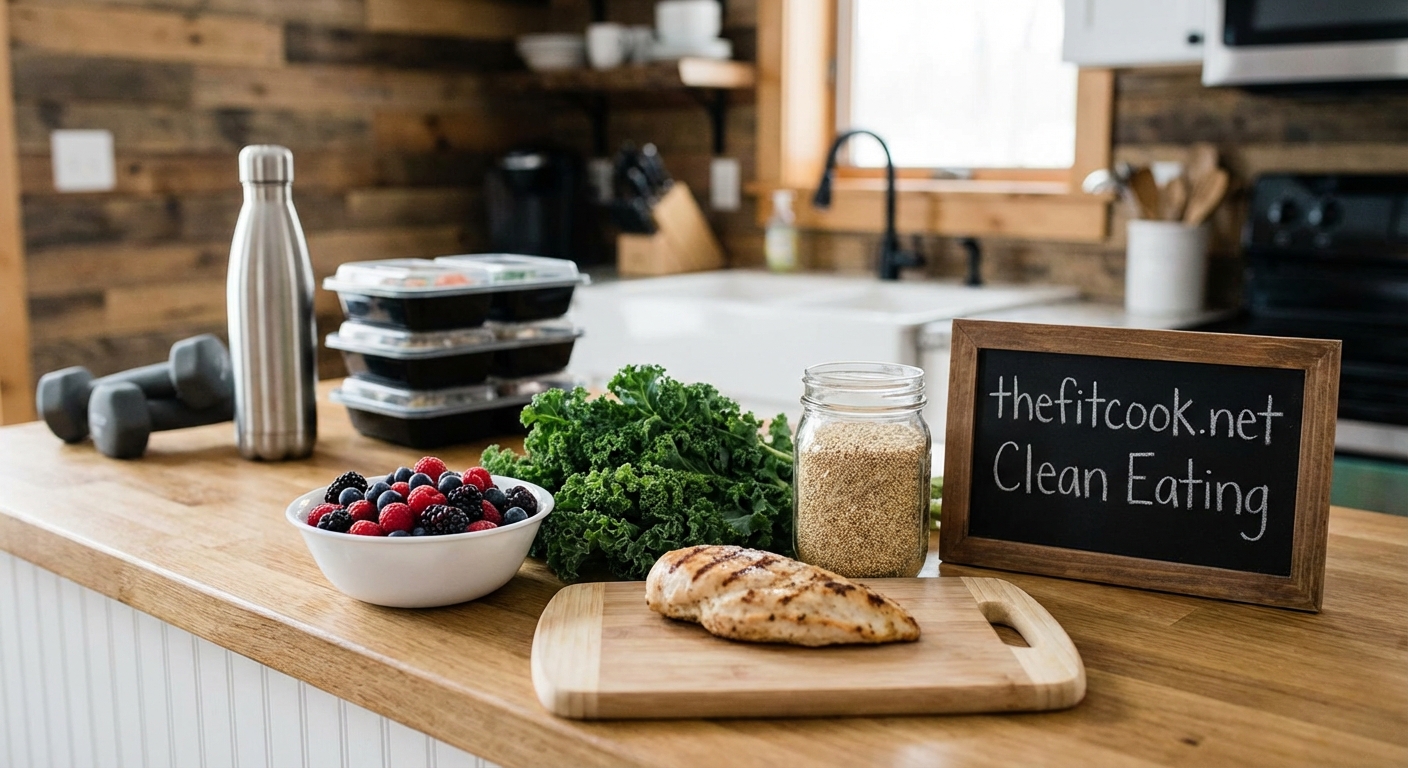
Starting clean eating doesn’t require a complete kitchen overhaul or throwing out everything in your pantry. Small, strategic changes add up to significant results.
Stock your kitchen with essentials
Having the right foods on hand makes clean eating effortless. You need a foundation of staple ingredients that work for multiple meals throughout the week.
- Fresh or frozen vegetables (broccoli, spinach, bell peppers, zucchini)
- Lean proteins (chicken breast, ground turkey, fish, eggs, tofu)
- Whole grains (brown rice, quinoa, oats, whole wheat pasta)
- Healthy fats (avocados, nuts, seeds, olive oil, coconut oil)
- Legumes (black beans, chickpeas, lentils)
- Fresh fruits (berries, apples, bananas, oranges)
- Herbs and spices for flavor without added sodium or sugar
Keeping 15 clean eating pantry staples every health-conscious cook needs ensures you can always throw together a nutritious meal.
Smart grocery shopping strategies
The perimeter of most grocery stores contains the freshest, least processed foods. Produce, meat, dairy, and eggs live around the edges while packaged and processed items fill the center aisles.
Shop with a list based on your meal plan. This prevents impulse purchases of processed snacks and keeps you focused on whole food ingredients.
Buy in bulk when possible for items like rice, oats, nuts, and frozen vegetables. This saves money and ensures you always have clean options available.
Choose organic when it makes sense for your budget, especially for the “dirty dozen” produce items with higher pesticide residues. But don’t let perfect be the enemy of good. Conventional produce is still better than processed junk food.
Making clean eating work with your schedule
Time is the biggest obstacle most people face. Between work, workouts, and everything else, cooking from scratch every day feels impossible.
That’s where strategic meal prep comes in. Dedicate a few hours one day per week to prepare proteins, cook grains, chop vegetables, and portion meals.
Learning how to meal prep an entire week of lunches in under 2 hours removes the daily decision fatigue and time pressure.
Keep some simple, fast recipes in your rotation for busy nights. Stir-fries, sheet pan dinners, and one-pot meals come together in 30 minutes or less with minimal cleanup.
Common clean eating mistakes to avoid
Even with good intentions, certain mistakes can sabotage your clean eating efforts or make the lifestyle harder to maintain than it needs to be.
| Mistake | Why It Happens | How to Fix It |
|---|---|---|
| Being too restrictive | Fear of “unclean” foods creates anxiety | Allow flexibility and focus on overall patterns, not perfection |
| Ignoring portion sizes | Assuming healthy foods can’t cause weight gain | Practice portion awareness even with whole foods |
| Skipping meal prep | Underestimating time needed for daily cooking | Batch cook on weekends to have ready meals all week |
| Not reading labels | Trusting marketing claims on packages | Check ingredient lists and nutrition facts every time |
| Eliminating entire food groups | Following extreme interpretations of clean eating | Include variety unless you have specific medical reasons to avoid foods |
| Expecting instant results | Wanting dramatic changes immediately | Give your body time to adapt and respond to better nutrition |
The social eating challenge
One of the hardest parts of clean eating is navigating social situations. Restaurants, parties, family gatherings, and work events often feature foods that don’t align with your goals.
The solution isn’t avoiding social situations. That creates isolation and makes clean eating feel like punishment.
Instead, plan ahead. Eat a small, protein-rich snack before events so you’re not ravenously hungry. Choose the cleanest options available without making a big deal about it. Enjoy reasonable portions of special foods without guilt.
Your friends and family will respect your goals more if you’re flexible and pleasant about it rather than rigid and judgmental.
Balancing clean eating with real life
Life happens. Travel, celebrations, stressful periods, and unexpected changes disrupt even the best meal plans.
The key is getting back on track without shame or extreme compensation. One meal, one day, or even one week of less-than-perfect eating won’t destroy your progress.
What matters is consistency over time, not perfection in every moment. Clean eating should enhance your life, not control it.
“Focus on making the next meal a good one rather than dwelling on past choices. Every meal is a fresh opportunity to nourish your body well.” – Registered Dietitian Nutritionist
Practical meal ideas for clean eating
Knowing what clean eating looks like in theory is one thing. Putting it into practice with actual meals is another. Here are some simple ideas to get you started.
Breakfast options that fuel your day
Starting your day with protein and complex carbs sets you up for stable energy and better food choices later.
- Scrambled eggs with spinach and whole grain toast
- Greek yogurt with berries, nuts, and a drizzle of honey
- Oatmeal topped with sliced banana, almond butter, and cinnamon
- Veggie-packed omelet with avocado slices
- Protein smoothie with frozen fruit, spinach, and protein powder
Finding 10 high protein breakfast recipes ready in under 10 minutes gives you more variety without adding time to your morning routine.
Lunch combinations that keep you full
Lunch should provide enough protein and fiber to prevent afternoon energy crashes and keep you satisfied until dinner.
- Grilled chicken salad with mixed greens, vegetables, and olive oil dressing
- Turkey and avocado wrap in a whole wheat tortilla
- Quinoa bowl with black beans, roasted vegetables, and salsa
- Tuna salad served over mixed greens
- Leftover dinner proteins with fresh vegetables and brown rice
Dinner meals that support recovery
After training, your body needs quality protein and carbohydrates to repair muscle and replenish energy stores.
- Baked salmon with roasted sweet potato and steamed broccoli
- Lean ground turkey stir-fry with vegetables over brown rice
- Grilled chicken breast with quinoa and a side salad
- Beef and vegetable kebabs with wild rice
- Baked cod with roasted Brussels sprouts and butternut squash
Making one-pan meal prep recipes that actually taste good reheated simplifies dinner while keeping meals clean and delicious.
Snacks that bridge the gaps
Healthy snacks prevent excessive hunger that leads to poor food choices. Keep these options ready for between meals or pre-workout fuel.
- Apple slices with almond butter
- Carrot sticks with hummus
- Hard-boiled eggs
- Mixed nuts and dried fruit (watch portions)
- Cottage cheese with berries
- Rice cakes with avocado
Tracking progress beyond the scale
Clean eating delivers benefits that go far beyond what the scale shows. Pay attention to these markers of success.
Your energy levels throughout the day improve. You wake up feeling more rested and maintain focus without caffeine crashes.
Workout performance gets better. You lift heavier weights, run faster, or complete more reps than before. Recovery time between sessions decreases.
Digestion normalizes. Bloating, gas, and irregular bathroom habits often improve when you eliminate processed foods and increase fiber from whole sources.
Sleep quality improves. Your body processes clean foods more efficiently, leading to deeper, more restorative sleep.
Skin appearance changes. Many people notice clearer skin, reduced acne, and a healthier complexion when they cut out processed foods and added sugars.
Mood stabilizes. Without blood sugar spikes and crashes, you experience fewer mood swings and feel more emotionally balanced.
These improvements matter just as much as changes in body weight or composition. They indicate your body is functioning better overall.
Making clean eating sustainable for the long term
The biggest challenge with any nutrition approach is maintaining it over months and years, not just weeks. Sustainability comes from flexibility, enjoyment, and realistic expectations.
Finding foods you actually enjoy
Clean eating doesn’t mean suffering through bland chicken and broccoli forever. Experiment with herbs, spices, marinades, and cooking methods to create meals you genuinely look forward to eating.
Try new vegetables prepared different ways. Roasting brings out natural sweetness. Grilling adds smoky flavor. Sautéing with garlic and olive oil makes almost anything delicious.
Test different protein sources beyond chicken. Fish, turkey, lean beef, pork tenderloin, eggs, and plant-based options like tempeh and lentils add variety.
Season generously with herbs and spices instead of relying on sauces loaded with sugar and sodium. Fresh herbs, garlic, ginger, cumin, paprika, and countless other seasonings transform simple ingredients.
Building in flexibility
Rigid rules create stress and increase the likelihood of giving up entirely. Build flexibility into your approach from the start.
Follow the 80/20 rule. Eat clean, whole foods 80% of the time. Allow 20% for flexibility, treats, and social eating without guilt.
Don’t label foods as “good” or “bad.” This creates an unhealthy mindset around eating. Some foods are more nutrient-dense than others, but occasional treats fit into a balanced lifestyle.
Adjust your approach based on your schedule, goals, and circumstances. Eating perfectly clean during a relaxed week at home is easier than during a stressful work trip. Adapt rather than abandon your goals completely.
Getting support and accountability
Clean eating becomes easier when you have support. Share your goals with friends or family members who can encourage you.
Join online communities focused on healthy eating and fitness. Seeing others succeed and sharing challenges helps you stay motivated.
Consider working with a registered dietitian or nutrition coach if you need personalized guidance. Professional support can prevent common mistakes and accelerate your progress.
Find a workout partner who shares similar nutrition goals. You can meal prep together, share recipes, and keep each other accountable.
Your clean eating journey starts with one meal
Clean eating doesn’t require perfection or an overnight transformation. It’s about making progressively better choices that add up to significant improvements in how you feel, perform, and look.
Start with one meal. Make breakfast cleaner by swapping sugary cereal for oatmeal with fruit. Once that feels normal, improve lunch. Then tackle dinner. Small changes compound into lasting habits.
Focus on adding good foods rather than only restricting bad ones. When you fill your plate with vegetables, lean proteins, and whole grains, there’s less room for processed junk.
Be patient with yourself. Changing eating habits takes time. You’ll have setbacks and imperfect days. What matters is getting back on track consistently.
The connection between clean eating and fitness results is real. Better fuel means better workouts, faster recovery, and a body that looks and feels the way you want it to. Your next meal is an opportunity to support those goals.
Leave a Reply