Category: Low Carb

  • Low Carb Breakfast Ideas That Power Morning Workouts Without the Crash

    Low Carb Breakfast Ideas That Power Morning Workouts Without the Crash

    You know that feeling when you eat toast and jam, then crash hard an hour later? Your body just rode a blood sugar rollercoaster, and now you’re hungry, tired, and reaching for more carbs.

    Low carb breakfasts break that cycle. They give you steady energy, keep you full longer, and help your body burn fat instead of storing it. Perfect for morning workouts or just getting through a busy day without the 10am snack attack.

    Key Takeaway

    Low carb breakfasts prioritize protein and healthy fats over sugar and refined grains. They stabilize blood sugar, reduce cravings, and provide sustained energy for hours. Focus on eggs, Greek yogurt, nuts, seeds, vegetables, and quality proteins. Prep ingredients ahead to make mornings easier. Most recipes take under 15 minutes once you have your system down.

    Why Your Breakfast Matters More Than You Think

    What you eat in the morning sets the tone for your entire day.

    Carb-heavy breakfasts spike your blood sugar fast. Your pancreas releases insulin to handle the surge. That insulin drives your blood sugar down, often too far. Now you’re hungry again, craving more carbs, stuck in a cycle.

    Low carb breakfasts keep your blood sugar stable. You get steady energy. Your brain works better. You don’t think about food every hour.

    This matters even more if you work out in the morning. You need fuel that lasts, not fuel that crashes halfway through your session.

    The right breakfast also helps with body composition. When you’re not constantly spiking insulin, your body can actually access stored fat for energy. That’s the whole point.

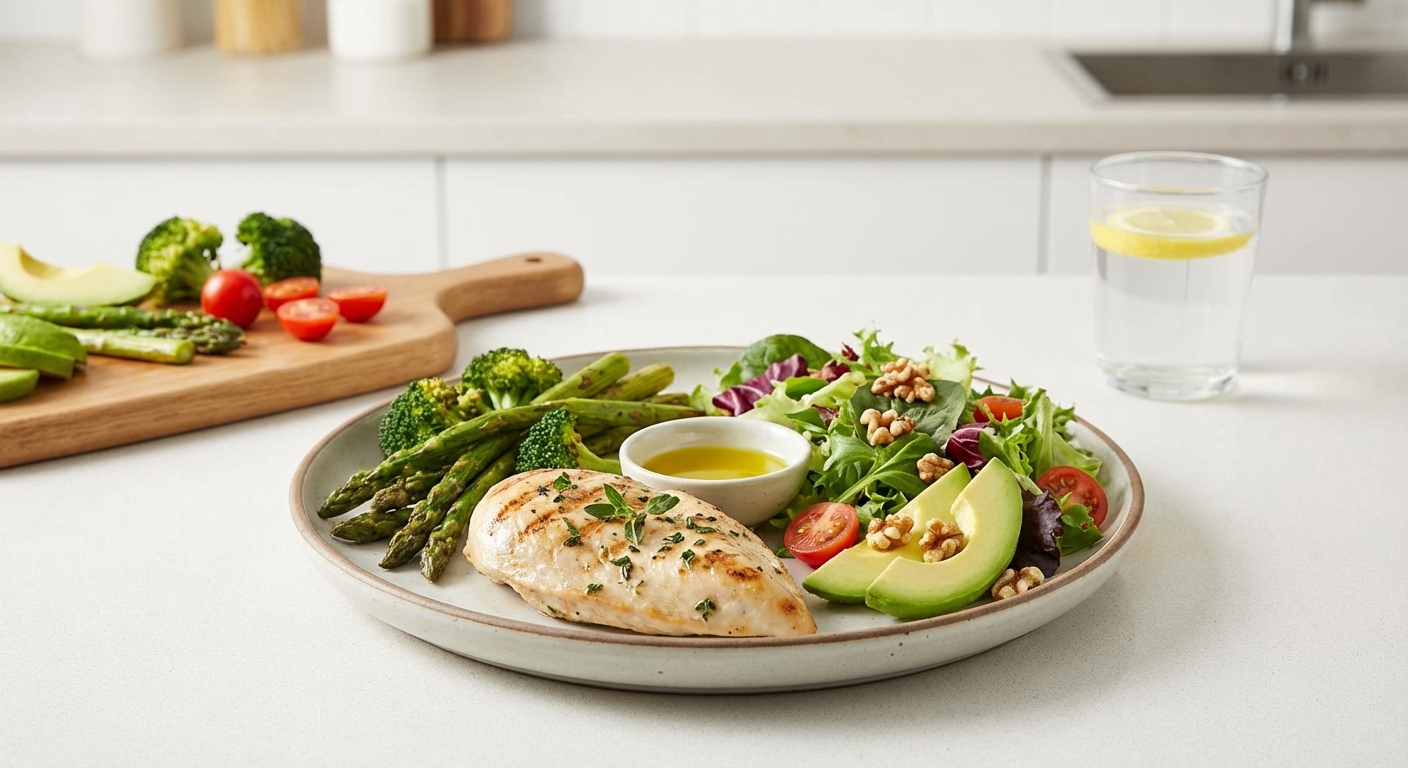
    What Makes a Breakfast Actually Low Carb
    Low Carb Breakfast Ideas That Power Morning Workouts Without the Crash - Illustration 1

    Not all “healthy” breakfasts are low carb.

    A smoothie bowl with granola and honey? That’s 60+ grams of carbs, mostly sugar. Oatmeal with dried fruit? Same story. Even whole grain toast adds up fast.

    True low carb breakfasts keep total carbs under 20 grams. Some people go even lower. The exact number depends on your goals and how your body responds.

    Here’s what to focus on:

    • Eggs in any form
    • Full-fat Greek yogurt (plain, not flavored)
    • Nuts and seeds
    • Avocado
    • Cheese
    • Vegetables (especially leafy greens)
    • Quality meats (bacon, sausage, chicken)
    • Healthy oils (olive oil, coconut oil, butter)

    Here’s what to skip:

    • Bread, bagels, muffins
    • Cereal and granola
    • Pancakes and waffles (unless made with almond flour)
    • Most fruit (berries in small amounts are fine)
    • Juice
    • Flavored yogurt
    • Anything with added sugar

    The Protein Power Move

    Protein should be the star of your low carb breakfast.

    Aim for at least 25 grams. That amount triggers muscle protein synthesis, keeps you full, and supports recovery if you’re training.

    Eggs are the easiest protein source. Three large eggs give you about 18 grams. Add cheese or meat and you’re well over 25 grams.

    Greek yogurt works too. A cup of full-fat Greek yogurt has around 15 to 20 grams of protein. Mix in some nuts or a scoop of protein powder and you’re set.

    Leftover chicken, ground beef, or salmon from dinner? Perfect breakfast protein. Don’t let breakfast food rules limit you.

    “The best breakfast is one that keeps your blood sugar stable and provides enough protein to prevent muscle breakdown. If you’re training fasted or doing morning workouts, hitting 30 grams of protein at breakfast becomes even more important.” – Registered Dietitian Nutritionist

    Eight Low Carb Breakfast Ideas You Can Actually Make

    These aren’t fancy. They’re practical, filling, and most take less time than waiting in a drive-through line.

    1. The Classic Scramble

    Three eggs scrambled in butter with spinach, mushrooms, and cheese.

    Cook time: 5 minutes. Carbs: about 3 grams. Protein: 25 grams.

    Add hot sauce or everything bagel seasoning for flavor without carbs.

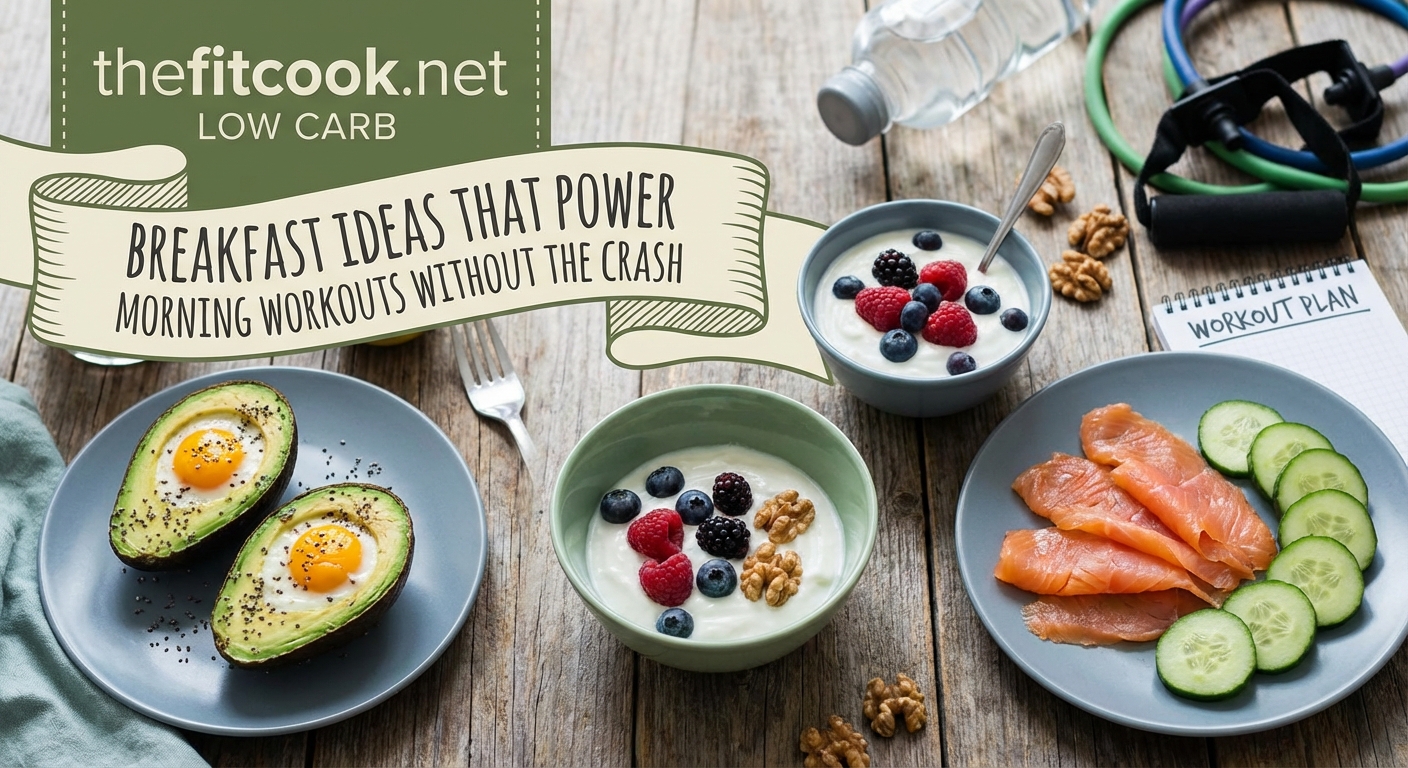
    2. Greek Yogurt Power Bowl

    One cup full-fat Greek yogurt topped with a handful of walnuts, a tablespoon of chia seeds, and a few raspberries.

    Prep time: 2 minutes. Carbs: 12 grams. Protein: 22 grams.

    The fat from the yogurt and nuts keeps you full. The chia seeds add fiber.

    3. Breakfast Sausage and Avocado

    Two cooked sausage patties with half an avocado, sliced.

    Cook time: 6 minutes. Carbs: 4 grams. Protein: 18 grams.

    Make a batch of sausage patties on Sunday. Reheat throughout the week.

    4. Veggie Egg Muffins

    Whisk eggs with diced peppers, onions, and cheese. Pour into muffin tins. Bake at 350°F for 20 minutes.

    Make 12 at once. Grab two each morning. Carbs per muffin: 2 grams. Protein: 7 grams.

    These reheat perfectly in 30 seconds.

    5. Smoked Salmon Plate

    Three ounces smoked salmon with cream cheese, cucumber slices, and capers.

    Prep time: 3 minutes. Carbs: 4 grams. Protein: 20 grams.

    Feels fancy but takes no cooking. Great for busy mornings.

    6. Almond Flour Pancakes

    Mix two eggs, quarter cup almond flour, and a splash of almond milk. Cook like regular pancakes.

    Makes 3 small pancakes. Carbs: 9 grams total. Protein: 14 grams.

    Top with butter and sugar-free syrup or a few berries.

    7. Breakfast Salad

    Spinach, hard-boiled eggs, bacon bits, avocado, and olive oil dressing.

    Prep time: 5 minutes if eggs are pre-cooked. Carbs: 6 grams. Protein: 22 grams.

    Yes, salad for breakfast. Don’t knock it until you try it.

    8. Protein Coffee Shake

    Brew coffee, let it cool slightly. Blend with a scoop of protein powder, ice, and heavy cream.

    Blend time: 1 minute. Carbs: 3 grams. Protein: 25 grams.

    This works when you’re truly rushed but need something substantial.

    The Meal Prep Strategy That Actually Works

    Mornings are chaos. Prep removes decisions and saves time.

    Here’s a simple system:

    1. Cook a dozen eggs on Sunday (hard-boiled or as egg muffins)
    2. Brown two pounds of breakfast sausage or ground beef
    3. Chop vegetables for the week (peppers, onions, mushrooms)
    4. Portion out nuts and seeds into small containers
    5. Make a batch of almond flour pancakes or muffins

    Store everything in clear containers so you can see what you have.

    Now your morning routine becomes: grab, heat if needed, eat. Five minutes max.

    You can mix and match components. Eggs with sausage one day. Egg muffins with avocado the next. Same prep, different meals.

    Common Mistakes That Sabotage Your Low Carb Breakfast

    Even with good intentions, it’s easy to mess this up.

    Mistake Why It Matters Fix
    Not enough protein You’ll be hungry in two hours Aim for 25+ grams minimum
    Too much dairy Some people stall on excess cheese Limit cheese to 1-2 ounces per meal
    Hidden carbs in sauces Ketchup has 4g carbs per tablespoon Read labels, use hot sauce or mustard
    Skipping fat Fat provides satiety and energy Add butter, oil, or avocado
    Eating the same thing daily You’ll get bored and quit Rotate between 5-7 different options
    Not preparing anything You’ll grab whatever’s easy (usually carbs) Prep at least eggs and protein ahead

    The hidden carbs one trips people up constantly. Coffee creamer, protein bars, “keto” products that aren’t actually low carb. Read every label.

    What About Pre-Workout Nutrition

    If you train first thing in the morning, timing matters.

    Some people train fasted. That works if your workout is under an hour and not super intense. Your body has enough stored glycogen for moderate activity.

    For harder sessions, eat something small 30 to 60 minutes before. Good options:

    • Two hard-boiled eggs
    • A handful of nuts
    • Half a protein shake
    • A few bites of leftover meat

    Keep it small. You want fuel without feeling full or sluggish.

    Save your main breakfast for after your workout. That’s when your body needs protein and nutrients for recovery.

    Post-workout is the perfect time for that three-egg scramble or Greek yogurt bowl.

    Making It Work When You’re Traveling

    Hotel breakfasts are carb festivals. Continental breakfast means bagels, muffins, and cereal.

    But you can usually find eggs. Most hotels have an omelet station or at least hard-boiled eggs. Add any available vegetables and cheese.

    No eggs? Look for:

    • Plain yogurt (add your own nuts if you brought them)
    • Sausage or bacon
    • Cheese
    • Avocado if they have a salad bar

    Pack emergency backup options in your bag. Single-serve nut butter packets, protein powder, or low carb protein bars work in a pinch.

    Coffee shops have options too. Most serve hard-boiled eggs, cheese, or protein boxes now.

    The key is planning ahead. Don’t wait until you’re starving to figure it out.

    Adjusting Based on Your Activity Level

    Not everyone needs the same breakfast.

    If you’re sedentary or trying to lose fat, keep portions moderate. Three eggs with vegetables and a small amount of cheese is plenty.

    If you’re training hard or very active, you need more. Add an extra egg or two. Include more fat through avocado or nuts. Maybe add a protein shake on the side.

    Athletes doing intense morning training might need 35 to 40 grams of protein at breakfast. That could mean four eggs plus sausage, or a large Greek yogurt bowl with added protein powder.

    Listen to your hunger signals. If you’re starving two hours after breakfast, you didn’t eat enough protein or fat. If you’re uncomfortably full, you ate too much.

    Adjust as you go. Your needs will change based on training volume, stress, and sleep quality.

    Budget-Friendly Low Carb Breakfast Options

    Low carb doesn’t have to mean expensive.

    Eggs are one of the cheapest proteins available. A dozen eggs costs a few dollars and gives you four breakfasts.

    Buy meat in bulk when it’s on sale. Freeze what you won’t use immediately. Ground beef, chicken thighs, and pork sausage all freeze well.

    Skip the fancy almond flour pancakes and specialty products. Stick with whole foods. Eggs, meat, vegetables, and cheese give you everything you need.

    Frozen vegetables cost less than fresh and work just as well in scrambles and egg muffins.

    Plain Greek yogurt in large containers costs less per serving than individual cups. Portion it yourself.

    Shop sales and plan around what’s cheap that week. Low carb eating can actually save money when you’re not buying processed foods and snacks.

    Your Morning Routine Just Got Easier

    You don’t need complicated recipes or expensive ingredients to eat low carb at breakfast.

    You need protein, healthy fat, and a plan. Cook eggs. Prep some meat. Keep it simple.

    Your energy will stabilize. Your cravings will decrease. Your workouts will improve.

    Start with one or two breakfast options you know you’ll actually make. Master those. Then add variety as you get comfortable.

    The goal isn’t perfection. The goal is consistency. Eating a solid low carb breakfast most mornings will change how you feel and perform.

    Pick one recipe from this list. Make it tomorrow morning. See how you feel three hours later compared to your usual breakfast.

    That’s all the proof you need.
  • The Ultimate Low Carb Grocery List for Fitness-Focused Meal Planning

    Walking into a grocery store without a plan is like hitting the gym without a program. You wander the aisles, grab random items, and end up with a cart full of foods that don’t support your goals. A solid low carb grocery list changes everything. It keeps you focused, saves money, and ensures your kitchen is stocked with foods that fuel your workouts and help you stay lean.

    Key Takeaway

    A well-structured low carb grocery list organizes proteins, healthy fats, vegetables, and pantry staples into shopping categories. This approach eliminates guesswork, reduces impulse purchases, and ensures you have the right ingredients for fitness-focused meals. Planning ahead saves time and keeps your nutrition on track throughout the week.

    Building your protein foundation

    Protein forms the backbone of any fitness-focused eating plan. Your muscles need it for recovery, and it keeps you satisfied between meals.

    Start with whole cuts of meat. Chicken breast, thighs, and ground turkey offer versatility. Beef options include ground beef (80/20 or 85/15), sirloin, and ribeye. Pork chops and tenderloin work well for variety.

    Don’t skip fatty fish. Salmon, mackerel, and sardines provide omega-3s that reduce inflammation. Canned tuna and salmon make easy protein additions to salads and lettuce wraps.

    Eggs deserve a permanent spot on your list. They’re affordable, packed with nutrients, and work for any meal. Buy a few dozen at a time.

    Deli meats can help in a pinch. Choose options without added sugars. Turkey, roast beef, and ham work well for fast lunches.

    Stock your freezer with individually frozen chicken breasts and ground meat. You can thaw exactly what you need without waste, and bulk purchases save money over time.

    Healthy fats that support your goals

    Low carb eating means getting comfortable with fat. Your body uses it for energy when carbs are restricted.

    Cooking fats should include:
    – Avocado oil for high-heat cooking
    – Olive oil for dressings and medium-heat cooking
    – Coconut oil for specific recipes
    – Grass-fed butter or ghee for flavor

    Whole food fat sources matter too. Avocados provide fiber along with healthy fats. A single avocado contains around 12 grams of carbs, but 10 of those are fiber.

    Nuts and seeds work as snacks and recipe ingredients. Almonds, walnuts, pecans, and macadamia nuts keep well in the pantry. Chia seeds and flaxseeds add texture to recipes.

    Full-fat dairy products include heavy cream, cream cheese, sour cream, and Greek yogurt. Check labels because some yogurts sneak in extra sugar.

    Cheese provides both protein and fat. Cheddar, mozzarella, parmesan, feta, and goat cheese all have minimal carbs. Buy blocks and shred them yourself to avoid anti-caking agents.

    Vegetables that won’t derail your carb count

    Not all vegetables fit a low carb approach. Root vegetables and starchy options can add up fast.

    Best choices for low carb eating:
    – Leafy greens like spinach, kale, arugula, and lettuce
    – Cruciferous vegetables including broccoli, cauliflower, Brussels sprouts, and cabbage
    – Zucchini and summer squash
    – Bell peppers in all colors
    – Asparagus and green beans
    – Mushrooms of any variety
    – Celery and cucumber

    Cauliflower deserves special mention. It replaces rice, mashes like potatoes, and forms pizza crusts. Buy fresh heads or pre-riced bags for convenience.

    Frozen vegetables work just as well as fresh. They’re picked at peak ripeness and often cost less. Stock your freezer with broccoli, cauliflower rice, and mixed vegetables without sauces.

    Tomatoes and onions contain more carbs than other vegetables. Use them in moderation for flavor without overdoing it.

    Pantry staples that make meal prep easier

    Your pantry needs basics that turn simple proteins and vegetables into satisfying meals.

    Category Essential Items Why They Matter
    Oils & Vinegars Avocado oil, olive oil, apple cider vinegar, red wine vinegar Cooking and dressing base
    Seasonings Salt, pepper, garlic powder, onion powder, paprika, cumin Flavor without carbs
    Condiments Mustard, hot sauce, sugar-free ketchup, mayo Meal variety
    Baking Almond flour, coconut flour, baking powder Low carb alternatives
    Canned Goods Tomato paste, coconut milk, chicken broth Recipe foundations

    Spices and herbs transform basic meals. Fresh herbs like basil, cilantro, and parsley add brightness. Dried herbs and spices last months in your pantry.

    Sugar-free condiments require label reading. Many brands add sugar to ketchup, BBQ sauce, and salad dressings. Look for versions sweetened with stevia or monk fruit.

    Canned tomatoes and tomato paste provide flavor bases for sauces. A tablespoon of tomato paste has about 3 grams of carbs, so measure carefully.

    Strategic shopping for fitness results

    How you shop matters as much as what you buy.

    Follow this process:

    1. Plan your meals for the week before shopping
    2. Write your list organized by store sections
    3. Shop the perimeter first for fresh foods
    4. Check labels for hidden sugars and carb counts
    5. Buy proteins in bulk when prices drop
    6. Prep vegetables immediately after shopping

    Meal planning prevents decision fatigue during the week. When you know what you’re making, you eat better and waste less food.

    Organization saves time in the store. Group proteins together, then vegetables, then pantry items. You won’t backtrack through aisles.

    The perimeter of most stores holds whole foods. Produce, meat, dairy, and eggs live on the edges. Processed foods fill the center aisles.

    Label reading becomes automatic with practice. Total carbs minus fiber equals net carbs. Some people track total carbs, others focus on net carbs. Pick one method and stay consistent.

    Bulk buying works for items you use regularly. Chicken breast goes on sale every few weeks. Stock your freezer and save money over time.

    Prepping vegetables right away makes weeknight cooking faster. Wash lettuce, chop peppers, and portion snacks. Future you will appreciate the effort.

    Foods that seem low carb but aren’t

    Some products market themselves as healthy while hiding significant carbs.

    Watch out for:
    – Flavored yogurts with fruit on the bottom
    – Trail mixes with dried fruit and chocolate
    – Granola and protein bars with “natural” sweeteners
    – Veggie chips and crackers
    – Smoothies and acai bowls
    – Low-fat salad dressings with added sugar

    Protein bars deserve special attention. Many contain 20-30 grams of carbs from dates, honey, or other sweeteners. Read every label.

    Nut butters sometimes include added sugar. Natural versions with just nuts and salt work better. Almond butter and peanut butter both fit low carb eating in measured amounts.

    Dairy alternatives like almond milk and coconut milk need checking. Unsweetened versions have minimal carbs. Sweetened varieties can pack 10-15 grams per cup.

    Smart substitutions for favorite foods

    Low carb eating doesn’t mean giving up texture and variety.

    Cauliflower rice replaces regular rice in stir-fries and burrito bowls. One cup has about 5 grams of carbs compared to 45 grams in white rice.

    Zucchini noodles (zoodles) work for pasta dishes. Spiralize them yourself or buy pre-made. They cook in minutes and absorb sauces well.

    Lettuce wraps replace tortillas and bread. Butter lettuce and romaine leaves hold fillings without falling apart.

    Almond flour and coconut flour substitute for wheat flour in baking. They behave differently, so follow recipes designed for them.

    Mashed cauliflower mimics mashed potatoes. Add butter, cream cheese, and garlic for a side dish that satisfies.

    Pork rinds replace crackers and breadcrumbs. They add crunch to recipes and work as dippers for guacamole and salsa.

    Snacks that support training and recovery

    Between-meal hunger happens, especially when you train hard.

    Keep these options ready:
    – Hard-boiled eggs
    – Cheese cubes or string cheese
    – Beef jerky without sugar
    – Nuts in pre-portioned bags
    – Celery with almond butter
    – Pepperoni slices
    – Olives
    – Pickles

    Pre-portioning prevents overeating. Nuts are easy to overdo because they taste good and contain calories. Measure servings into small bags or containers.

    Jerky brands vary widely in carb content. Some add teriyaki sauce or honey. Plain, peppered, or spicy versions usually have fewer carbs.

    Vegetables with dip make satisfying snacks. Cucumber slices, bell pepper strips, and celery sticks pair with ranch dressing or guacamole.

    Budget-friendly strategies for clean eating

    Low carb eating doesn’t require expensive specialty foods.

    Eggs provide the cheapest protein per gram. A dozen eggs costs a few dollars and delivers 72 grams of protein.

    Chicken thighs cost less than breasts and contain more flavor. The extra fat fits low carb eating perfectly.

    Frozen vegetables match fresh nutrition at lower prices. Buy large bags and use what you need.

    Ground beef on sale can be portioned and frozen. Brown several pounds at once for easy meal assembly later.

    Seasonal produce costs less and tastes better. Summer brings cheap zucchini and peppers. Winter offers affordable cabbage and Brussels sprouts.

    Store brands for basics like butter, cheese, and canned goods save money without sacrificing quality.

    Sample shopping list for one week

    This list supports five dinners and basic breakfast and lunch options for one person:

    Proteins:
    – 2 pounds chicken breast
    – 1 pound ground beef
    – 1 pound salmon
    – 1 dozen eggs
    – 8 ounces deli turkey

    Vegetables:
    – 2 heads broccoli
    – 1 head cauliflower
    – 1 bag spinach
    – 2 bell peppers
    – 1 zucchini
    – 1 container mushrooms
    – 1 head lettuce

    Fats:
    – 2 avocados
    – 8 ounces cheddar cheese
    – 1 container heavy cream
    – 1 jar mayonnaise

    Pantry additions:
    – Avocado oil
    – Garlic powder
    – Salt and pepper

    This basic framework adapts to your preferences and household size. Scale up quantities for families or meal prep enthusiasts.

    Making your list work for your lifestyle

    Your grocery list should match your cooking skills and schedule.

    Beginners benefit from simple proteins and vegetables. Grilled chicken with roasted broccoli requires minimal technique.

    Busy schedules call for prep-friendly items. Pre-washed greens, rotisserie chicken, and frozen vegetables cut cooking time.

    Meal prep enthusiasts can buy in bulk. Cooking large batches on Sunday sets up the whole week.

    Families need variety to keep everyone happy. Stock multiple protein options and let people choose their vegetables.

    Athletes and heavy trainers might need more protein. Add extra eggs, Greek yogurt, and protein powder to your list.

    Your kitchen, your results

    A well-stocked kitchen removes barriers between you and your goals. When healthy options fill your fridge and pantry, eating well becomes the path of least resistance. Your low carb grocery list isn’t just a shopping tool. It’s a commitment to showing up for yourself every single day. Start with the basics, refine your list over time, and watch how proper planning transforms both your physique and your relationship with food.

  • Quick Low Carb Dinners Ready in 20 Minutes or Less

    Quick Low Carb Dinners Ready in 20 Minutes or Less

    You’re staring at the clock after a long day, knowing you need dinner on the table soon without derailing your low carb goals. The good news? You can absolutely make satisfying, nutritious meals in 20 minutes or less without resorting to takeout or boring salads.

    Key Takeaway

    Low carb dinners in 20 minutes rely on high-heat cooking methods, pre-prepped proteins, and strategic ingredient choices. Focus on thin-cut meats, pre-washed greens, and simple seasonings to create satisfying meals without sacrificing nutrition. Smart substitutions like cauliflower rice and zucchini noodles keep carbs low while maximizing flavor and keeping prep time minimal for busy weeknights.

    Why Speed Matters for Low Carb Success

    Sticking to a low carb eating plan falls apart when you’re exhausted and hungry.

    Time pressure leads to poor decisions. You grab whatever’s convenient, which usually means carbs.

    The solution isn’t meal prepping every Sunday for three hours. It’s building a system that lets you cook real food fast.

    When you can make a complete dinner in the time it takes to order and pick up takeout, you’re more likely to stay consistent. Consistency is what actually moves the needle on your health goals.

    The Foundation of Fast Low Carb Cooking

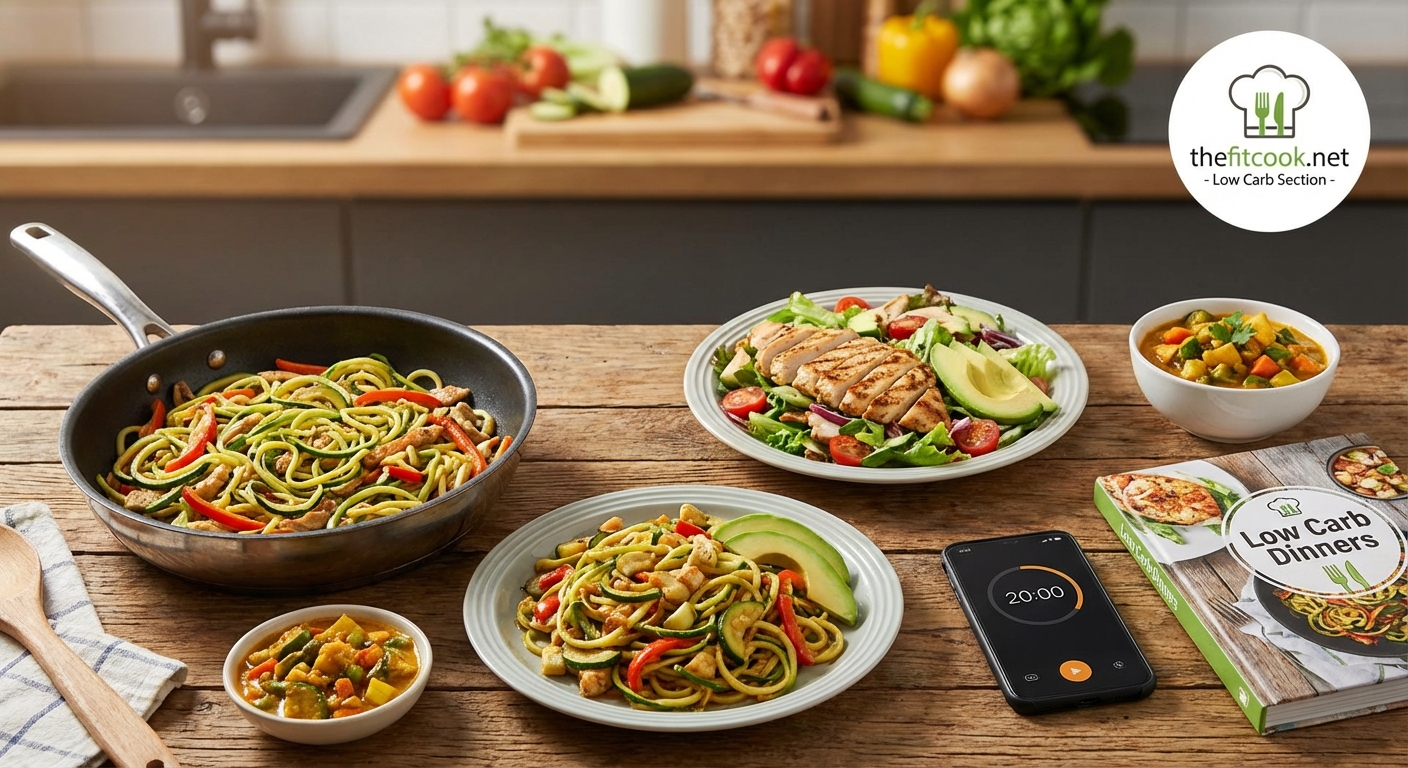
    Quick Low Carb Dinners Ready in 20 Minutes or Less - Illustration 1

    Three elements make or break your timing.

    Protein choice matters most. Thin chicken cutlets cook in 6 minutes. Thick chicken breasts take 18 minutes. That difference determines whether you hit your 20-minute target.

    Heat level controls speed. Medium-high to high heat creates the sear and caramelization you want while cooking proteins through faster. Low heat takes forever and often produces sad, gray meat.

    Mise en place saves chaos. Having your garlic minced, vegetables chopped, and seasonings measured before you turn on the stove prevents that frantic scrambling that adds 10 minutes to every recipe.

    Here’s what to keep stocked:

    • Pre-washed spinach and arugula
    • Frozen cauliflower rice
    • Pre-spiralized zucchini noodles
    • Canned tomatoes
    • Jarred garlic and ginger
    • Quality olive oil and avocado oil
    • Sea salt, black pepper, and red pepper flakes

    Five Techniques That Cut Cooking Time in Half

    1. Pound Your Proteins Thin

    Grab a meat mallet or heavy skillet.

    Place chicken breasts between plastic wrap or parchment paper. Pound them to an even half-inch thickness.

    This single step reduces cooking time from 15 minutes to 6 minutes. It also ensures even cooking, so you don’t end up with dry edges and raw centers.

    The same applies to pork chops. Thin cuts cook faster and stay juicier.

    2. Use a Hot Pan and Don’t Move Food

    Preheat your skillet for 2 to 3 minutes before adding oil.

    When the oil shimmers, add your protein. Then leave it alone for 3 to 4 minutes.

    Constant flipping prevents browning. Browning equals flavor. Let that crust develop before you flip once.

    This applies to vegetables too. Let Brussels sprouts or zucchini sit undisturbed to get those caramelized edges.

    3. Cook Vegetables and Protein Together

    One-pan meals save time and dishes.

    Start protein in the pan first. When you flip it, add your vegetables around the edges.

    Asparagus, bell peppers, and green beans all cook in the same timeframe as chicken or shrimp. Everything finishes together.

    4. Embrace Sheet Pan Dinners

    Set your oven to 425°F.

    Toss protein and vegetables with oil and seasonings. Spread everything on a sheet pan in a single layer.

    Roast for 15 to 18 minutes. Done.

    This method requires almost zero active cooking time. You can prep tomorrow’s lunch while dinner cooks itself.

    5. Keep Sauces Simple

    Fancy sauces with reductions take too long.

    Instead, use:
    – Lemon juice and butter
    – Garlic and olive oil
    – Coconut aminos and sesame oil
    – Pesto from a jar
    – Hot sauce and lime

    Mix these after cooking for instant flavor without extra steps.

    Building Your 20-Minute Meal Formula

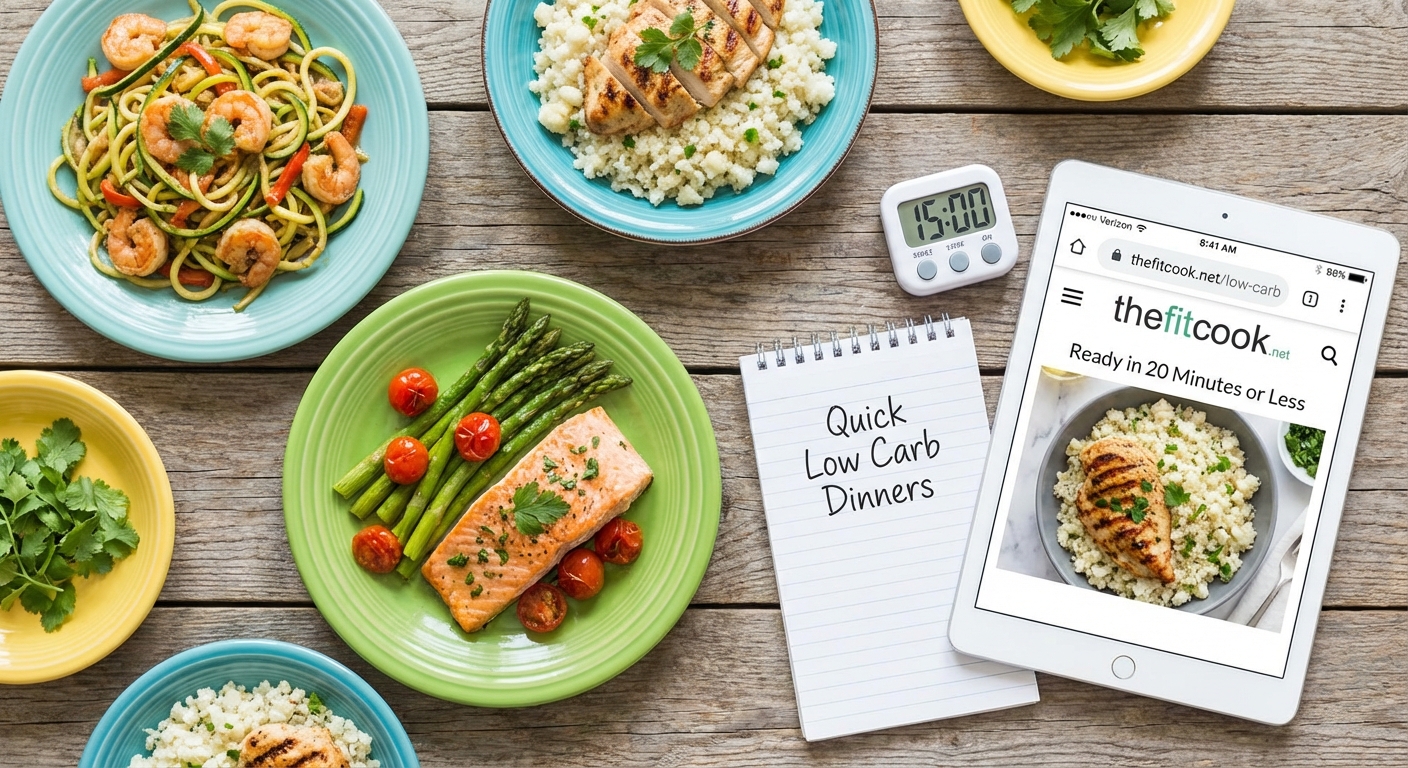
    Quick Low Carb Dinners Ready in 20 Minutes or Less - Illustration 2

    Every fast low carb dinner follows the same pattern.

    Step 1: Choose your protein (4 to 6 ounces per person)
    Step 2: Pick one or two vegetables (aim for 2 cups total)
    Step 3: Select your fat source (oil for cooking, butter or avocado for finishing)
    Step 4: Add seasonings and aromatics (garlic, herbs, spices)

    Here’s how different proteins and vegetables pair by cooking time:

    Protein Cook Time Best Vegetable Pairings Cooking Method
    Shrimp 4-5 min Zucchini, spinach, asparagus Sauté
    Thin chicken cutlets 6-8 min Broccoli, bell peppers, green beans Pan-sear
    Salmon fillets 8-10 min Cauliflower, Brussels sprouts Oven or pan
    Ground beef 8-10 min Cabbage, mushrooms, cauliflower rice Sauté
    Pork chops (thin) 8-10 min Kale, snap peas, zucchini Pan-sear

    Match proteins and vegetables with similar cook times to finish everything simultaneously.

    Real Dinner Examples That Work

    Garlic Butter Shrimp with Zucchini Noodles

    Heat a large skillet over medium-high heat. Add 1 tablespoon butter.

    Toss in 1 pound shrimp. Cook 2 minutes per side. Remove to a plate.

    Add another tablespoon butter and 3 cloves minced garlic. Cook 30 seconds.

    Add pre-spiralized zucchini noodles. Toss for 2 minutes until just tender.

    Return shrimp to pan. Season with salt, pepper, and red pepper flakes. Squeeze half a lemon over everything.

    Total time: 12 minutes.

    Pan-Seared Chicken with Creamy Spinach

    Pound 2 chicken breasts to half-inch thickness. Season both sides with salt and pepper.

    Heat 1 tablespoon avocado oil in a skillet over medium-high heat.

    Cook chicken 5 minutes per side. Remove to a plate.

    Add 4 ounces cream cheese and a quarter cup chicken broth to the pan. Stir until melted.

    Add 4 cups fresh spinach. Cook until wilted, about 2 minutes.

    Slice chicken and serve over spinach.

    Total time: 18 minutes.

    Beef and Broccoli Stir Fry

    Heat a wok or large skillet over high heat. Add 1 tablespoon sesame oil.

    Add 1 pound thinly sliced flank steak. Cook 3 to 4 minutes, stirring occasionally.

    Add 3 cups broccoli florets and 2 cloves minced garlic. Stir-fry for 4 minutes.

    Mix 3 tablespoons coconut aminos with 1 teaspoon ginger. Pour over beef and broccoli.

    Cook 2 more minutes until sauce thickens slightly.

    Total time: 15 minutes.

    “The biggest mistake people make with low carb cooking is overthinking it. Simple proteins, fresh vegetables, and good fats create satisfying meals without complicated techniques or long ingredient lists. Focus on quality ingredients and proper seasoning rather than elaborate recipes.” – Kevin Curry, Fit Men Cook

    Common Mistakes That Slow You Down

    Mistake 1: Starting with a cold pan

    This adds 5 minutes to every recipe. Preheat your cookware while you prep ingredients.

    Mistake 2: Overcrowding the pan

    When protein or vegetables touch, they steam instead of sear. This makes everything soggy and doubles cooking time.

    Use a larger pan or cook in batches.

    Mistake 3: Choosing thick cuts

    A 2-inch chicken breast takes 25 minutes to cook through. A half-inch cutlet takes 8 minutes.

    Buy thin cuts or pound them yourself.

    Mistake 4: Not reading the full recipe first

    You discover halfway through that something needs to marinate or that you’re missing an ingredient.

    Read everything before you start. Gather all ingredients and tools.

    Mistake 5: Trying new recipes on busy nights

    Test new recipes on weekends when you have buffer time. Stick to familiar formulas on hectic weeknights.

    Smart Substitutions for Speed

    Traditional recipes often include high-carb ingredients that take time to prepare.

    Swap these for faster, lower-carb options:

    • Rice: Use pre-riced cauliflower (cooks in 5 minutes)
    • Pasta: Use zucchini noodles or shirataki noodles (ready in 3 minutes)
    • Potatoes: Use radishes or turnips (roast in 15 minutes when diced small)
    • Breadcrumbs: Use crushed pork rinds or almond flour (no prep needed)
    • Tortillas: Use lettuce wraps or low-carb tortillas

    These swaps maintain the comfort food feel without the carbs or extended cooking time.

    Prep Strategies for Even Faster Dinners

    Spending 15 minutes on Sunday creates 20-minute meals all week.

    Batch prep proteins: Season and portion chicken, ground beef, or pork into individual bags. Freeze flat for faster thawing.

    Wash and chop vegetables: Store in glass containers with paper towels to absorb moisture. They’ll last 5 days.

    Make simple sauces: Mix up vinaigrettes, garlic butter, or coconut aminos blends. Store in jars for instant flavor.

    Pre-portion seasonings: Combine your favorite spice blends in small containers. Grab and sprinkle instead of measuring multiple spices.

    This prep doesn’t require marathon cooking sessions. Just a few focused minutes saves hours during the week.

    Equipment That Speeds Everything Up

    You don’t need a kitchen full of gadgets.

    But these tools genuinely save time:

    1. Large cast iron skillet: Holds heat well, creates perfect sears, goes from stovetop to oven
    2. Instant-read thermometer: Prevents overcooking and guesswork (chicken is done at 165°F, not when you “think” it looks right)
    3. Sharp chef’s knife: Cuts prep time in half compared to a dull blade
    4. Sheet pans: Two good half-sheet pans let you roast everything at once

    That’s it. You don’t need specialty equipment to make low carb dinners in 20 minutes.

    Meal Planning Without the Overwhelm

    Pick 3 to 4 core proteins for the week.

    Rotate your vegetables based on what’s on sale.

    Use different cooking methods and seasonings to create variety:

    • Monday: Pan-seared chicken with Italian herbs and zucchini
    • Tuesday: Ground beef stir-fry with Asian flavors and broccoli
    • Wednesday: Baked salmon with lemon-dill and asparagus
    • Thursday: Shrimp tacos with Mexican spices and cabbage slaw

    Same proteins, different flavors. Your grocery list stays short. Your prep stays simple.

    Flavor Boosters That Require Zero Extra Time

    Simple doesn’t mean bland.

    Add these at the end of cooking for instant flavor:

    • Fresh lemon or lime juice
    • Handful of fresh herbs (cilantro, basil, parsley)
    • Crumbled feta or parmesan
    • Toasted nuts or seeds
    • Everything bagel seasoning
    • Quality finishing salt

    These take 30 seconds but transform basic proteins and vegetables into restaurant-quality meals.

    Making It Work for Your Schedule

    Not every night allows for cooking.

    Build flexibility into your plan:

    Tier 1 nights (15 to 20 minutes): You have time to cook. Use the recipes and techniques above.

    Tier 2 nights (5 to 10 minutes): Rotisserie chicken with pre-washed salad and avocado. Deli turkey roll-ups with cheese and vegetables.

    Tier 3 nights (0 minutes): Leftovers from Tier 1 nights. Keep portions in glass containers ready to reheat.

    This three-tier system keeps you eating low carb even when life gets chaotic.

    Your New Weeknight Rhythm

    Low carb dinners in 20 minutes aren’t about perfection.

    They’re about creating a sustainable system that works when you’re tired, busy, or just don’t feel like cooking.

    Start with one or two recipes this week. Get comfortable with the timing and techniques. Then add more variety as these become second nature.

    The goal isn’t to become a chef. It’s to feed yourself well without stress, keep your carbs low, and stay consistent with your health goals. Twenty minutes is all you need.

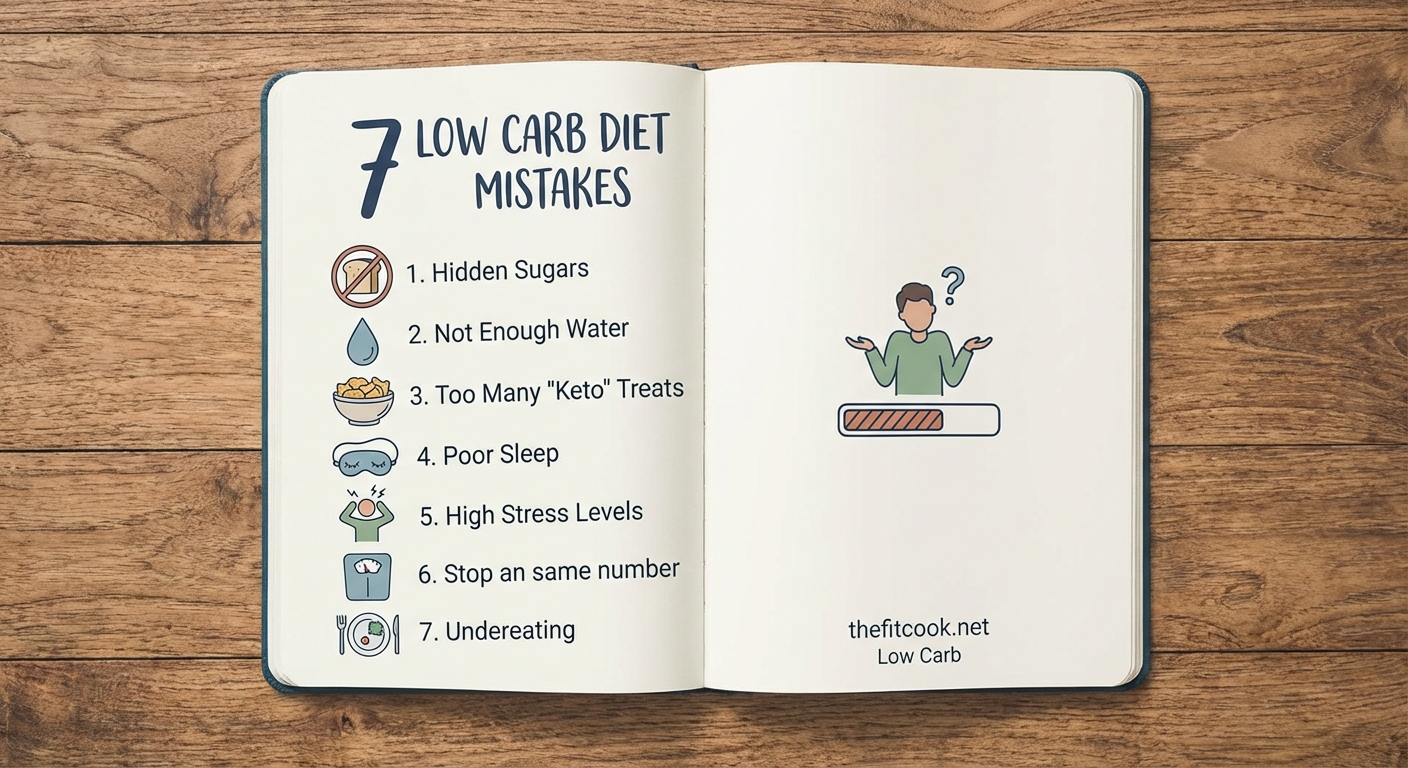
  • Are You Making These 7 Low Carb Diet Mistakes That Stall Your Progress?

    Are You Making These 7 Low Carb Diet Mistakes That Stall Your Progress?

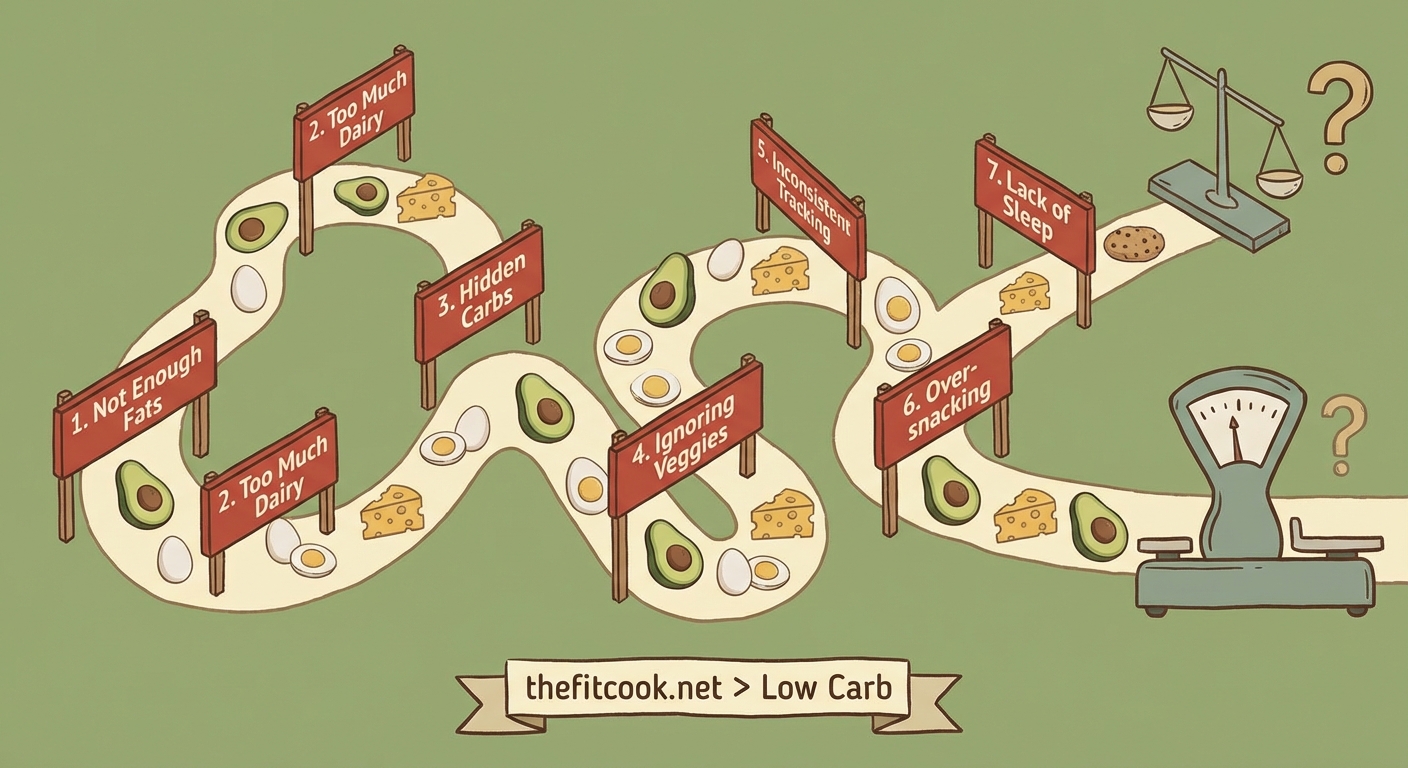
    You’ve been cutting carbs for weeks, maybe months. The scale moved at first, but now it’s stuck. Your energy feels off, and you’re wondering if this whole approach is broken.

    Here’s the truth: low carb works, but only when you avoid the traps that derail most people. Small errors compound over time, turning what should be a powerful fat loss tool into a frustrating plateau.

    Key Takeaway

    Most low carb diet plateaus stem from seven fixable mistakes: eating hidden carbs, fearing fat, neglecting electrolytes, consuming too much protein, skipping fiber, quitting too early, and relying on processed “keto” products. Correcting these errors restores fat burning, energy, and consistent progress without extreme restriction or complicated meal plans.

    Mistake 1: Sneaky Carbs Are Sabotaging Your Numbers

    You think you’re eating 30 grams of carbs daily. You’re actually eating 60.

    Condiments, sauces, and “low carb” packaged foods hide more carbs than you’d expect. Two tablespoons of ketchup? Four grams. A serving of salad dressing? Six grams. That sugar-free syrup? Still has maltodextrin that spikes insulin.

    Restaurant meals are even worse. Marinades contain sugar. Grilled chicken gets glazed with honey. Your “plain” vegetables arrive swimming in a starchy sauce.

    How to fix it:

    1. Track everything for two weeks using a food scale
    2. Read nutrition labels for serving sizes and total carbs
    3. Subtract fiber to get net carbs, but don’t ignore the total
    4. Cook at home where you control every ingredient

    The carbs you don’t see are the ones that stop fat burning. Your body can’t tell the difference between intentional carbs and accidental ones.

    Mistake 2: You’re Terrified of Eating Fat

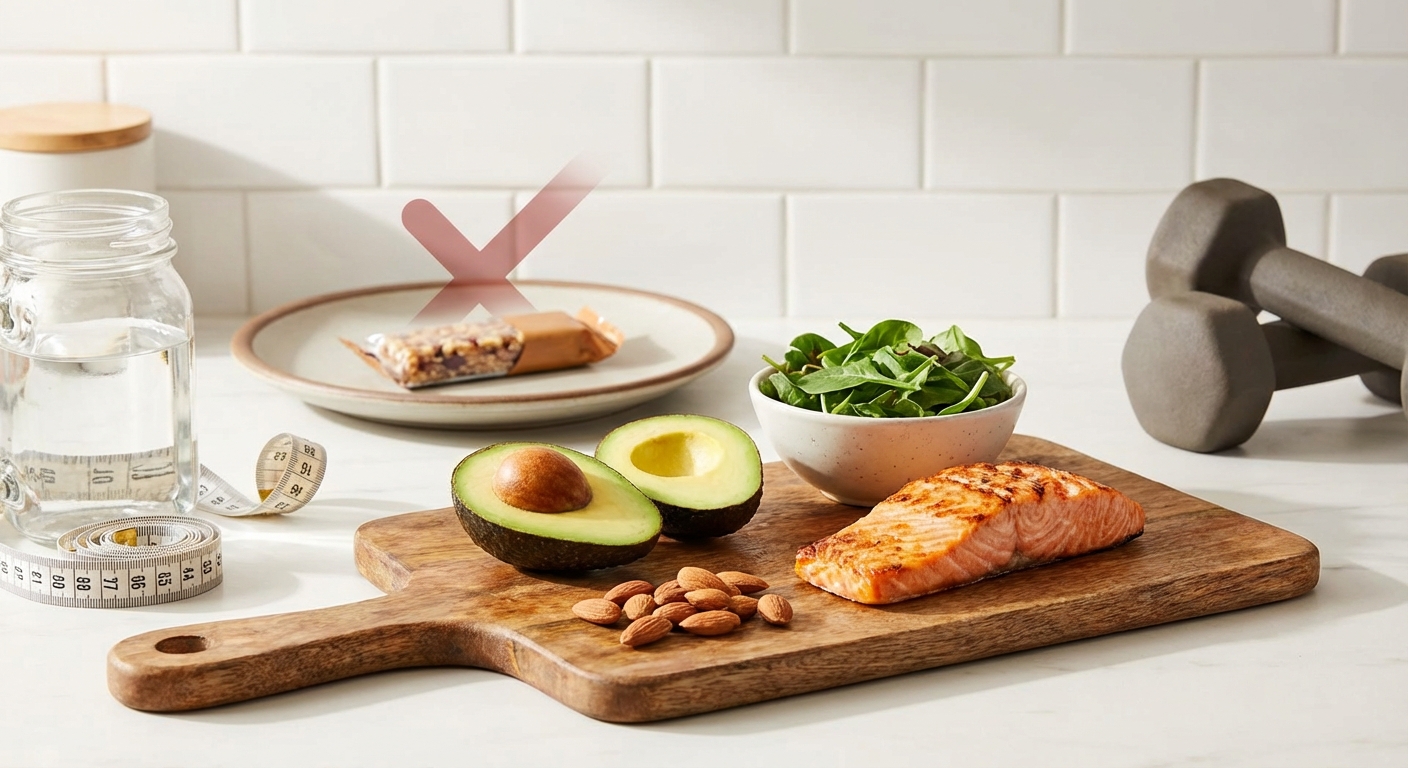
    Are You Making These 7 Low Carb Diet Mistakes That Stall Your Progress? - Illustration 1

    Decades of bad advice taught you that fat makes you fat. Now you’re eating low carb AND low fat, which leaves you starving and miserable.

    When you cut carbs, fat becomes your primary fuel source. Without enough of it, your body has nothing to burn. You end up tired, hungry, and reaching for snacks that kick you out of ketosis.

    This fear shows up in real meals. You order a salad with grilled chicken and skip the dressing. You trim every bit of fat off your steak. You buy fat-free cheese and wonder why you’re never satisfied.

    Your body needs fat for hormone production, brain function, and sustained energy. Restricting it while also restricting carbs is a recipe for failure.

    Healthy fat sources to embrace:

    • Avocado and avocado oil
    • Olive oil and olives
    • Fatty fish like salmon and mackerel
    • Nuts and nut butters (measured portions)
    • Full-fat dairy if you tolerate it
    • Grass-fed butter or ghee
    • Coconut oil for cooking

    Aim for 70 to 75 percent of your calories from fat when eating very low carb. That might sound extreme, but it’s what keeps hunger away and energy stable.

    Mistake 3: Your Electrolytes Are Tanked

    You feel foggy, tired, and irritable. You blame the diet. Actually, you’re just depleted.

    Cutting carbs drops insulin levels, which signals your kidneys to dump sodium. That sodium takes potassium and magnesium with it. Within days, you’re deficient in all three, and you feel terrible.

    This is what people call the “keto flu,” but it’s not the diet’s fault. It’s a mineral deficiency that’s completely preventable.

    Most people don’t realize how much sodium they need on low carb. The standard recommendation of 2,300 milligrams per day is far too low when you’re not eating processed carbs that come pre-salted.

    Electrolyte Daily Target on Low Carb Common Sources
    Sodium 4,000 to 6,000 mg Sea salt, bone broth, pickles
    Potassium 3,000 to 4,000 mg Avocado, spinach, salmon
    Magnesium 400 to 500 mg Pumpkin seeds, dark chocolate, almonds

    Add a half teaspoon of sea salt to your water twice daily. Sip bone broth in the afternoon. Take a magnesium supplement before bed. These small changes eliminate brain fog and restore your energy within 24 hours.

    Mistake 4: You’re Eating Too Much Protein

    Are You Making These 7 Low Carb Diet Mistakes That Stall Your Progress? - Illustration 2

    Protein is good, but more isn’t always better.

    When you eat excessive protein, your body converts some of it into glucose through a process called gluconeogenesis. That glucose can interfere with ketosis and slow fat loss, especially if you’re insulin resistant.

    This mistake happens when people swap carbs for protein without adding enough fat. A chicken breast becomes the entire meal. Protein shakes replace breakfast. Lean ground turkey replaces fattier beef.

    You need protein for muscle retention and satiety, but there’s a sweet spot. Most people do best with 0.6 to 1.0 grams per pound of lean body mass. An active 150-pound person needs roughly 90 to 120 grams daily, not 200.

    Signs you’re overdoing protein:

    • Stalled weight loss despite low carbs
    • Difficulty staying in ketosis
    • Digestive discomfort after meals
    • Relying on protein bars and shakes

    Balance your plate with fat as the main energy source, moderate protein for muscle maintenance, and minimal carbs from vegetables.

    Mistake 5: You’re Skipping Vegetables and Fiber

    Bacon and eggs taste great, but they don’t give you fiber.

    Many people go low carb and accidentally go low fiber, too. They avoid all plant foods because they’re scared of carbs. Constipation follows. Gut health suffers. Nutrient deficiencies creep in.

    Fiber doesn’t raise blood sugar the way starchy carbs do. It feeds beneficial gut bacteria, supports digestion, and keeps you full between meals. You can eat plenty of it and still stay in ketosis.

    Non-starchy vegetables are your best source. They provide fiber, vitamins, minerals, and antioxidants without spiking insulin.

    High-fiber, low-carb vegetables:

    • Leafy greens (spinach, kale, arugula)
    • Cruciferous vegetables (broccoli, cauliflower, Brussels sprouts)
    • Zucchini and summer squash
    • Asparagus and green beans
    • Bell peppers and cucumbers
    • Mushrooms and celery

    Aim for at least five servings of vegetables daily. That’s not hard when you load your plate with greens at lunch and roast a pan of broccoli for dinner.

    “Fiber is the most underrated nutrient on a low carb diet. It’s what separates people who feel amazing from those who struggle with energy and digestion.” – Registered Dietitian Nutritionist

    Mistake 6: You Quit Before Adaptation Happens

    You tried low carb for a week. You felt awful. You quit.

    Here’s what you missed: fat adaptation takes time.

    Your body has been burning glucose for fuel your entire life. Switching to fat as the primary energy source doesn’t happen overnight. It takes two to four weeks for your metabolism to adjust, your mitochondria to upregulate fat-burning enzymes, and your brain to efficiently use ketones.

    During that transition, you might feel sluggish. Workouts might feel harder. Sleep might be disrupted. This is temporary, but most people bail before they get to the other side.

    After adaptation, energy stabilizes. Mental clarity improves. Hunger decreases. Fat loss becomes consistent. But you only get there if you stick with it long enough.

    Give yourself at least 30 days before deciding if low carb works for you. Support your body with electrolytes, adequate fat, and enough sleep. The first week is the hardest, but it gets easier.

    Mistake 7: You’re Relying on Processed “Keto” Products

    The grocery store shelves are packed with keto cookies, keto ice cream, and keto bread. Most of it is garbage.

    These products are designed to mimic the foods you’re trying to avoid. They’re loaded with artificial sweeteners, inflammatory seed oils, and mystery fibers that cause digestive distress. They keep you craving sweets instead of breaking the sugar addiction.

    Worse, many of them aren’t even low carb. Manufacturers use labeling tricks to hide carbs or claim that certain ingredients “don’t count.” Your body doesn’t care about marketing claims. It responds to what you actually eat.

    Processed keto products also teach you nothing about real food. You never learn to cook satisfying meals from whole ingredients. You stay dependent on packaged convenience, which is expensive and unsustainable.

    What to do instead:

    1. Build meals around whole foods: meat, fish, eggs, vegetables, healthy fats
    2. Save treats for special occasions, and make them yourself
    3. Use simple ingredients you can pronounce
    4. Focus on nutrient density, not just hitting macros

    Real food doesn’t need a keto label. A grass-fed steak, a side of roasted Brussels sprouts with butter, and a simple salad will always outperform a box of keto crackers.

    How to Know If You’re Making Progress

    Weight on the scale tells part of the story, but not all of it.

    Low carb causes water weight fluctuations that have nothing to do with fat loss. You might drop five pounds in the first week, then see no change for ten days. That doesn’t mean you’re failing. It means your body is adjusting.

    Better progress markers:

    • How your clothes fit around the waist and hips
    • Energy levels throughout the day
    • Mental clarity and focus
    • Hunger and cravings between meals
    • Sleep quality and recovery
    • Strength and performance in workouts

    Take measurements every two weeks. Notice how you feel, not just what you weigh. Fat loss is rarely linear, but the trend should move in the right direction over time.

    If you’ve fixed the seven mistakes above and still aren’t seeing results after six weeks, it’s time to look at total calories. Low carb makes it easier to eat less, but you can still overeat. Track your portions for a few days to see where you stand.

    Your Low Carb Diet Should Feel Sustainable

    The best diet is the one you can stick with long enough to see results.

    Low carb works because it controls insulin, reduces hunger, and makes fat burning easier. But it only works when you avoid the mistakes that sabotage most people: hidden carbs, fat phobia, electrolyte depletion, excess protein, missing fiber, quitting too early, and relying on junk food with a keto label.

    Fix these errors, give your body time to adapt, and measure progress beyond the scale. You’ll break through plateaus, regain your energy, and finally see the results you’ve been working toward.

  • How to Build the Perfect Low Carb Plate for Fat Loss and Muscle Retention

    How to Build the Perfect Low Carb Plate for Fat Loss and Muscle Retention

    You want to drop body fat without losing the muscle you worked hard to build. That means you need more than a generic diet plan. You need a structured approach that balances macros, times nutrients around training, and keeps you full enough to stick with it for months, not just days.

    Key Takeaway

    A successful low carb meal plan for fat loss prioritizes high protein intake, strategic carb placement around workouts, and portion sizes that create a moderate calorie deficit. This approach preserves muscle tissue while burning fat, provided you maintain consistent strength training and adjust portions based on weekly progress rather than daily fluctuations.

    Understanding how low carb supports fat loss

    Reducing carbohydrates lowers insulin levels, which allows your body to access stored fat more easily. When you eat fewer carbs, your body shifts toward using fat as its primary fuel source instead of constantly relying on glucose.

    But here’s what most people get wrong. They slash carbs to near zero and wonder why their workouts suffer and their muscle starts to flatten. The goal isn’t to eliminate carbs completely. The goal is to reduce them enough to trigger fat burning while keeping enough around your training sessions to fuel performance and recovery.

    Your body can maintain muscle on lower carbs as long as protein stays high and training stimulus remains consistent. Studies show that adequate protein intake during calorie restriction is the most important factor for muscle retention, even more important than carb intake itself.

    The sweet spot for most people sits between 50 and 100 grams of carbs per day. Athletes or people training intensely might need 100 to 150 grams. Sedentary individuals might do well with 30 to 50 grams. The right number depends on your activity level, current body composition, and how your energy feels day to day.

    Building your plate for maximum results

    How to Build the Perfect Low Carb Plate for Fat Loss and Muscle Retention - Illustration 1

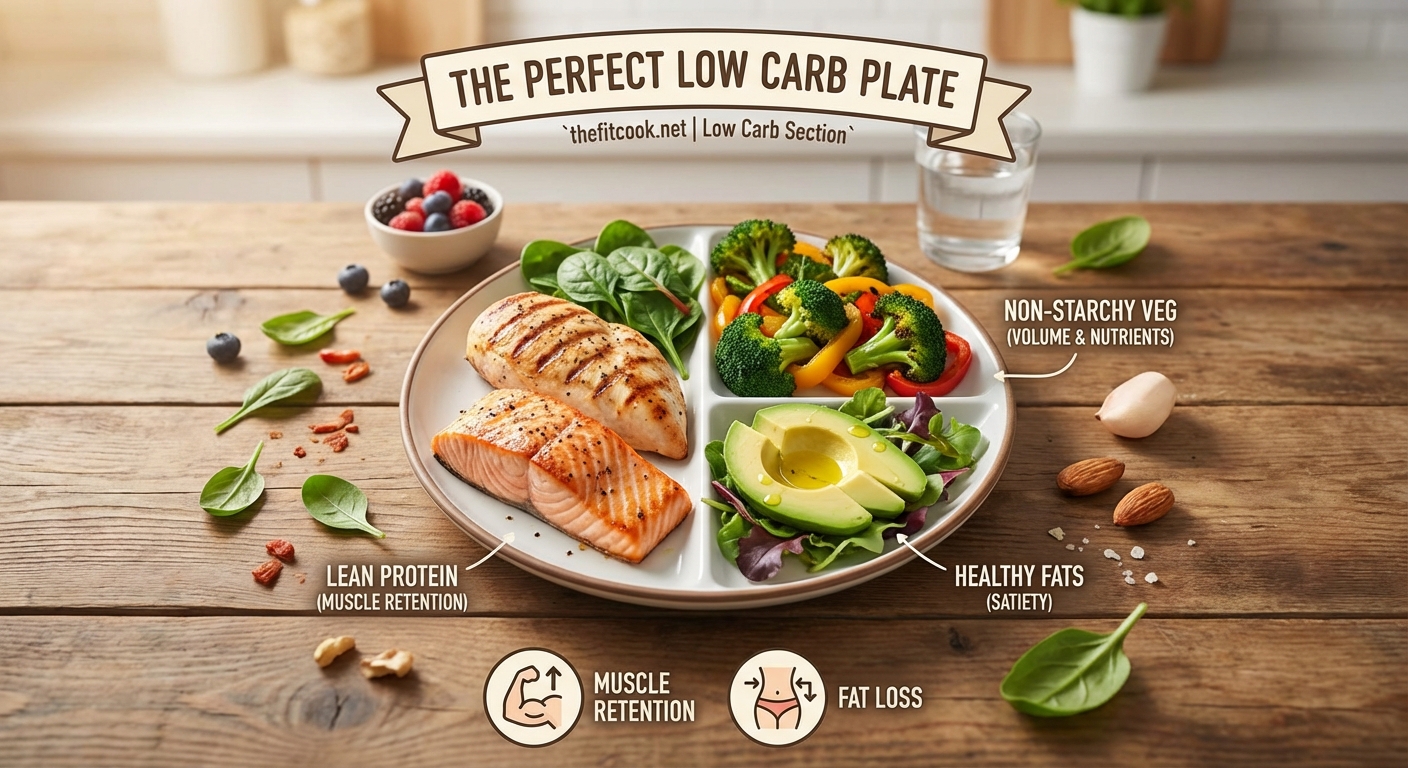
    Every meal should follow a simple framework that makes portion control automatic. This takes the guesswork out of eating and ensures you hit your targets without weighing every morsel of food.

    Start with protein as your anchor. Fill one third to one half of your plate with a quality protein source. This could be chicken breast, ground turkey, salmon, lean beef, or eggs. Protein keeps you full, protects muscle tissue during fat loss, and has the highest thermic effect of all macronutrients, meaning your body burns more calories just digesting it.

    Next, add non-starchy vegetables to fill another third to half of your plate. Think leafy greens, broccoli, cauliflower, zucchini, bell peppers, asparagus, and mushrooms. These foods are nutrient dense, high in fiber, and so low in calories that you can eat them freely without worrying about portions.

    Finally, add a small portion of healthy fats. This might be half an avocado, a tablespoon of olive oil on your salad, a handful of nuts, or butter used in cooking. Fats slow digestion, improve nutrient absorption, and help regulate hormones that control hunger and metabolism.

    Your strategic carbs, if you include them in a meal, should come from whole food sources like sweet potatoes, white rice, oats, or fruit. These work best in your post-workout meal when your muscles are primed to store glycogen instead of converting carbs to fat.

    Sample meal structure for different schedules

    How you distribute your meals throughout the day matters less than hitting your total daily targets. Some people thrive on three square meals. Others prefer four to five smaller ones. Both approaches work as long as total protein, carbs, fats, and calories align with your goals.

    Here’s a framework for someone eating three meals per day:

    Breakfast (7:00 AM)
    – 3 whole eggs scrambled with spinach and mushrooms
    – Half an avocado
    – Black coffee or green tea

    Lunch (12:30 PM)
    – 6 ounces grilled chicken breast
    – Large mixed green salad with olive oil and vinegar
    – Steamed broccoli

    Dinner (6:30 PM, post-workout)
    – 6 ounces salmon
    – 1 cup roasted sweet potato
    – Asparagus cooked in grass-fed butter

    For someone who trains in the morning and prefers four meals:

    Pre-workout (6:00 AM)
    – 2 whole eggs
    – Handful of berries

    Post-workout breakfast (8:30 AM)
    – Protein smoothie with whey, banana, almond butter, and spinach

    Lunch (1:00 PM)
    – Turkey lettuce wraps with avocado and tomato
    – Side of cucumber salad

    Dinner (7:00 PM)
    – Grass-fed beef stir-fry with mixed vegetables
    – Cauliflower rice

    Notice how the person training in the morning gets more carbs in their post-workout meal. The person training in the evening saves their carb portion for dinner. This timing helps fuel recovery when your body needs it most.

    Protein targets you can’t ignore

    How to Build the Perfect Low Carb Plate for Fat Loss and Muscle Retention - Illustration 2

    Protein intake should range from 0.8 to 1.2 grams per pound of body weight when you’re in a calorie deficit. A 180-pound person should aim for 145 to 215 grams per day, depending on training volume and how aggressive the deficit is.

    Spreading protein across meals works better than loading it all into one or two sittings. Your body can only synthesize so much muscle protein at once. Aim for at least 30 to 40 grams per meal if you eat three times daily, or 25 to 30 grams if you eat four to five times.

    Quality matters. Whole food sources like meat, fish, eggs, and Greek yogurt provide complete amino acid profiles and come with other nutrients. Protein powder can fill gaps, but it shouldn’t replace real food as your primary source.

    “When calories are restricted for fat loss, protein becomes even more critical. It’s your insurance policy against muscle loss. Skimp on protein and your body will break down muscle tissue to meet its amino acid needs, especially if you’re training hard.”

    Carb timing strategies that work

    You don’t need to fear carbs, but you do need to be strategic about when and how much you eat. Timing carbs around your training sessions maximizes their benefit while minimizing fat storage potential.

    The best time to eat carbs is within two hours after training. Your muscles are insulin sensitive at this point, meaning they’ll pull glucose into cells for glycogen storage rather than letting it float around in your bloodstream. This supports recovery without spiking fat storage hormones for extended periods.

    On rest days, you can drop carbs lower since you’re not depleting glycogen stores. Some people cycle carbs, eating 100 to 150 grams on training days and 30 to 50 grams on rest days. This approach keeps average intake moderate while supporting performance when it matters.

    If you train multiple times per day or do very high volume work, you might need carbs before training too. A small serving of easily digestible carbs 30 to 60 minutes pre-workout can improve performance without interfering with fat loss, especially if total daily intake stays controlled.

    Fat sources that support hormones and satiety

    Dietary fat often gets a bad reputation, but it’s essential for hormone production, vitamin absorption, and feeling satisfied after meals. The key is choosing the right types and controlling portions since fat contains nine calories per gram compared to four for protein and carbs.

    Focus on these sources:

    • Avocados and avocado oil
    • Extra virgin olive oil
    • Nuts and nut butters (measured portions)
    • Fatty fish like salmon and mackerel
    • Grass-fed butter or ghee
    • Coconut oil for high-heat cooking
    • Egg yolks
    • Full-fat Greek yogurt (if dairy is tolerated)

    Avoid industrial seed oils like soybean, corn, and canola when possible. These oils are high in omega-6 fatty acids that can promote inflammation when consumed in excess. Stick with more stable fats that have been part of human diets for centuries.

    A good starting point for fat intake is 0.3 to 0.5 grams per pound of body weight. A 180-pound person would eat 55 to 90 grams of fat per day. This provides enough for hormonal health without crowding out protein or pushing calories too high.

    Tracking progress beyond the scale

    Your body weight will fluctuate daily based on water retention, sodium intake, carb consumption, stress, sleep, and hormonal cycles. Weighing yourself every day and reacting to each change is a recipe for frustration and poor decisions.

    Instead, track these markers:

    1. Weekly average weight: Weigh yourself at the same time each day, then average the seven numbers. Compare weekly averages, not daily weights.

    2. Progress photos: Take front, side, and back photos every two weeks in the same lighting and clothing. Visual changes often show up before scale changes.

    3. Measurements: Track waist, hips, chest, arms, and thighs monthly. You can lose inches while weight stays the same if you’re building muscle and losing fat simultaneously.

    4. Performance metrics: Are your lifts maintaining or improving? Can you do more reps at the same weight? Strength maintenance during fat loss indicates muscle preservation.

    5. How your clothes fit: The way your jeans fit your waist or how your shirts fit your shoulders tells you more than any number on a scale.

    If weekly average weight drops 0.5 to 1.5 pounds per week, you’re in a good range. Faster than that and you risk losing muscle. Slower than that and you might need to adjust portions or activity.

    Common mistakes that stall results

    Many people sabotage their progress without realizing it. These errors are fixable once you know what to watch for.

    Mistake Why It Hurts The Fix
    Protein too low Body breaks down muscle for amino acids Hit 0.8-1.2g per pound daily
    Carbs too low for activity Training performance suffers, metabolism slows Match carbs to training volume
    Not tracking anything Portions creep up over time Log food for at least two weeks
    Changing plans weekly No time to see what works Stick with one approach 4-6 weeks
    Ignoring sleep Hormones get disrupted, hunger increases Prioritize 7-9 hours nightly
    Overdoing cardio Increases hunger, doesn’t preserve muscle Focus on lifting, add cardio sparingly

    Another common issue is eating too little for too long. Aggressive deficits work for a few weeks, but eventually your metabolism adapts, hunger skyrockets, and adherence falls apart. A moderate deficit of 300 to 500 calories below maintenance is sustainable for months and produces better long-term results.

    Adjusting your plan as you progress

    What works in week one won’t work forever. As you lose weight, your calorie needs decrease. A 200-pound person burns more calories at rest than a 180-pound person, even with identical activity levels.

    Every four to six weeks, reassess your approach:

    • Is weekly average weight still dropping at an acceptable rate?
    • Are strength levels maintaining or improving?
    • Is hunger manageable most days?
    • Are energy levels adequate for training and daily life?

    If progress stalls for two consecutive weeks, make one small adjustment. Drop carbs by 15 to 20 grams, reduce fat by 5 to 10 grams, or add 20 to 30 minutes of walking per day. Change one variable at a time so you know what’s working.

    If you’ve been in a deficit for 12 to 16 weeks straight, consider a diet break. Eat at maintenance calories for one to two weeks. This can reset some metabolic adaptations, improve adherence, and set you up for another successful fat loss phase.

    Meal prep strategies that save time

    Cooking every meal fresh sounds ideal but rarely happens in real life. Batch cooking on weekends or one evening per week makes adherence much easier during busy workdays.

    Pick one or two protein sources to cook in bulk. Grill several pounds of chicken breast, bake a large piece of salmon, or brown a few pounds of ground beef. Portion these into containers and refrigerate or freeze.

    Prep vegetables by washing, chopping, and storing them in containers. Pre-cut broccoli, cauliflower, peppers, and zucchini last several days in the fridge and cut your cooking time by half.

    Cook carb sources if you include them. Bake sweet potatoes, cook a pot of rice, or prepare overnight oats. These reheat well and make assembling meals faster.

    Invest in quality storage containers that seal well and stack efficiently. Glass containers work great because they don’t absorb odors and can go from fridge to oven to table.

    Keep emergency options available for days when meal prep fails. Canned tuna, rotisserie chicken from the grocery store, pre-washed salad greens, and frozen vegetables can save you from ordering takeout when time is tight.

    Making this work for your lifestyle

    A low carb meal plan for fat loss only works if you can sustain it for months. That means it needs to fit your schedule, food preferences, budget, and social life.

    If you hate cooking, keep meals simple. Grilled protein, steamed vegetables, and a side of healthy fats takes 15 minutes to prepare. You don’t need elaborate recipes to get results.

    If you eat out frequently, learn how to order. Ask for vegetables instead of rice or potatoes. Request sauces on the side. Order an extra side of protein instead of bread. Most restaurants will accommodate these requests without issue.

    If you have family meals to consider, cook one protein and multiple sides. You can have grilled chicken with vegetables while your family has the same chicken with rice and bread. Everyone eats together without you cooking separate meals.

    If weekends are social, plan for it. Eat slightly lower calories Monday through Friday so you have room for a restaurant meal or drinks on Saturday without derailing weekly totals. One higher calorie day won’t ruin progress if the other six days are solid.

    Your next steps start today

    Building a sustainable low carb meal plan for fat loss doesn’t require perfection. It requires consistency, patience, and willingness to adjust based on how your body responds.

    Start by calculating your protein target and making that non-negotiable. Build your meals around quality protein sources, fill the rest of your plate with vegetables, and add strategic portions of healthy fats and carbs based on your training schedule. Track your progress using multiple metrics, not just the scale, and make small adjustments every few weeks as needed.

    The people who succeed long term are the ones who find a system they can maintain even when motivation fades. Make your plan simple enough to follow on busy days, flexible enough to handle social situations, and structured enough to produce measurable results. That’s how you lose fat, keep muscle, and build habits that last well beyond your initial goal weight.

  • 30 Low Carb Meal Prep Recipes That Actually Keep You Full All Week

    Meal prepping on a low carb diet doesn’t mean eating sad salads for seven days straight. When you build your weekly menu around protein, healthy fats, and fiber-rich vegetables, you create meals that actually satisfy hunger and keep energy steady from Monday through Friday. The secret is choosing recipes that hold up well in the fridge, reheat beautifully, and deliver the macros your body needs to feel full between meals.

    Key Takeaway

    Successful low carb meal prep combines high protein ingredients with healthy fats and non-starchy vegetables. Planning one prep session creates five to seven days of satisfying meals. Focus on recipes with 20+ grams of protein per serving, use quality storage containers, and batch cook proteins separately from vegetables for better texture. This approach saves time, reduces decision fatigue, and keeps you full throughout the week.

    Why Low Carb Meal Prep Works Better Than Daily Cooking

    Preparing meals in advance removes the 5 PM panic when hunger hits and willpower disappears. You open the fridge and find a complete meal instead of random ingredients that require chopping, seasoning, and cooking.

    Low carb eating relies heavily on fresh proteins and vegetables. These ingredients take longer to prepare than opening a box of pasta. Batch cooking transforms three hours on Sunday into 15 meals ready to grab.

    The financial benefits add up fast. Buying chicken thighs in bulk costs half the price of buying two breasts at a time. A whole head of cauliflower makes four servings of rice for less than one takeout side dish.

    Your macros stay consistent when you prep ahead. Each container holds measured portions of protein, fat, and carbs. No guessing. No tracking surprises at 9 PM when you realize you ate 50 grams of carbs instead of 20.

    Essential Equipment for Low Carb Meal Prep Success

    The right tools make prep day flow smoothly instead of feeling like a kitchen disaster.

    Glass containers with snap lids preserve food quality better than plastic. They don’t absorb odors, stain from tomato-based sauces, or leach chemicals when reheated. A set of 10 containers in two sizes handles most weekly needs.

    A sharp chef’s knife cuts prep time in half. Dull knives make chopping vegetables tedious and dangerous. Invest in one quality 8-inch blade and learn to maintain the edge.

    Sheet pans let you roast multiple proteins and vegetables simultaneously. Line them with parchment paper for easy cleanup. Two half-sheet pans fit in most ovens and handle enough food for six servings.

    A food scale eliminates portion guessing. Eyeballing 4 ounces of chicken never works. Weighing ensures each container has the protein and fat you planned.

    Additional helpful items:

    • Slow cooker for hands-off protein cooking
    • Instant pot for faster meal components
    • Mandoline slicer for uniform vegetable cuts
    • Silicone muffin cups for egg bites
    • Mason jars for salad dressings and sauces

    Building a Weekly Low Carb Meal Prep Plan

    Start with a simple framework instead of trying to prep 21 different meals.

    1. Choose two breakfast options and alternate them throughout the week
    2. Select three lunch recipes and rotate them over five days
    3. Pick three dinner proteins and pair them with different vegetable sides
    4. Prepare two snack options for between-meal hunger

    This rotation prevents boredom without overwhelming your prep time. You’ll cook each recipe once but eat it multiple times.

    Monday planning saves Sunday stress. Sit down with your calendar and note which days need portable lunches versus meals eaten at home. Check your schedule for late meetings or kids’ activities that require grab-and-go dinners.

    Write your grocery list by store section. Group all proteins, then vegetables, then dairy, then pantry items. This organization prevents forgotten ingredients and multiple store trips.

    Shop once for the entire week. Buying ingredients in single-meal quantities costs more and wastes time. Purchase family packs of chicken thighs, ground beef, and salmon. Buy vegetables that store well like broccoli, cauliflower, bell peppers, and zucchini.

    The Best Proteins for Low Carb Meal Prep

    Not all proteins reheat equally. Some dry out while others improve with time.

    Protein Type Prep Method Storage Time Reheating Quality
    Chicken thighs Bake or slow cook 5 days Excellent
    Ground beef Brown and season 5 days Excellent
    Pork tenderloin Roast whole 4 days Good
    Salmon Bake or pan sear 3 days Fair
    Hard boiled eggs Boil in batch 7 days Excellent
    Turkey meatballs Bake on sheet pan 5 days Excellent

    Chicken breasts work for meal prep but require careful cooking. Overcooking by even two minutes creates dry, rubbery meat. Thighs contain more fat and forgive timing mistakes.

    Ground meat offers incredible versatility. Season it with taco spices, Italian herbs, or Asian flavors. Use it in lettuce wraps, over cauliflower rice, or mixed with roasted vegetables.

    Cook proteins to proper temperature, then cool them fast. Leaving cooked chicken on the counter for an hour invites bacterial growth. Portion into containers and refrigerate within 30 minutes of cooking.

    The biggest meal prep mistake I see is cooking everything on Sunday night. By Thursday, you’re eating four-day-old food that tastes like the fridge. Instead, prep ingredients on Sunday and do a mid-week mini prep on Wednesday. Your meals taste fresh and you stay motivated.

    Low Carb Vegetables That Hold Up All Week

    Choosing the right vegetables makes the difference between crisp, flavorful sides and mushy disappointments.

    Roasted vegetables maintain texture better than steamed. The high heat caramelizes natural sugars and removes excess moisture. Broccoli, cauliflower, Brussels sprouts, and asparagus all improve with roasting.

    Keep dressings separate until serving. Pouring vinaigrette over salad greens on Sunday creates wilted sadness by Tuesday. Store dressings in small containers and add them right before eating.

    Spiralized vegetables work better raw. Zucchini noodles turn soggy when pre-cooked. Spiralize them on Sunday, store them in paper towels to absorb moisture, and cook them fresh in two minutes when needed.

    Raw vegetables for snacking:

    • Bell pepper strips with ranch dip
    • Cucumber slices with everything bagel seasoning
    • Celery sticks with almond butter
    • Cherry tomatoes with mozzarella
    • Radish chips with guacamole

    Five Day Breakfast Meal Prep Formula

    Breakfast prep follows a different strategy than lunch and dinner. Most people want variety but need speed on weekday mornings.

    Egg-based meals dominate low carb breakfast prep. Bake a frittata in a 9×13 pan, cut it into six portions, and reheat slices in 90 seconds. Add different vegetables and cheeses each week for variety.

    Egg bites mimic expensive coffee shop versions at a fraction of the cost. Blend eggs with cottage cheese, pour into silicone muffin cups, add mix-ins like bacon and cheddar, and bake at 300°F for 25 minutes.

    Chia pudding requires zero cooking. Mix chia seeds with unsweetened almond milk, vanilla, and a low carb sweetener. Let it sit overnight. Top with berries and nuts in the morning.

    Breakfast bowls combine scrambled eggs, sausage, cheese, and avocado. Reheat everything except the avocado, which you add fresh. The healthy fats keep you satisfied until lunch.

    Prep these components separately:

    1. Cook a pound of breakfast sausage or bacon
    2. Scramble or hard boil a dozen eggs
    3. Chop vegetables for omelets
    4. Portion berries into small containers
    5. Make a batch of almond flour muffins

    Assemble different combinations each morning using the same prepped ingredients.

    Lunch Recipes That Travel Well

    Packed lunches need to survive commutes, office refrigerators, and microwave reheating without turning into a mess.

    Burrito bowls pack all the flavor without the carb-heavy tortilla. Layer cauliflower rice, seasoned ground beef, cheese, sour cream, salsa, and lettuce in compartmented containers. Everything stays separate until you’re ready to eat.

    Chicken salad made with mayo, celery, and herbs tastes better on day three than day one. The flavors meld and develop. Serve it over mixed greens or wrapped in lettuce leaves.

    Zucchini lasagna uses thin zucchini slices instead of noodles. Layer them with ricotta, meat sauce, and mozzarella. Bake in individual portions. It reheats perfectly and feels like comfort food.

    Taco salad jars layer ingredients in mason jars. Dressing goes on the bottom, then sturdy vegetables, then protein, then delicate greens on top. Shake and eat straight from the jar.

    Sheet pan fajitas roast sliced chicken, peppers, and onions together. Portion them into containers with a side of guacamole and sour cream. Wrap in low carb tortillas or eat as a bowl.

    Dinner Meal Prep for Busy Weeknights

    Dinner requires more variety than lunch because you’re often feeding family members with different preferences.

    Protein and two sides is the simplest dinner formula. Grill or bake a protein, pair it with a roasted vegetable and a fresh salad. Everything stores separately and reheats at different temperatures.

    One-pan meals minimize dishes and cooking time. Arrange chicken thighs on a sheet pan, surround them with Brussels sprouts and cherry tomatoes, drizzle with olive oil, and roast at 425°F for 35 minutes.

    Slow cooker meals cook while you work. Throw in a pork shoulder with spices in the morning. Come home to pulled pork that shreds easily. Serve it over cauliflower rice or in lettuce cups.

    Casseroles feed multiple people and reheat well. Combine cooked ground beef, riced cauliflower, cream cheese, cheddar, and seasonings. Bake until bubbly. Cut into portions.

    Stir fry components prep separately. Slice all your vegetables on Sunday. Marinate protein. Store everything raw. When dinner time arrives, cooking takes eight minutes in a hot wok.

    Smart Snack Prep Strategies

    Snacks prevent the 3 PM vending machine disaster. Having ready options means you won’t grab whatever’s available when hunger strikes.

    Portion nuts immediately after buying them. A serving of almonds is one ounce, about 23 nuts. Eating from a large container leads to mindless munching. Divide them into small bags or containers.

    Make fat bombs for sweet cravings. Combine cream cheese, butter, cocoa powder, and sweetener. Roll into balls and freeze. They satisfy dessert urges with minimal carbs.

    Prep veggie snack packs with individual portions of ranch or hummus. Wash and cut vegetables on Sunday. Grab a pack each day.

    String cheese and pepperoni require zero prep but provide protein and fat. Keep them stocked.

    Pork rinds replace chips when you want something crunchy and salty. Pair them with guacamole or cream cheese dip.

    Common Meal Prep Mistakes and How to Fix Them

    Even experienced preppers fall into these traps.

    Cooking everything to death. Remember that most meals get reheated. Slightly undercook vegetables so they don’t turn to mush after microwaving. Chicken should reach 165°F but not sit at that temperature for 10 minutes.

    Using containers that leak. Nothing ruins a work bag faster than leaked chicken juice. Invest in containers with secure locking lids and silicone seals.

    Forgetting to label and date. That container of ground beef could be from last Sunday or three weeks ago. Use masking tape and a marker to note contents and prep date.

    Prepping foods you don’t actually enjoy. Meal prep won’t work if you force yourself to eat steamed broccoli because it’s “healthy.” Choose vegetables you genuinely like.

    Making the same five meals every week. Boredom kills consistency. Rotate new recipes into your lineup. Try one new recipe each week while keeping familiar favorites.

    Making Meal Prep Fit Your Schedule

    Not everyone has three free hours on Sunday afternoon. Adapt the process to your reality.

    Split prep across two days. Cook proteins on Saturday. Chop and roast vegetables on Sunday. Breaking it up prevents burnout.

    Use a mid-week refresh. Prep Monday through Wednesday meals on Sunday. Prep Thursday and Friday meals on Wednesday evening. Everything tastes fresher.

    Involve family members. Kids can wash vegetables, tear lettuce, or stir ingredients. Partners can handle one component while you manage another. Teamwork cuts time in half.

    Prep during other activities. Chop vegetables while watching a show. Boil eggs while answering emails. Multi-tasking makes the process feel less like a chore.

    Start small. Begin by prepping just lunches. Once that becomes routine, add breakfast or dinner. Trying to prep 21 meals in week one leads to overwhelm and quitting.

    Your First Week of Low Carb Meal Prep

    Here’s a realistic starter plan that won’t consume your entire weekend.

    Sunday prep session (2 hours):

    1. Bake a frittata with spinach and feta for breakfast
    2. Grill six chicken thighs seasoned with paprika and garlic
    3. Brown two pounds of ground beef with taco seasoning
    4. Roast two sheet pans of broccoli and cauliflower
    5. Hard boil a dozen eggs
    6. Wash and chop salad vegetables
    7. Make a batch of ranch dressing

    Monday through Friday meals:

    • Breakfast: Frittata slice reheated with avocado
    • Lunch: Taco salad with ground beef, lettuce, cheese, sour cream, salsa
    • Dinner: Grilled chicken thigh with roasted vegetables
    • Snacks: Hard boiled eggs, string cheese, almonds

    This simple plan provides variety without requiring advanced cooking skills or exotic ingredients. Each meal delivers 20+ grams of protein and keeps net carbs under 10 grams.

    Storing and Reheating for Best Results

    Proper storage prevents food waste and maintains meal quality.

    Cool food before refrigerating but don’t leave it out for hours. Spread hot food on a clean sheet pan to speed cooling. Once it stops steaming, transfer to containers.

    Stack containers efficiently. Put meals you’ll eat first at the front of the fridge. Thursday and Friday meals go in back. This prevents forgetting about containers until they spoil.

    Reheat with added moisture. Sprinkle a few drops of water over chicken or vegetables before microwaving. Cover the container to trap steam. This prevents drying out.

    Freeze extras immediately. If you prepped more than you’ll eat in five days, freeze portions right away. Freezing on day six doesn’t work as well as freezing on day one.

    Thaw safely. Move frozen meals to the fridge the night before eating them. Avoid leaving them on the counter where bacteria can grow.

    Keeping Your Meal Prep Routine Fresh

    Sustainability matters more than perfection. These strategies prevent meal prep burnout.

    Rotate protein sources. Don’t eat chicken every single week. Alternate between chicken, beef, pork, turkey, and fish. Your body benefits from varied nutrients.

    Follow seasonal vegetables. Asparagus in spring, zucchini in summer, Brussels sprouts in fall, cauliflower in winter. Seasonal produce costs less and tastes better.

    Theme your weeks. Try a Mexican-inspired week with fajitas and taco bowls. Follow it with an Italian week featuring meatballs and zucchini noodles. Themes create coherence without monotony.

    Join a meal prep community. Online groups share recipes, troubleshooting tips, and motivation. Seeing others’ prep successes inspires your own creativity.

    Track what you actually eat. If you consistently skip certain meals, stop making them. Prep only foods you genuinely look forward to eating.

    Making Meal Prep Work Long Term

    The real test comes in week four when the novelty wears off. Consistency beats intensity.

    Start with manageable goals. Prepping three lunches per week beats attempting 21 meals and quitting after two weeks. Build the habit before expanding the scope.

    Celebrate small wins. You made it through Wednesday without buying lunch. That’s $12 saved and macros on track. Acknowledge progress.

    Adjust based on results. If you’re hungry two hours after lunch, increase protein portions. If vegetables taste bland, experiment with new seasonings. Meal prep should serve you, not feel like punishment.

    Remember why you started. Whether it’s weight loss, better energy, or financial savings, reconnect with that motivation when prep day feels tedious.

    Low carb meal prep transforms eating from a series of stressful decisions into a smooth system. Your fridge stays stocked with satisfying meals. Your body gets consistent nutrition. Your schedule gains hours previously spent cooking. The upfront investment of time creates freedom throughout the week.